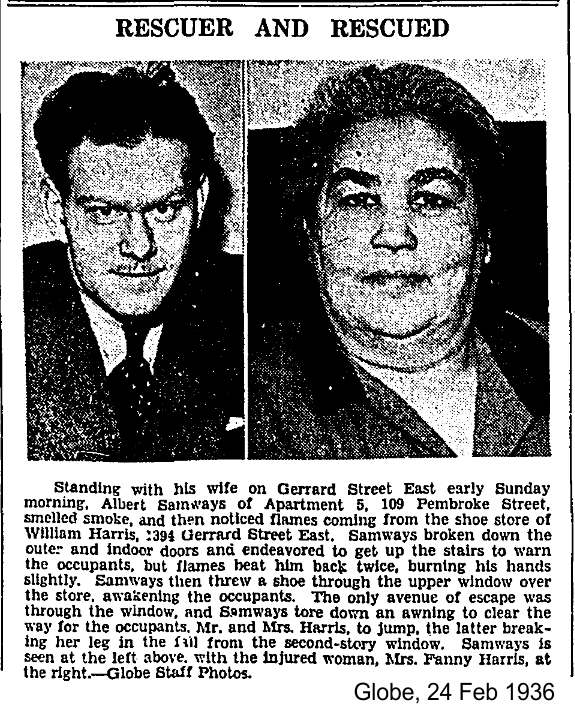
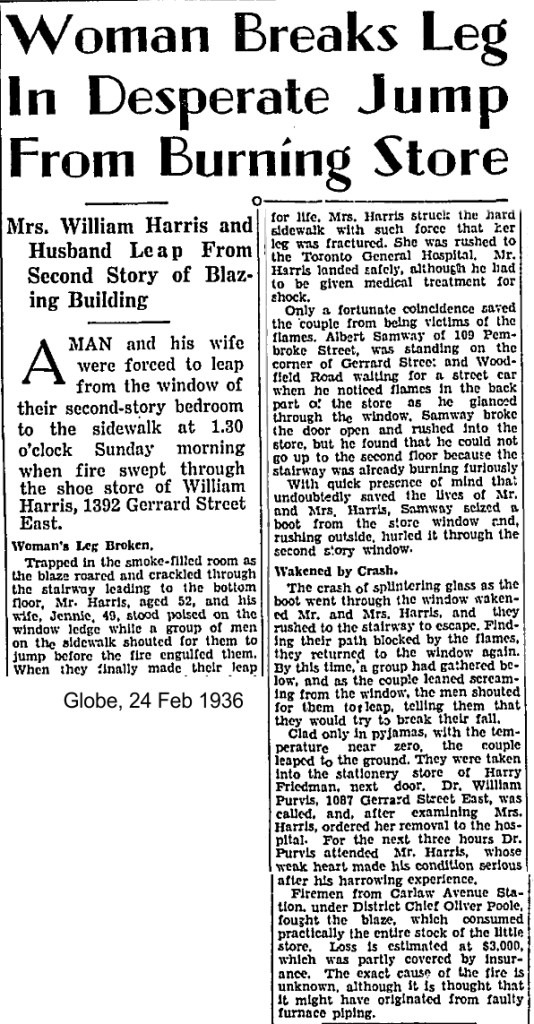
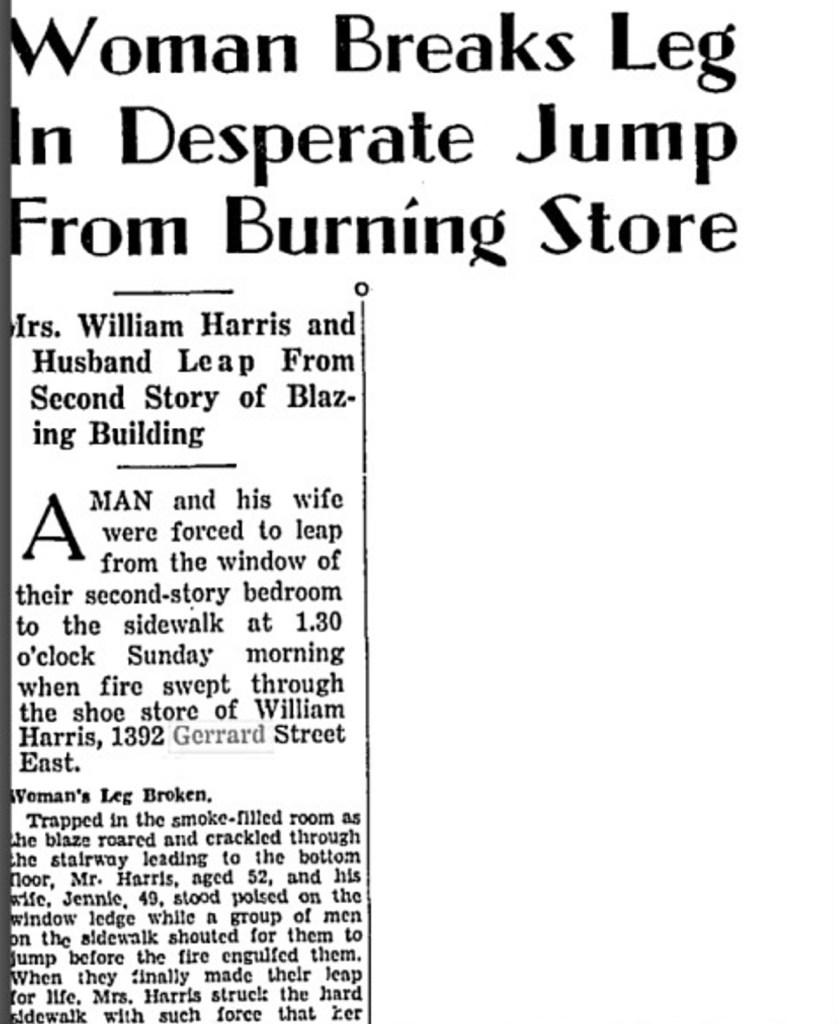
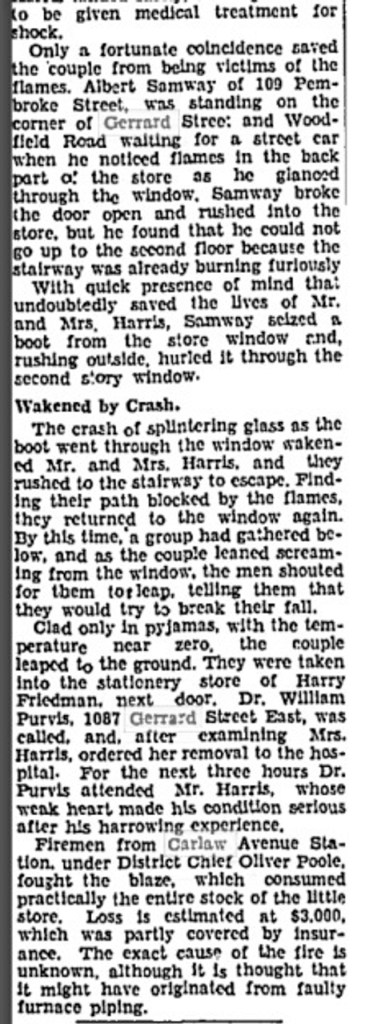
Fire, William Harris shoe store, 1394 Gerrard Street East, Globe, 24 Feb 1936Fire, William Harris shoe store, 1394 Gerrard Street East, Globe, 24 Feb 1936
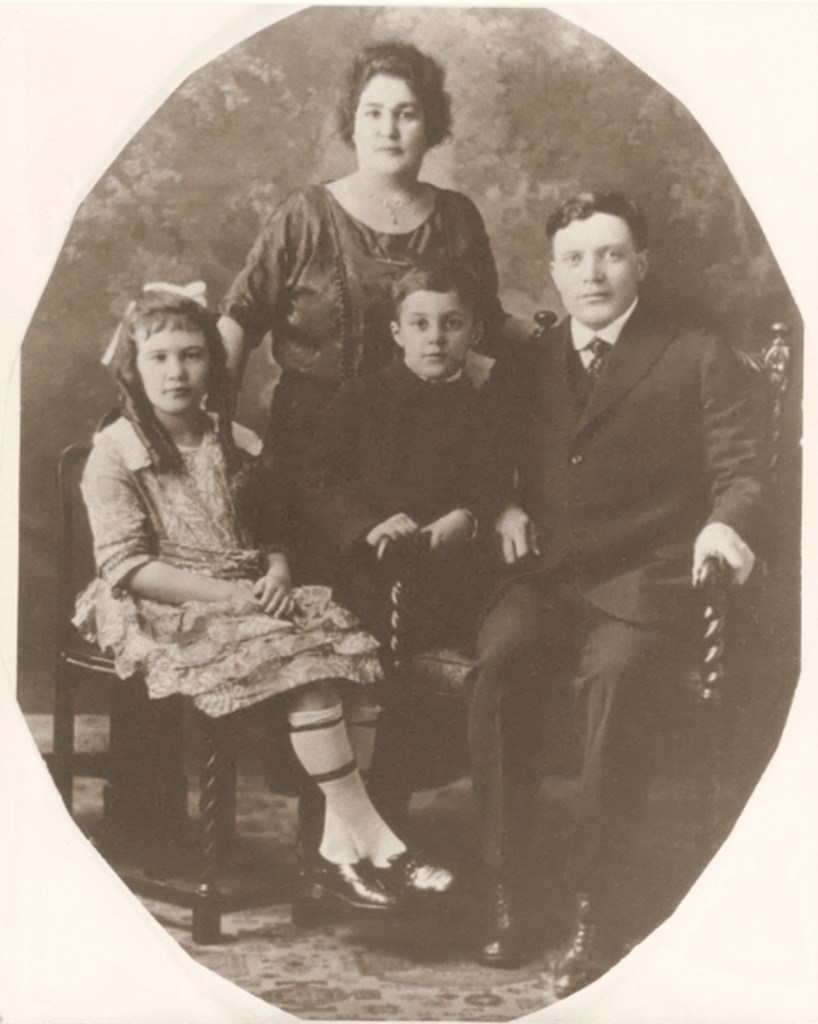
More about Fannie Harris
Fannie Irene Feiga Maryam Chipokova Zhipikov was born on August 23, 1887 in Bersobar, Poland. She arrived on 27 Aug 1908 at Montreal, Quebec at the age of 20. Her occupation was listed as “tailoress”. Three years later she married William “Harry” Wishnefsky Harris in the McCaul Street Synagogue, when she was 23 years old.
Their daughter Annie was born in 1912 Ontario and son Nathan was born on January 12, 1914. Sadly they lost their twin boys on March 20, 1916. All their children were born in Toronto. By 1921 they owned a shoe store at 1392 Gerrard Street East and lived in the apartment. The building is still there, on the north side of the street, two stores east of Woodfield Road. My vet’s office used to be there, but now it’s a beauty salon.
She died on October 19, 1942, in Toronto, Ontario, at the age of 55, while living above the family store at 1392 Gerrard Street East. She and her husband are buried in Roselawn Cemetery. Her husband died in 1962 in Toronto, Ontario, at the age of 78.
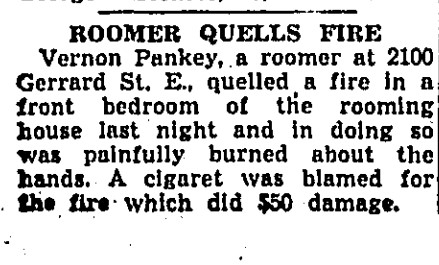
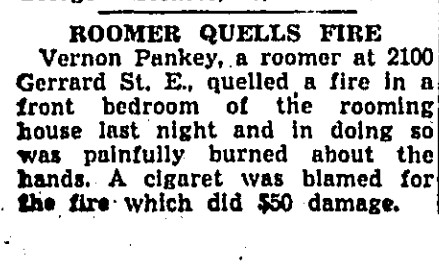
Vernon Pankey injured, fire rooming house, 2100 Gerrard St E, Globe and Mail, February 21, 1948
As I research the history of the neighbourhood from the beginning of the 20th century when the Ashbridge’s and Small estates were broken up for housing, I’m struck by just how many fires there were. This makes sense at a time when many houses were tarpaper shacks, built closely together in Shacktowns and even more substantial houses were had roofs of wooden shingles. Coal and wood fueled furnaces and chimney fires were common. So I’m posting some of those fires street by street. I start with Vernon Pankey on 2100 Gerrard Street East, injured in a fire on February 21, 1948, four years before I was born.
I am focusing on residential, business and some small factory fires. Brickyard fires were so common that they deserve a post of their own.
William “Stinky” Harris’s glue factory at Coxwell and Danforth was susceptible to fire as fats and oils rendered from animal carcasses are very inflammable. Sometimes our neighbourhood even appeared in the Big Apple news: Losses by Fire. Toronto, Ontario, Sept. 22—Harris’s glue factory, on Danforth Avenue, was completely destroyed by fire this morning. Loss,$25,000.00; partially insured. New York Times, September 23, 1900.
Harris Glue Factory Fire, Danforth and Coxwell, The Gazette, Sept. 24, 1900
The glue factory on Danforth Road burned down on September 22, 1900, causing about $6,000 worth of damage, a considerable sum at the time. The factory was a three-story brick building, 125 feet long and 60 feet wide, just outside the city limits, on “glebe land”. About 40 men were thrown out of work by the fire. Toronto Star, Saturday, September 22, 1900
Fire, 1597 Gerrard St E at Coxwell, Globe, April 18, 1910Fire, 1600 Gerrard St. East, Globe, May 12, 1913
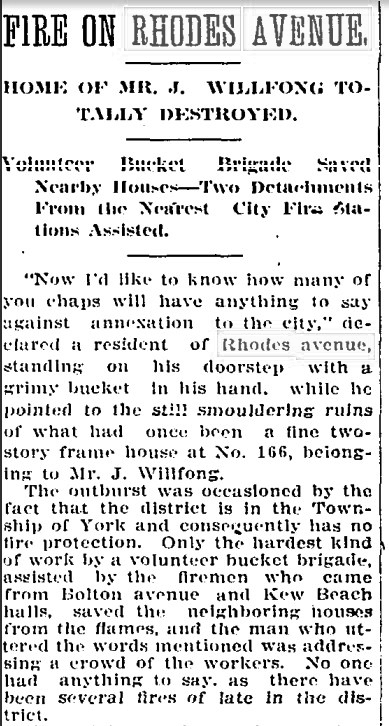
WIllfong fire, Globe, January 4, 1909
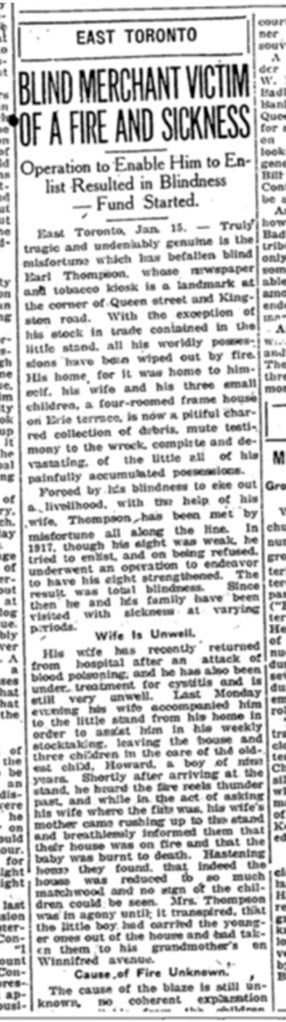
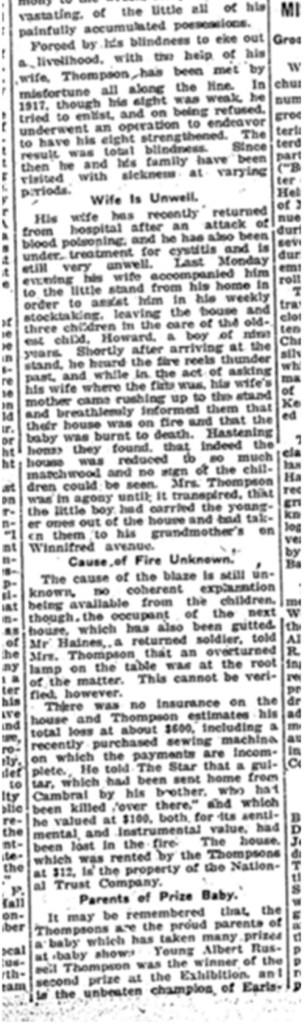
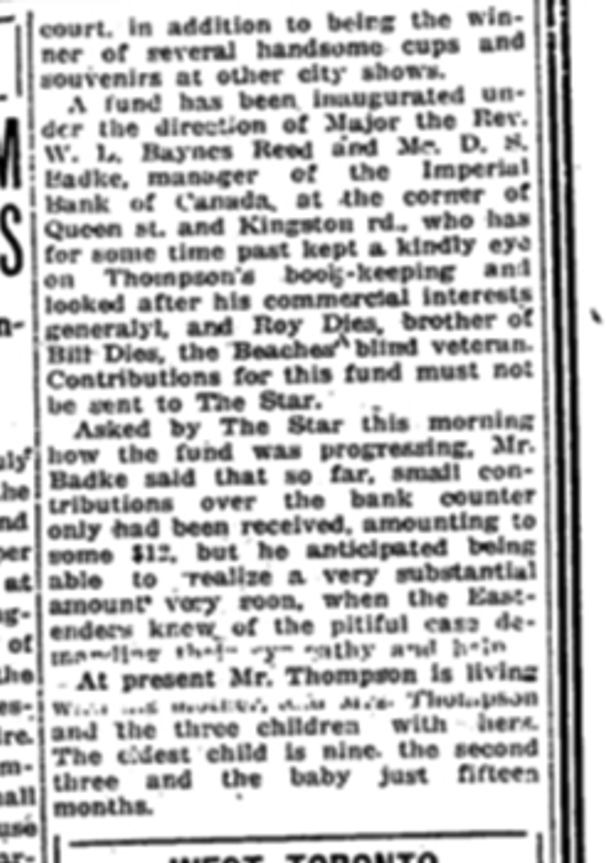
At the time Erie Terrace (later renamed Craven Road) was too narrow for the City’s fire trucks to drive on. So this narrow street, known as “Bootlegger’s Alley”, with shacks packed in side by side was particularly vulnerable to conflagrations that could quickly spread from house to house.
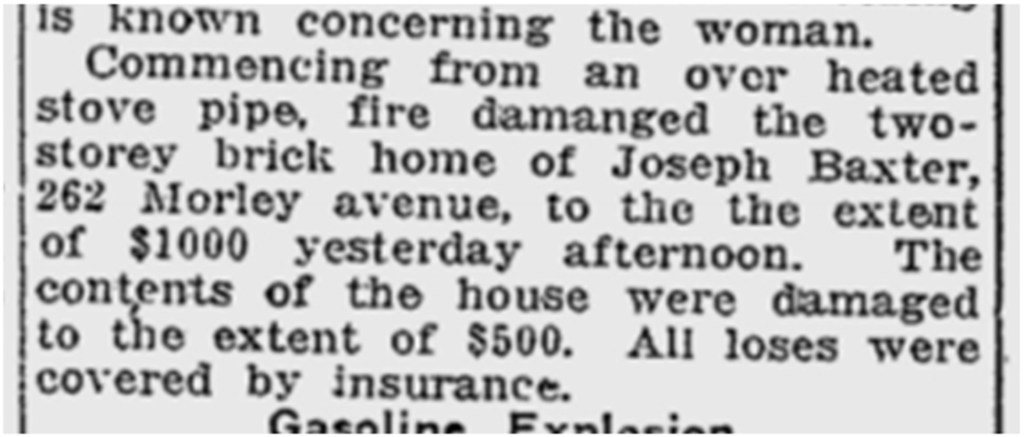
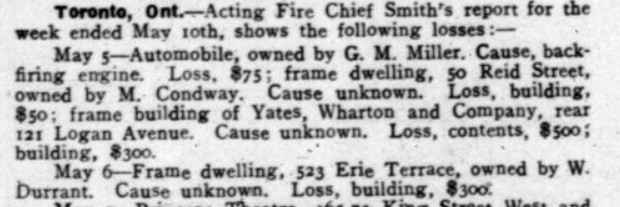
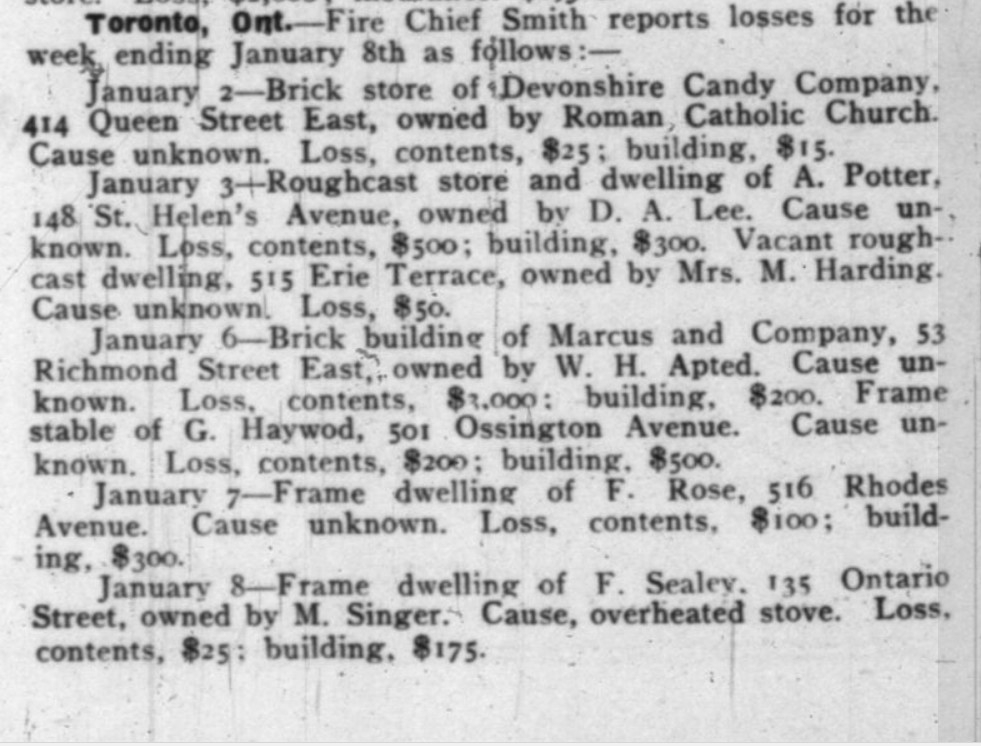
Fire 47 and 49 Carven Road, Monetary Times, Vol. 64, No. 4, p 52 Earl Terrace is a typo. This was Erie Terrace.Fire 262 Morley Ave, south of Gerrard St E, Toronto World, January 19, 1915Fire, 50 Rhodes Ave., Monetary Times, May 28, 1915Fire, 523 Craven Rd., Monetary Times, May 28, 1915515 Craven Rd, Monetary Times, January 14, 1916Fire, 1418 Gerrard St E at Hiawatha, Globe, March 2, 1917Fire 193 Craven Rd, Toronto Star, March 15, 1917Fire, 335 Rhodes Ave, between Fairford and Gerrard, Toronto Star, Feb. 2, 1918Streetcar on fire Upper Gerrard and Gainsborough, Toronto Star, Feb. 9, 1918
Brush and grass fires were common. Embers and coals flying off of the trains started many such blazes, but people also set fires to clear weeds and overgrowth as well as leaves in autumn. Sometimes they got out of hand. As well children playing with matches and the occasional arsonist played a role.
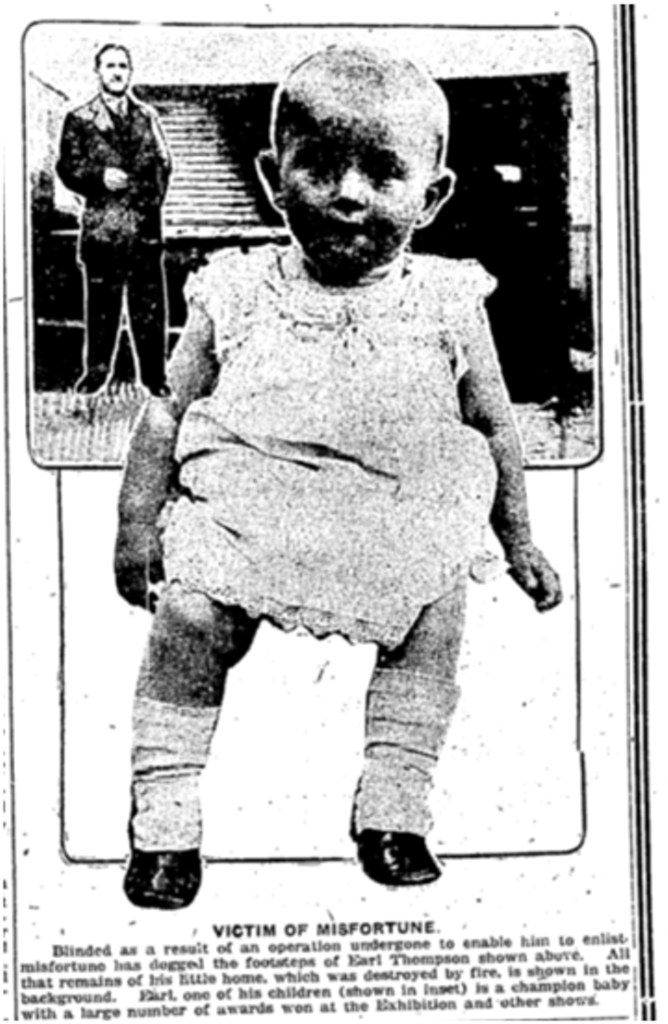
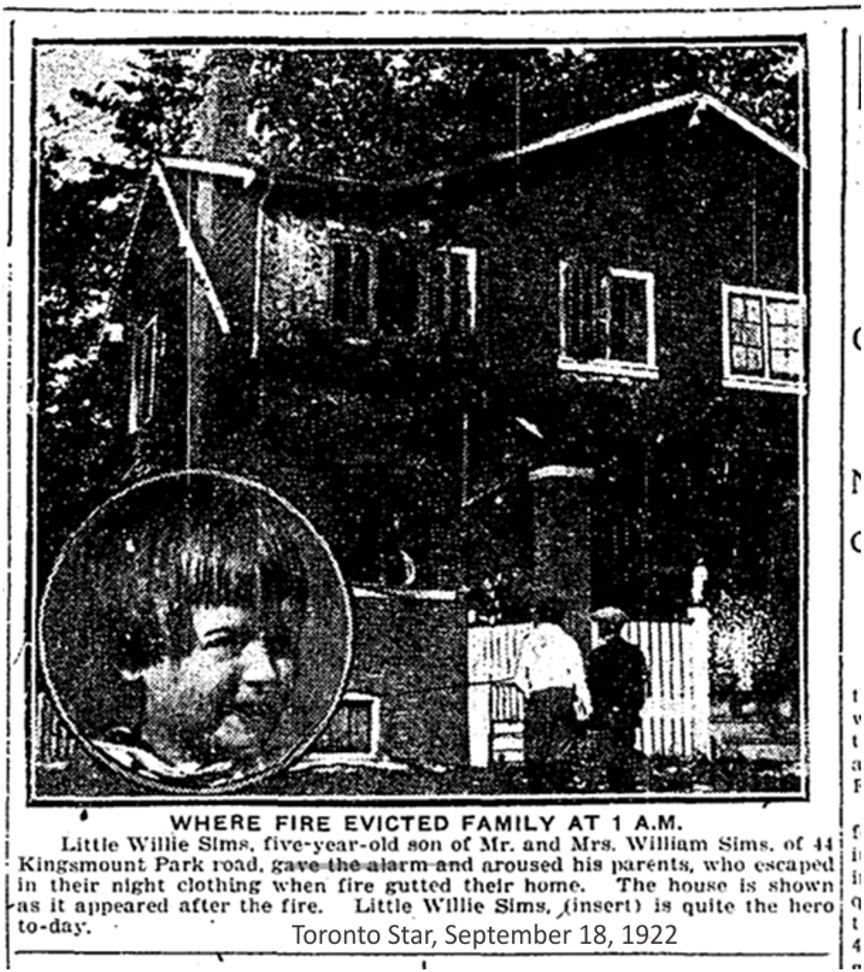
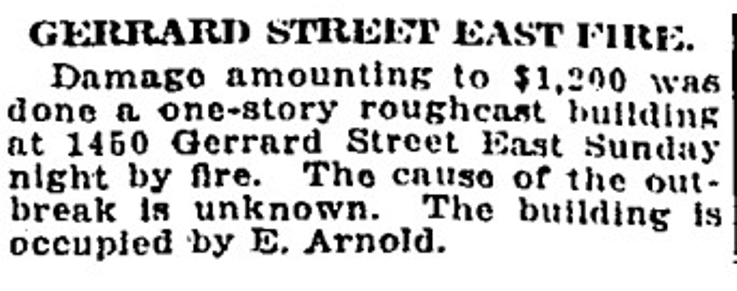
Grass fire Coxwell and Gerrard, Toronto Star, April 15, 1918Thompson fire, Craven Road, Toronto Star, January 15, 1920Thompson fire, Craven Road, Toronto Star, January 15, 1920raven Road, Toronto Star, January 15, 1920raven Road, Toronto Star, January 15, 1920House fire, 44 Kingsmount Park Rd, Toronto Star, September 18, 1922Fire, 1450 Gerrard St E at Craven Rd, Globe, October 13, 1924Grass fire, Wrenson Road and Highcroft Ave., Toronto Star, March 19, 1926
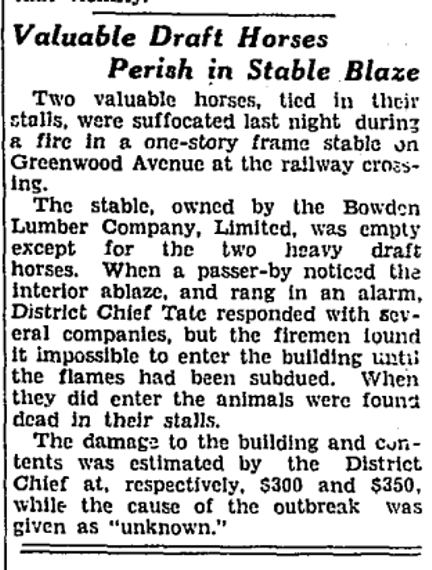
Belle Ewart was an ice company that used teams of horses to deliver ice across the city. Stables were and still are very vulnerable to fires with lots of hay and straw. Sometimes in hot weather fires even started by spontaneous combustion. And horses are notorious for panicking in a fire and need expert help to get out or they will run back into the flames. A barn or stable makes a death trap for livestock, horrifying to watch.
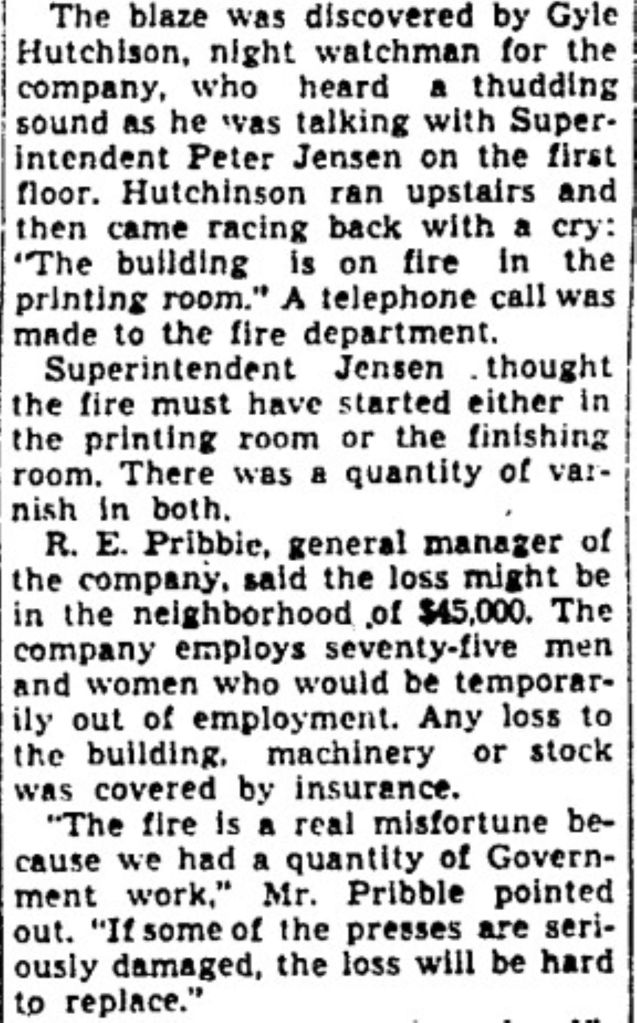
Fire Belle Ewart stables, 433 Gainsborough Road, Globe, June 1, 1927Fire, Bowdens Lumberyard, Greenwood and Walpole, Globe, January 9, 1930Fire at Earl Haig School, February 18, 1932Fire, Hollywood Crescent, Toronto Star, January 25, 1936Fire, Harris Shoe Store 1392 Gerrard St E at Woodfield, Globe, February 24, 1936 1Fire, Harris Shoe Store 1392 Gerrard St E at Woodfield, Globe, February 24, 1936Fire, Harris Shoe Store 1392 Gerrard St E at Woodfield, Globe, February 24, 1936Fire, 1622 Gerrard St E, Dr. Braund’s office damaged, Globe and Mail, January 7, 1941
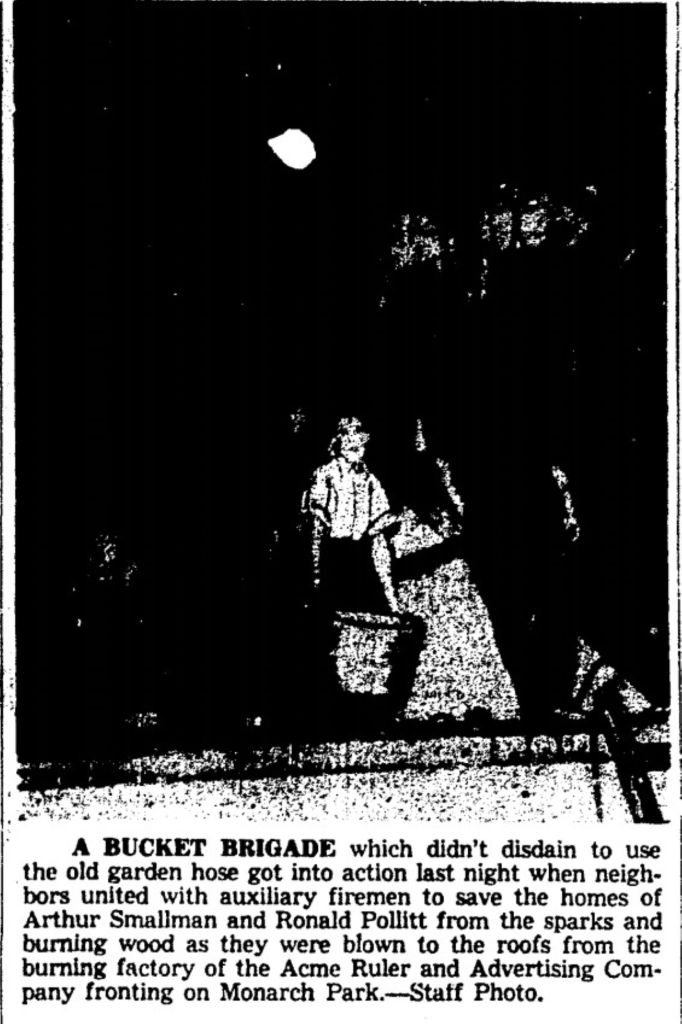
Below: Fire at the Acme Ruler Company, Globe and Mail, June 11, 1942
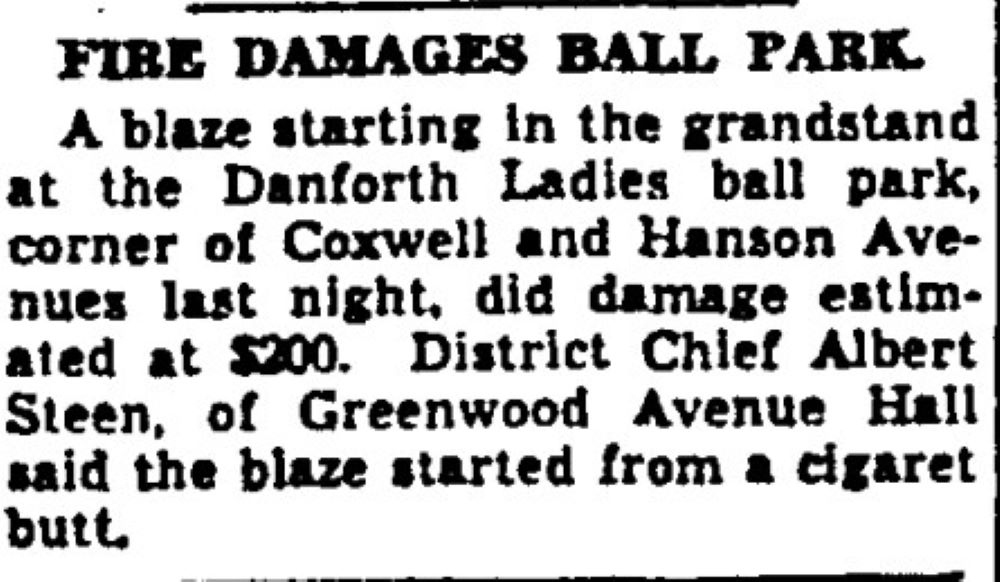
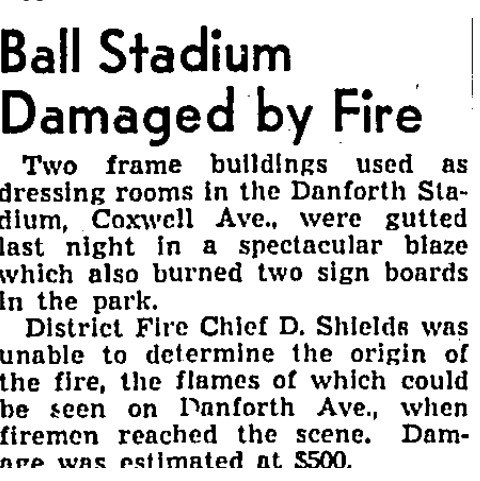
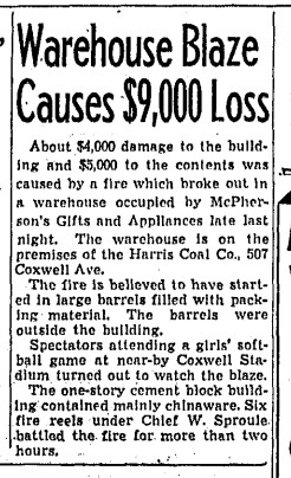
Fire Ladies Ball Park, Coxwell Stadium, Globe and Mail, August 22, 1942Vernon Pankey injured, fire rooming house, 2100 Gerrard St E, Globe and Mail, February 21, 1948Fire Coxwell Stadium, Globe and Mail, March 27, 1948
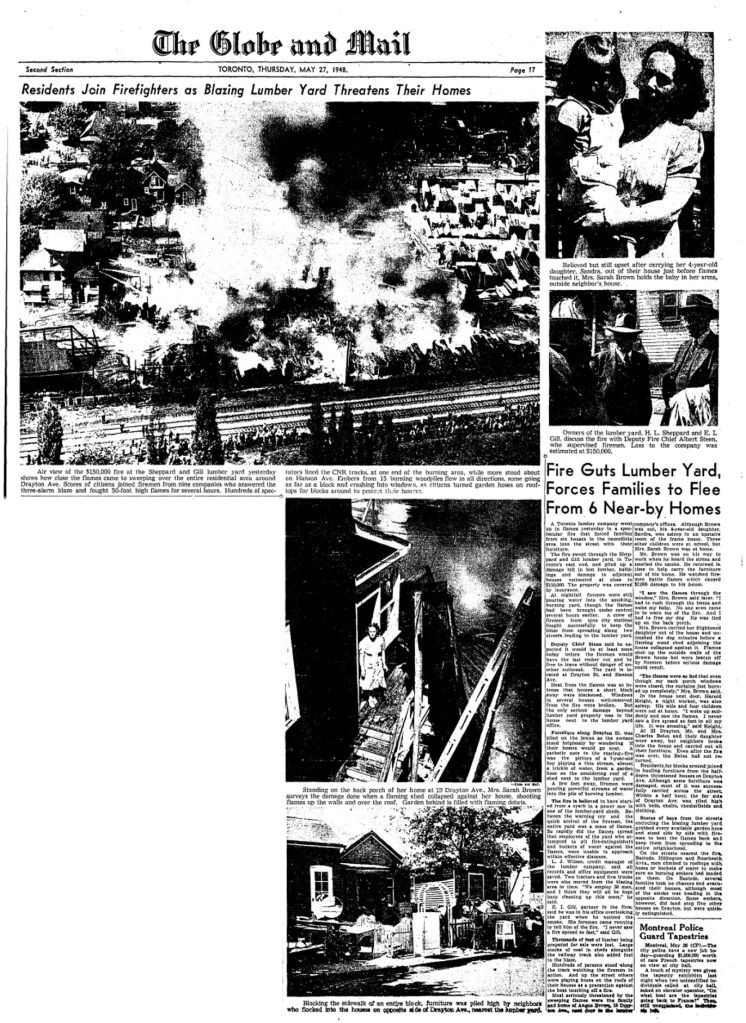
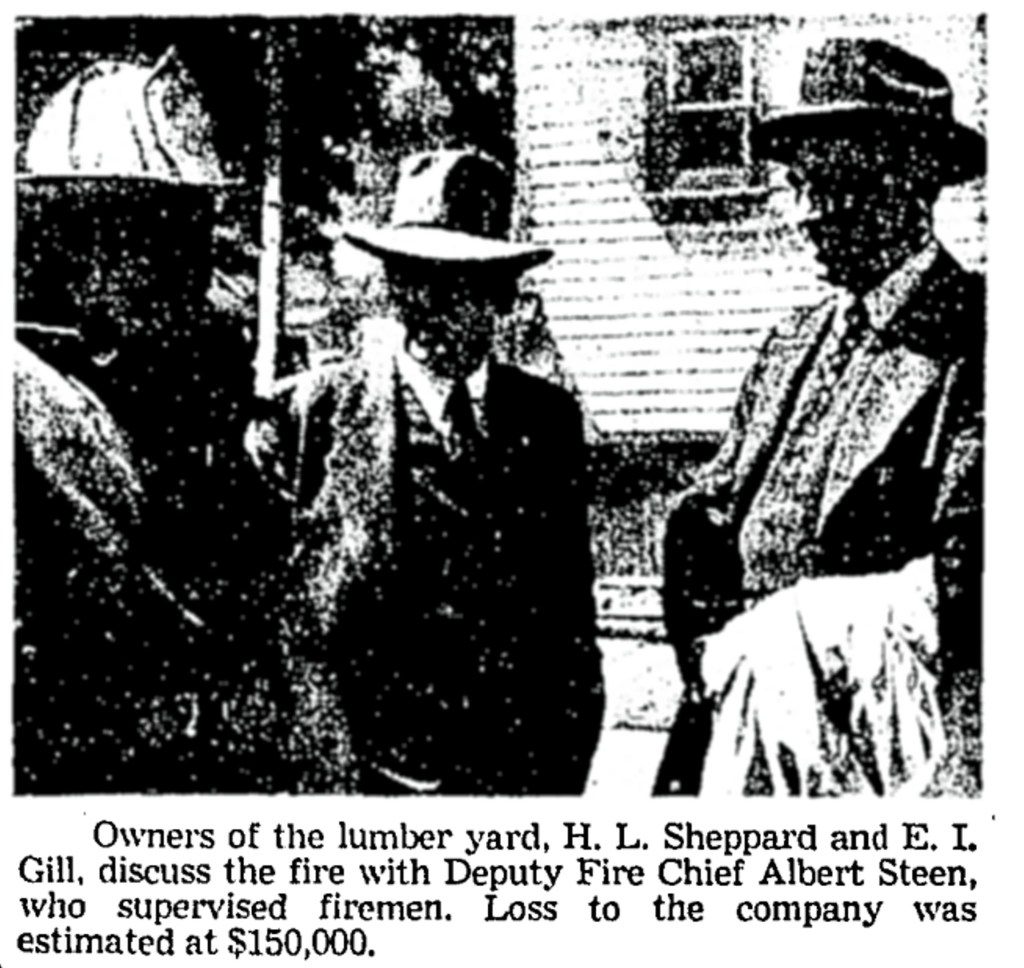
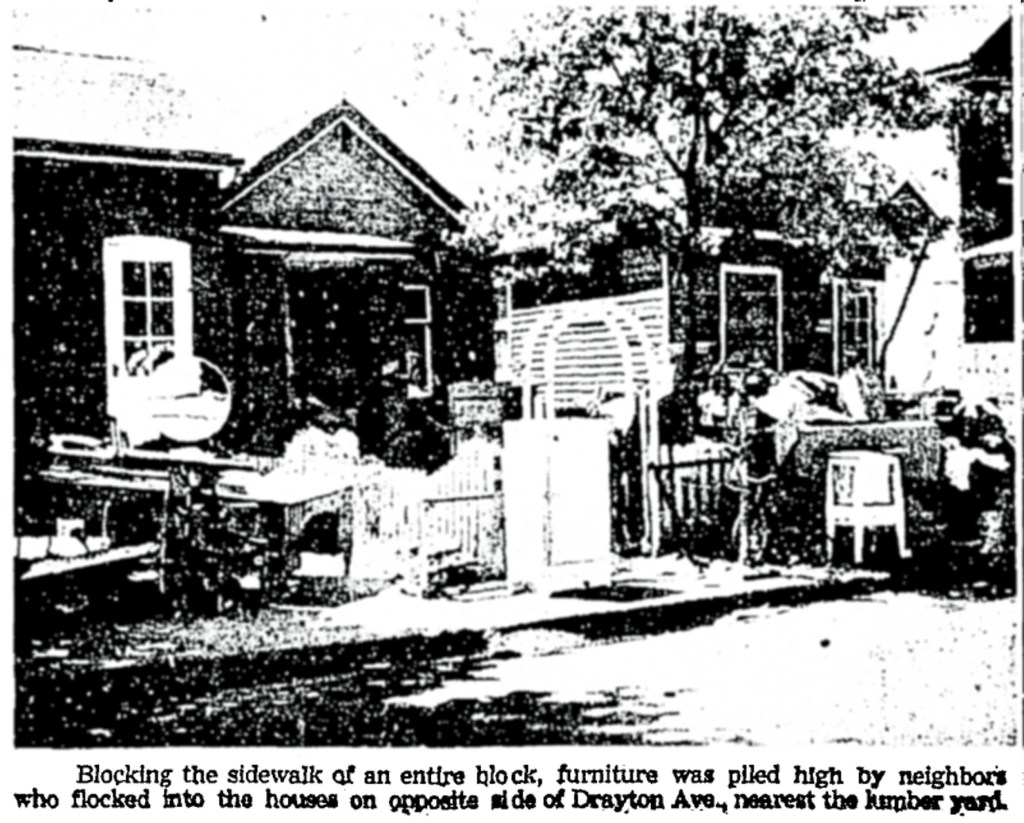
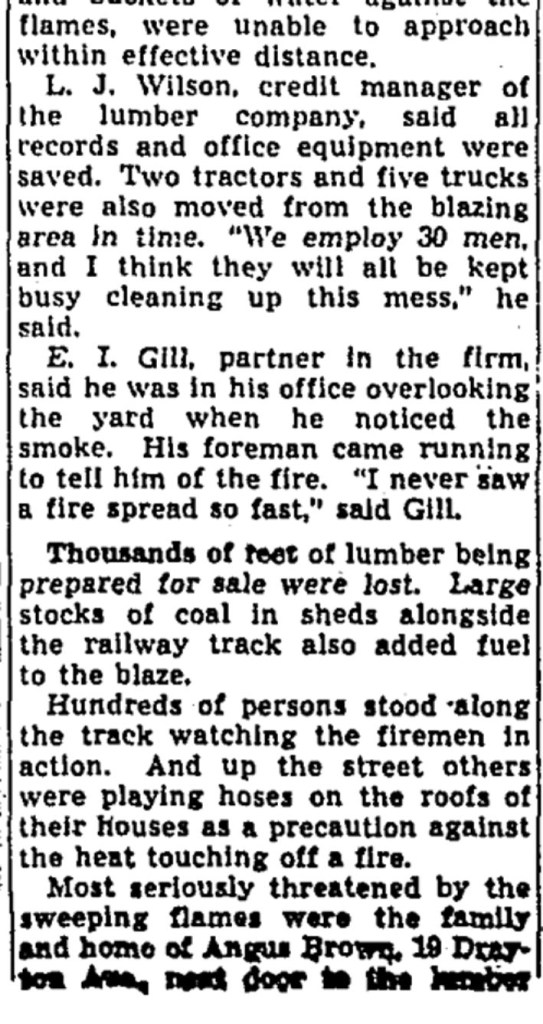
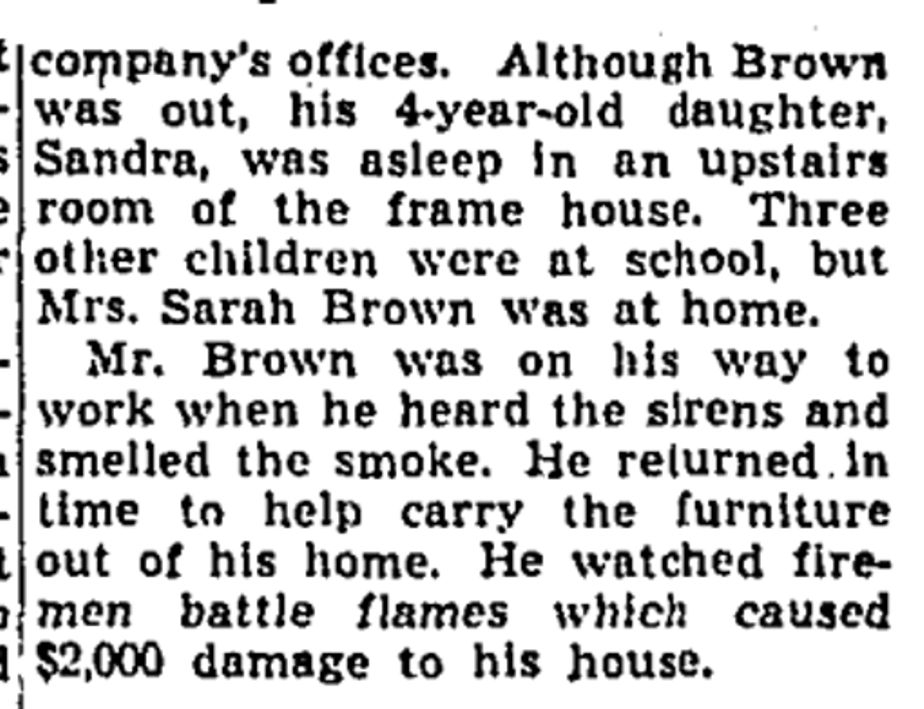
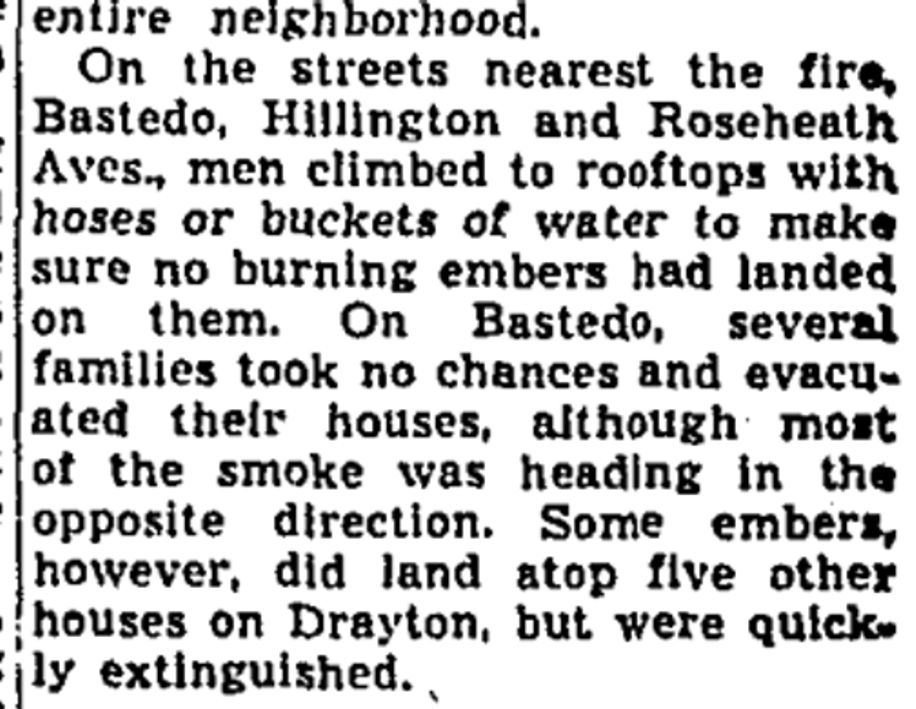
Some fires like the one at the lumberyard at Drayton and Hanson Street in May 1948 were spectacular. But in this case neighbours worked together to save each other’s property and lives too.
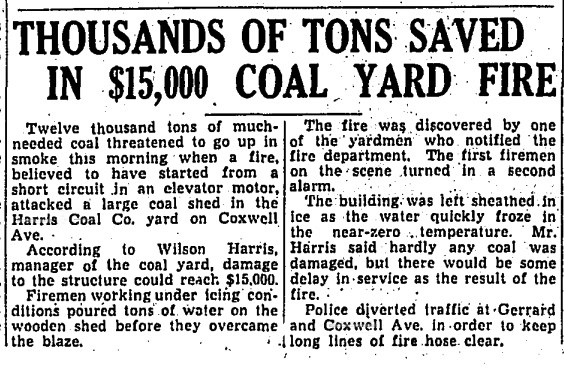
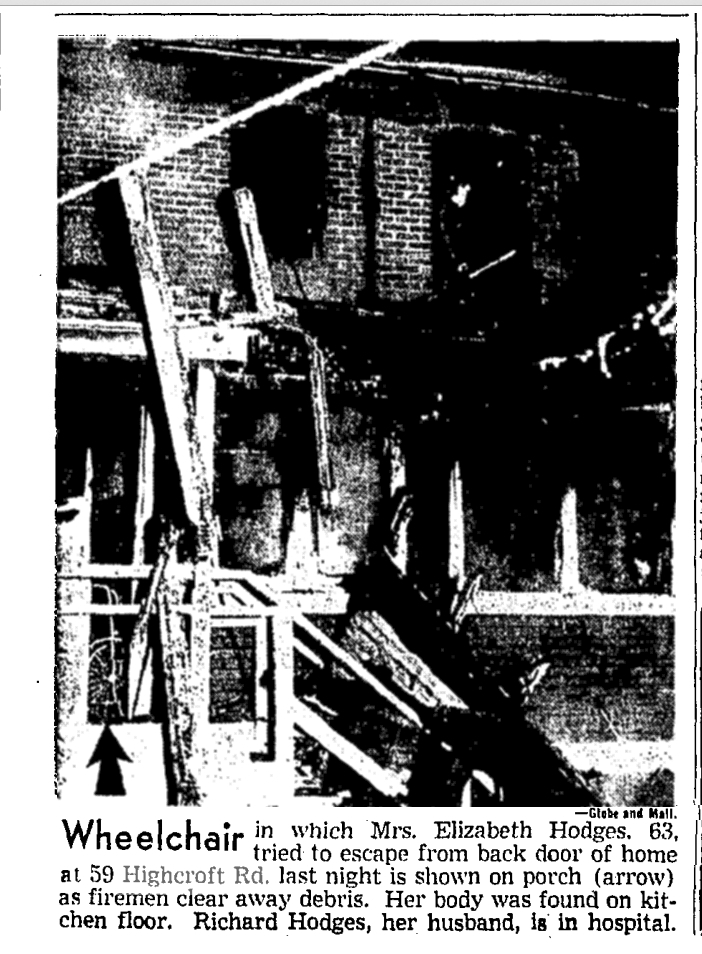
Harris Coal fire, Coxwell Ave, Toronto Star, February 22, 1950Firebug, Rhodes and Craven, Globe and Mail, May 16, 1950Fire, 10 Walpole Ave, Globe and Mail, November 25, 1950Fire, 59 Highcroft Rd, Globe and Mail, February 3, 1951Fire near Harris Coal, Coxwell Ave, Globe and Mail, August 24, 1951
Fires at Christmas were common with highly combustible trees and decorations. Even if the only victim was a budgie, it would have traumatized the children. (I know. My home burned when I was in Grade Three.)
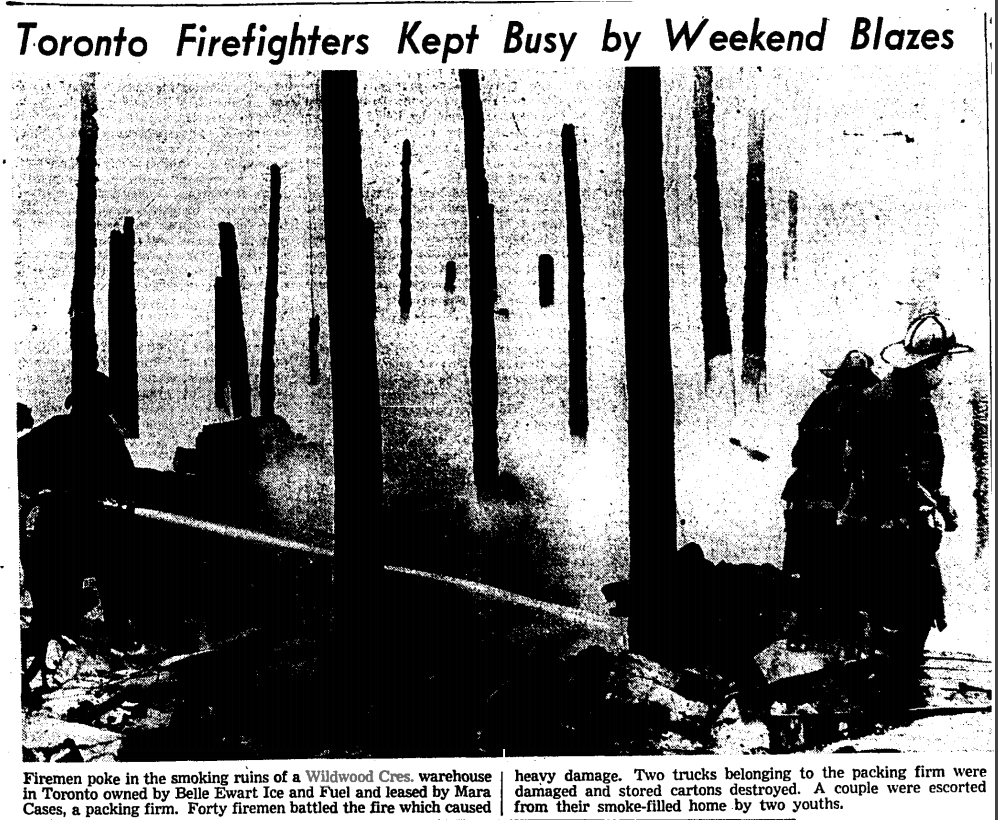
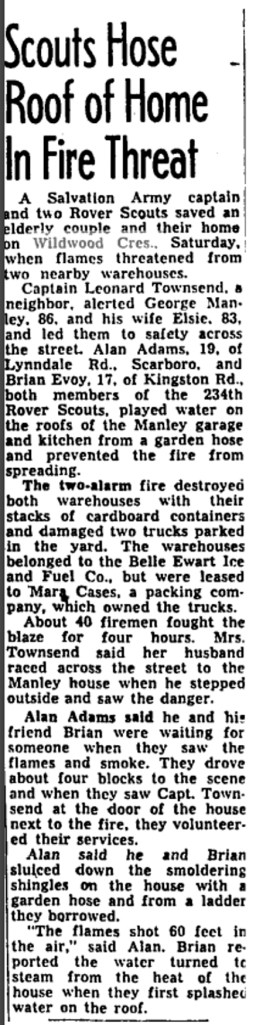
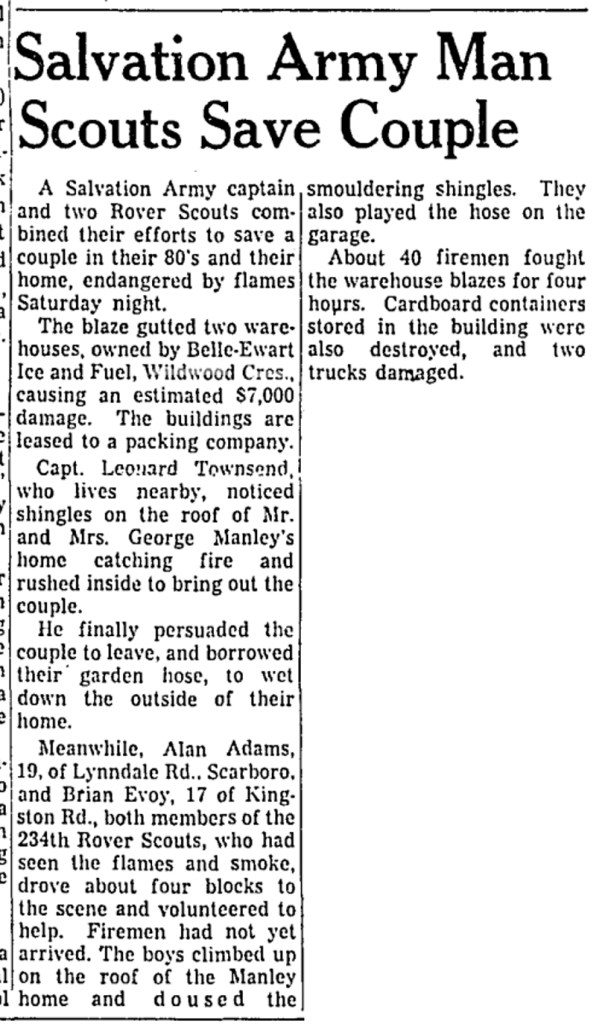
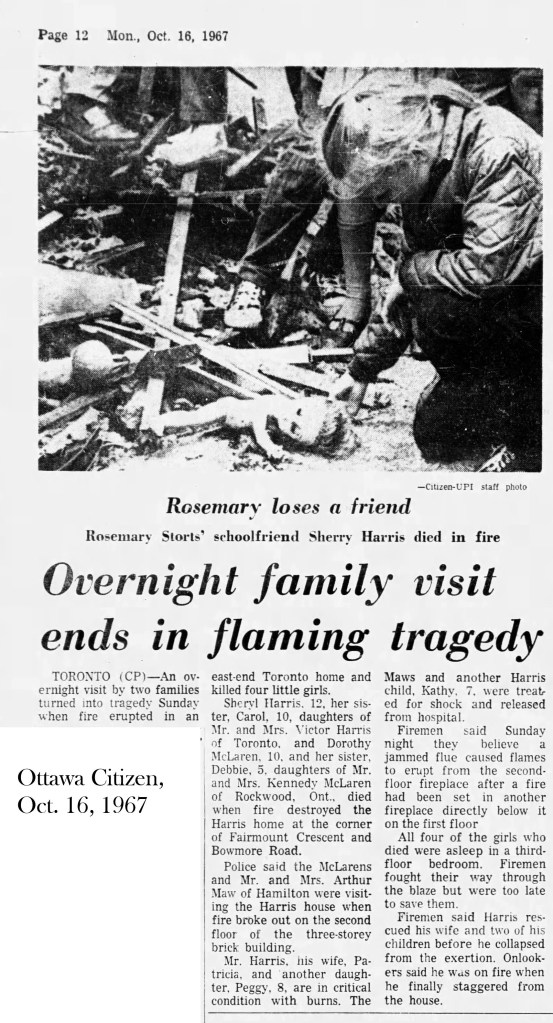
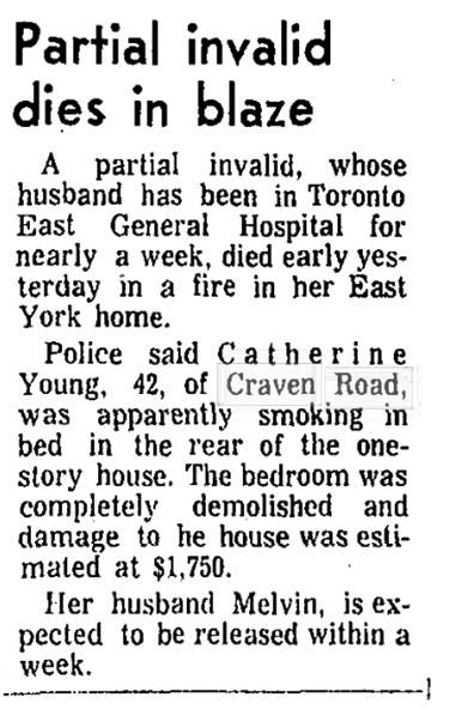
Fire, 93 Gainsborough Rd, Globe and Mail, December 23, 1955Fire Belle Ewart Fire Belle Ewart, Wildwood Crescent, Globe and Mail, March 6, 1961Fire Belle Ewart, Wildwood Crescent, Globe and Mail, March 6, 1961Fire Belle Ewart, Wildwood Crescent, Toronto Star, March 6, 1961Fire Belle Ewart, Wildwood Crescent, Toronto Star, March 6, 1961Fire Bowmore Road and Fairmount Crescent, Ottawa Citizen, Oct. 16, 1967Woman dies in fire, Craven Rd, Globe and Mail, December 9, 1972
Generally my coverage of historical events ends in the early 1970s because of copyright restrictions. It’s not that fires stopped happening.
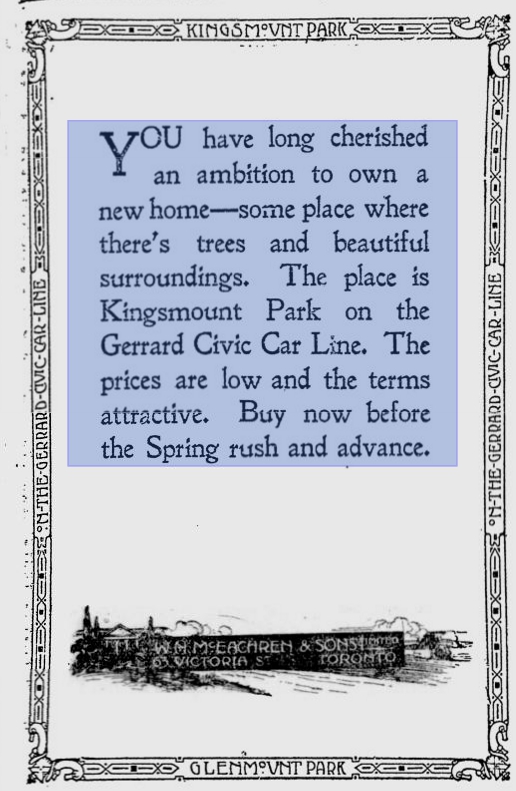
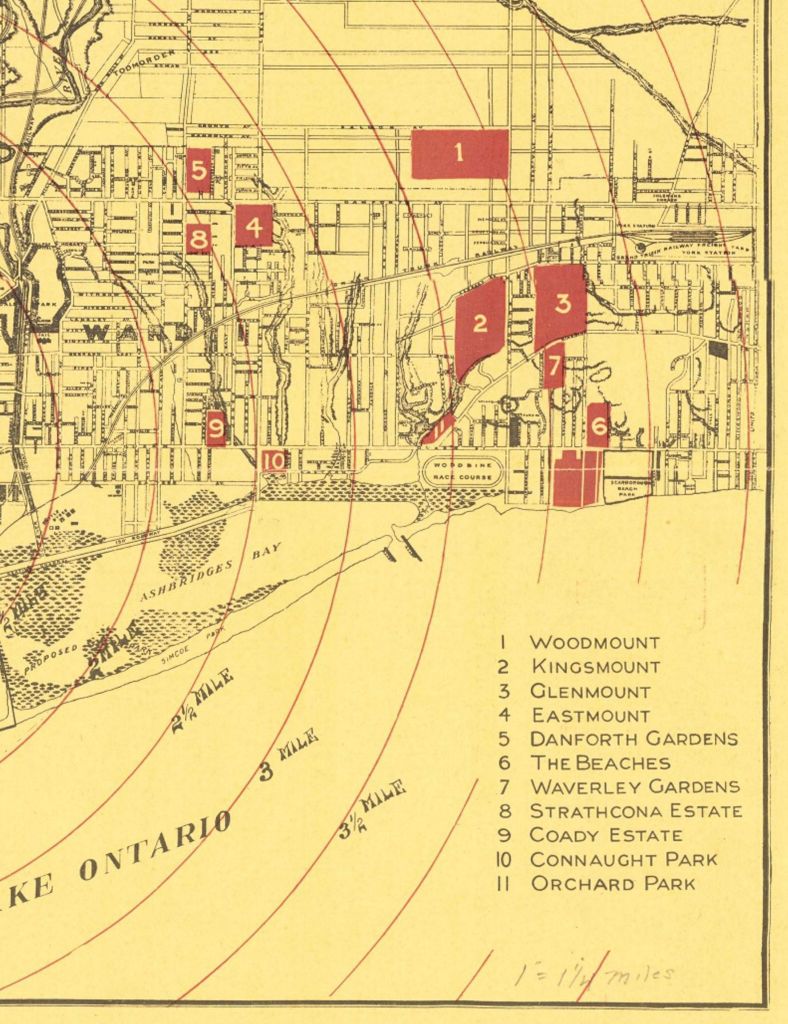
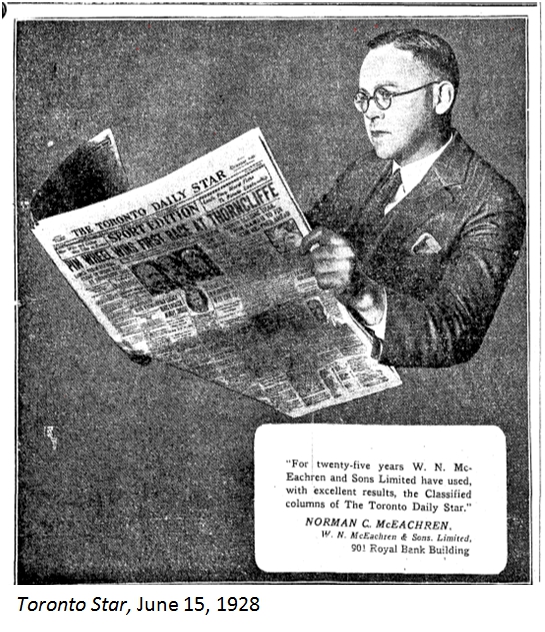
There were two new McEachren subdivisions, each unique, but with some common elements: high quality homes and the effort the owner and developer of the properties, the McEachren family, to retain the trees. First was was Kingsmount Park, from Bowmore to Woodbine, and then, across Woodbine Avenue, Kingsmount Park.
By 1923, there was a building boom across Toronto as prosperity had returning following the brief depression of 1919. The area filled in with rows of brick bungalows, detached, duplexes and triplexes:
The building impulse is also evident south of Danforth and Gerrard street east from Main street to Coxwell avenue, including the new subdivision, Kelvin Park Beach, which is astir with scores of houses rising above the snow-cloaked fields. Variety in architecture and price underlie the building movement of this district, and homes range in value from $5,000 to $9,000. The ring of the hammers of the builders in the Gerrard street east district echoes over the hills south to Kingston road, where from the city limits at Victoria Park avenue to Queen street, with its lake frontage streets, are building up with blocks of homes valued from $4,500 to $8,000. During the last few days cellars have been excavated in the new Bingham avenue subdivision and Glenmount Park. Globe, February 27, 1923
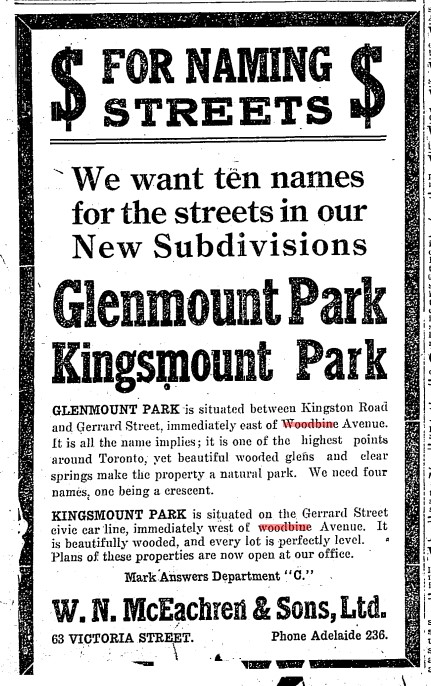
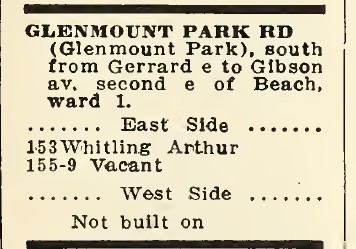
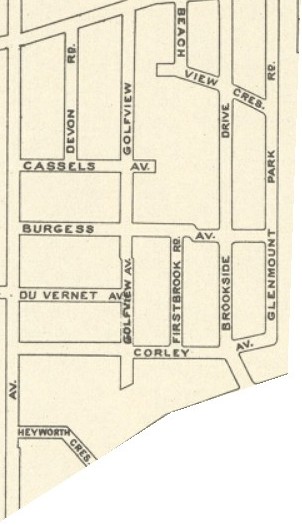
Glenmount Park ad, Toronto World, December 4, 1911Glenmount Park ad, Toronto World, November 15, 1911Toronto Star, February 6, 1912 Street names Kingsmount, GlenmountGlenmount ad, Toronto World, February 24, 1912Glenmount ad, Toronto Star ad, April 11, 1912Glenmount aerial labelled, Toronto Star ad, April 11, 1912Toronto Star, April 11, 1902 Glenmount mapA home among the trees, Toronto Star, June 14, 19121916 Glenmount Park RdGlenmount Park, Toronto Star, May 6, 19191921 Glenmount ParkMcEachren ad, Globe, June 9, 1923The model home at 92 Glenmount as it looked in 19231924 Glenmount Park Rd1924 Glenmount Park RdGlenmount Park Rd sale, Toronto Star, April 12, 1924William McEachren, realtor









































 The Midway Historical Society of Toronto