Tag: Coxwell Avenue
-
February 28 in our history
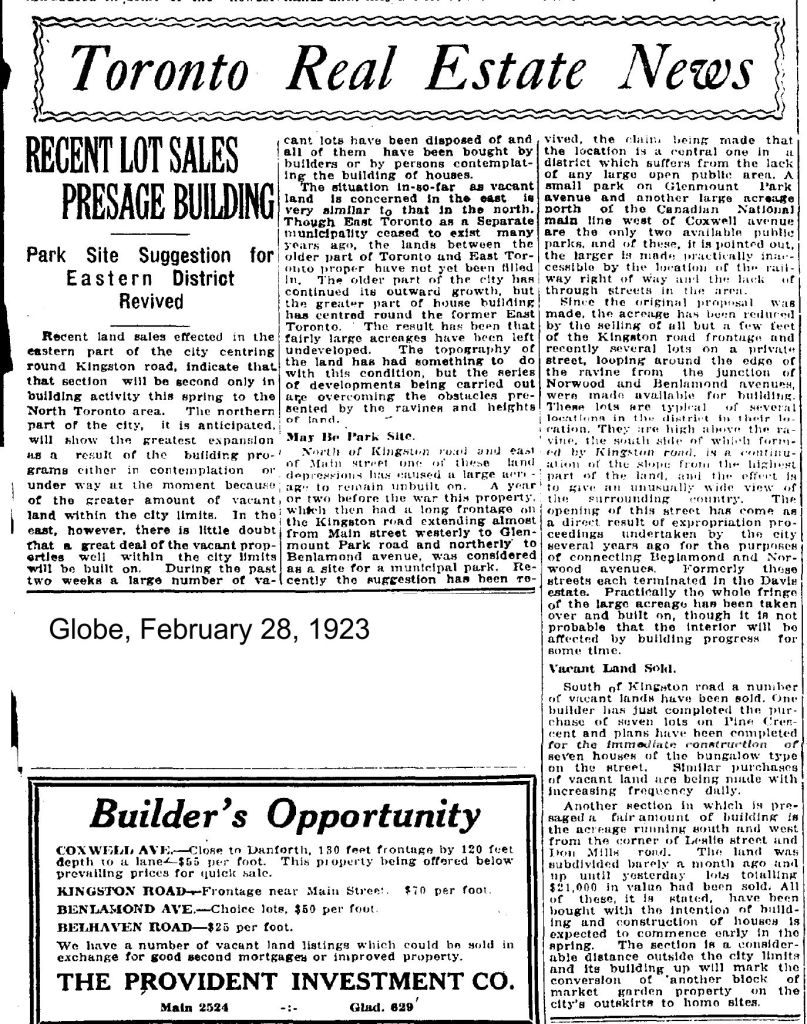
Globe, February 28, 1923 Real Estate -
February 26 in our past: Changing street names and a changing neighbourhood, Kelvin Park
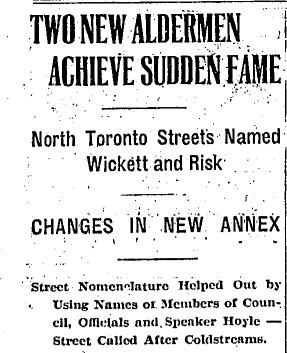
Street name changes, Toronto Star, February 26, 1913 1 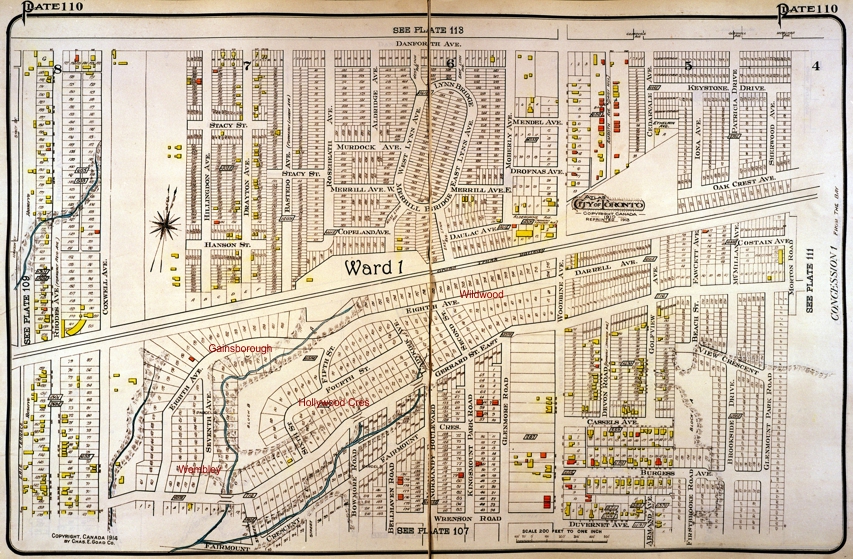
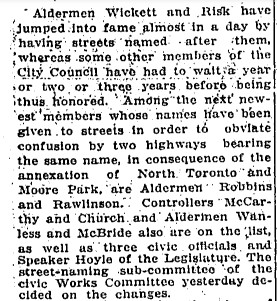
Street name changes, Toronto Star, February 26, 1913 2 
Street name changes, Toronto Star, February 26, 1913 3 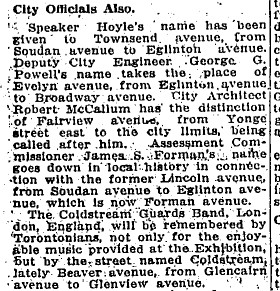
Street name changes, Toronto Star, February 26, 1913 4 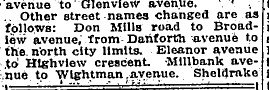
Street name changes, Toronto Star, February 26, 1913 5 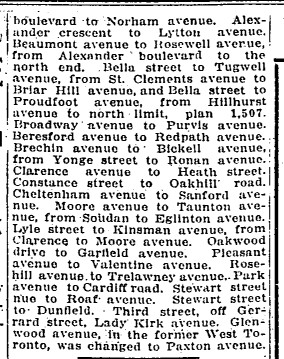
Street name changes, Toronto Star, February 26, 1913 6 
Toronto and the Men Who Made It, 1911, Frederick Burton Robins When the Ashbridges sold their farm west of the Toronto Golf Club grounds. F.B. Robins was their realtor. When Erie Realty Company sold lots on and just west of Coxwell Avenue, Frederick B. Robins was their realtor too. Henry Pellatt, F.B. Robins and their circle were known their free and easy approach to such things as insider trading, conflict of interest, and manipulating the markets.
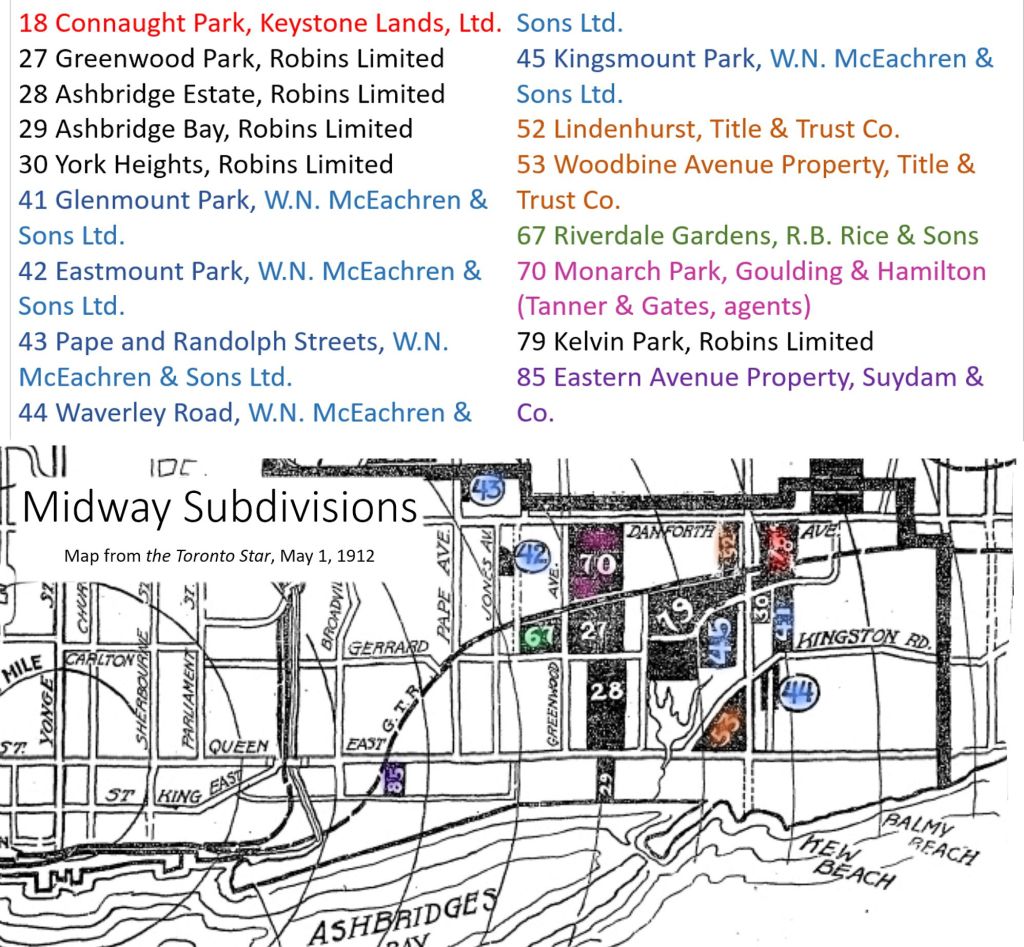
East End Subdivisions colour coded, 1912 While Robins and Pellat survived the Financial Panic of 1907, the crisis revealed the weaknesses of a largely unregulated financial sector.
Five Canadian banks failed between 1905 and 1908. The failure, in January 1908, of the Sovereign Bank was the biggest, but not the last Canadian bank to fall. Bankers feared a domino effect. One of the banks Pellatt was involved with was the Home Bank of Canada, founded in 1903. It grew out of the Home Savings and Loan Company, created in 1854 to serve Toronto’s Catholics.
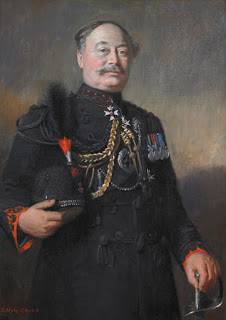
Sir Henry Pellatt Pellatt with his castle, Casaloma, seemed to be Canadian royalty. But his wealth was built on offering risky investment opportunities to unsophisticated investors and using the savings of poor Irish Catholics through the Home Bank. Many investors in Pellatt’s enterprises were poorly equipped to evaluate risk and unable to afford losses. With this money, Henry Pellatt and Frederick B. Robins, both “land sharks”, bought up land on the fringes of Toronto and, in Pellatt’s own words, “nursed it along” until they could profit from the anticipated suburban growth.
In 1909 the City of Toronto annexed the area south of the Danforth between Greenwood Avenue and the Town of East Toronto, allowing Toronto to expand eastward. Toronto City Estates incorporated in a partnership that would make Frederick Robins the real estate agent for almost all sales from Greenwood to Woodbine Avenues. Pellatt was a director of the Home Bank which lent millions to the Pellatt’s enterprises apparently without the knowledge of other directors.
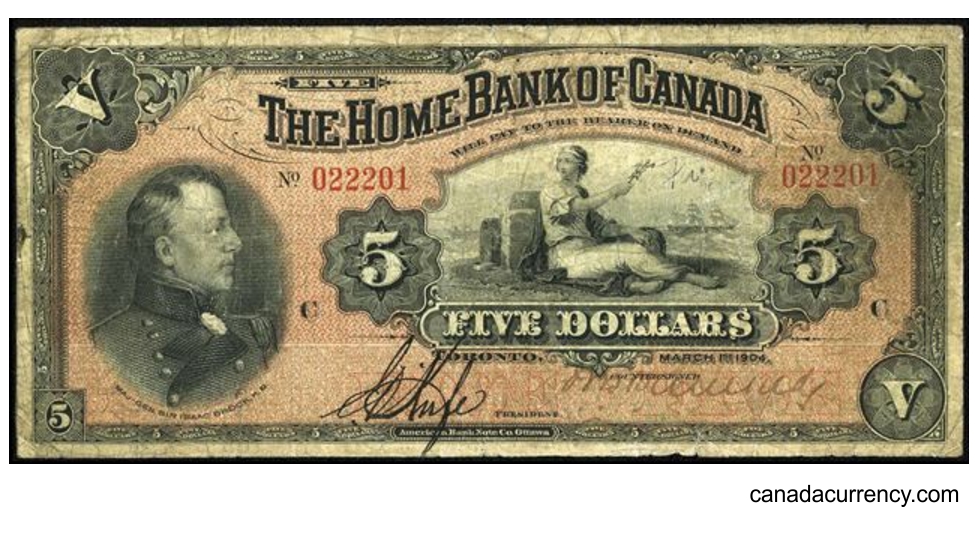
Home Bank note A genius in marketing, Pellatt renamed the Toronto City Estates subdivision on the Toronto Golf links. Its new name, Kelvin Park, suggested modernity and electricity. William Thomson, Lord Kelvin, died in 1907 the same year that Adam Beck brought Niagara’s electricity to Toronto. William Thomson was instrumental in the laying of the Atlantic Telegraph Company in 1856. This scientist, with his interest in the transmission of electricity. became a hero of the day and was knighted for his efforts, become Lord Kelvin. Kelvinator appliances (fridges, stoves, etc.) took their name from Lord Kelvin too.

Kelvin Park ad, Toronto Star, October 25, 1912 
Kelvin Park Ad, 1912 Although favourable reports of Kelvin Park appeared in the British press, sales were slower than anticipated as another economic downturn preceded the First World War.

Kelvin Park ad, Toronto Star, January 5, 1912 By 1914 the Home Bank was in deep trouble. Other bankers blamed Home Bank’s troubles on inefficient management and complained to the federal Minister of Finance. The Government of Canada refused to investigate the Home Bank, fearing this would cause the Bank to fail and destabilize credit vital to the war effort. The Bank promised to change and to reorganize its Board of Directors. However, the economy slumped after World War One. The Home Bank struggled on. Others went under went under.
Home Bank 1922 ad In 1919 Standard Reliance Mortgage Corp., along with its subsidiaries was insolvent. F.B. Robins was the major stockholder in Dovercourt Land Company, a wholly-owned subsidiary of Standard Reliance. Yet Frederick B. Robins managed to survive and continue dealing in real estate.
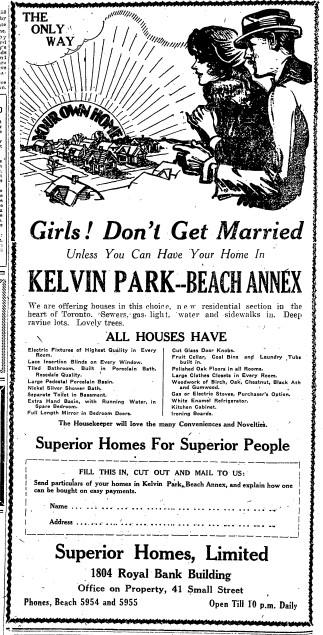
Girls Don’t Get Married, Toronto Star, April 15, 1922 In 1923 a housing boom started to fill the area with homes. But it was too late for Henry Pellatt. On August 17, 1923, the Home Bank suspended operations. The misstatements on the financial reports and other deceptive practices added up to a disaster for depositors. The Bank over-valued its collateral which was mostly real estate, and, on this shaky basis, loaned money. Home Bank’s liabilities far exceeded its assets. There was little actual cash in the Bank’s own account. Nearly $2 million dollars was loaned by the Home Bank to Toronto City Estates. Sir Henry Pellatt was both the President of Toronto City Estates, and a director of the Home Bank. Loans were secured by the Bank’s and its subsidiaries worthless stocks, as well as overvalued properties and mortgages.
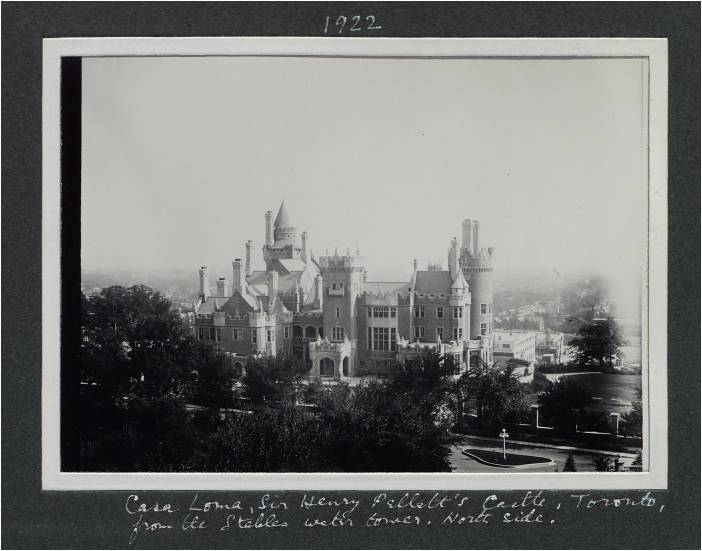
Casa Loma 1922 Sir Henry Pellatt was a broken man. His wife died, he lost his castle, and he ended his days living with his former chauffeur in a small Etobicoke home. F.B. Robins emerged unscathed and went on to be appointed as a diplomat representing Canada abroad.
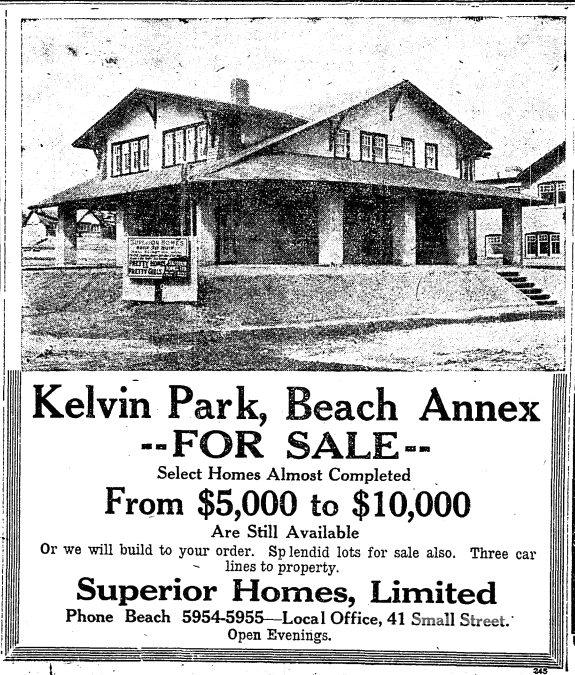
The show home, Superior Homes, Toronto Star, May 12, 1922 Providential Investment Company and Superior Homes took over the sale of Kelvin Park. Sales skyrocketed and houses went up to line the streets where they still stand today. Two show homes graced Kelvin Park: a classic Arts and Crafts bungalow and a hip-roofed home, known as “the Electric House”, used to showcase electric lighting, heating, and appliances. Sales of electric appliances and homes skyrocketed. Although the name Kelvin Park has been forgotten, the houses built from 1923 to 1929 still line the streets that lie where the greens and fairways of the old Toronto Golf Club were.

110 Kelvin Park north 1924 
Strathrobyn, Scottish Picnic, Mr. and Mrs. Robins. – June 7, 1924 
Kelvin Park then and now 
The show home in 2016, photo by J. Doucette -
February 25 in our past
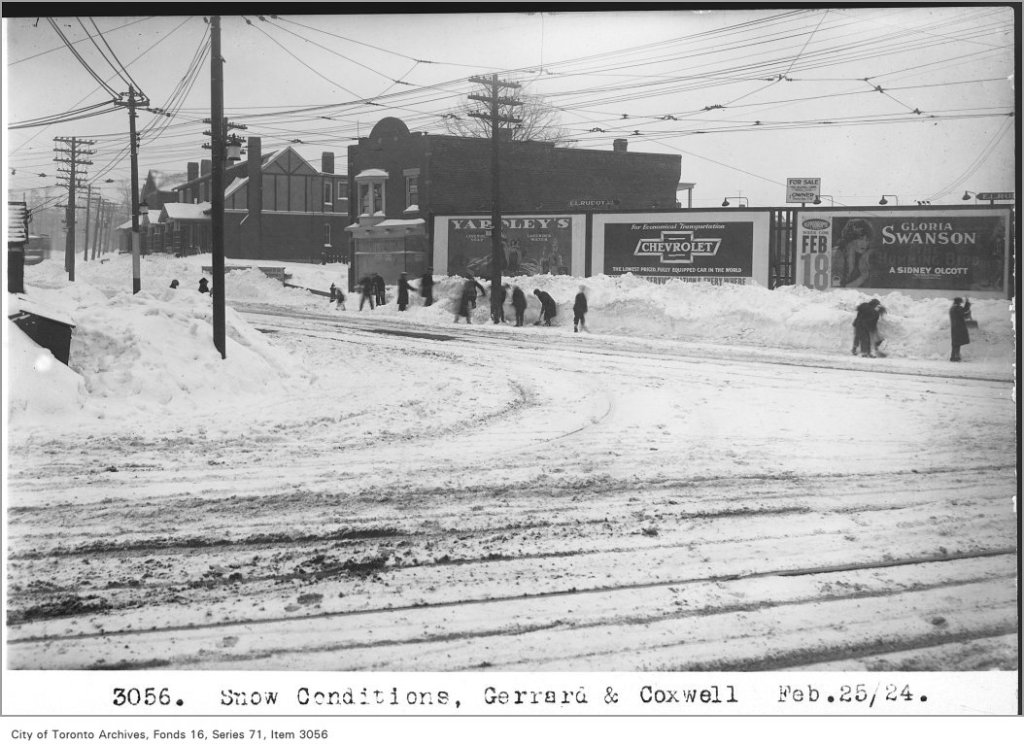
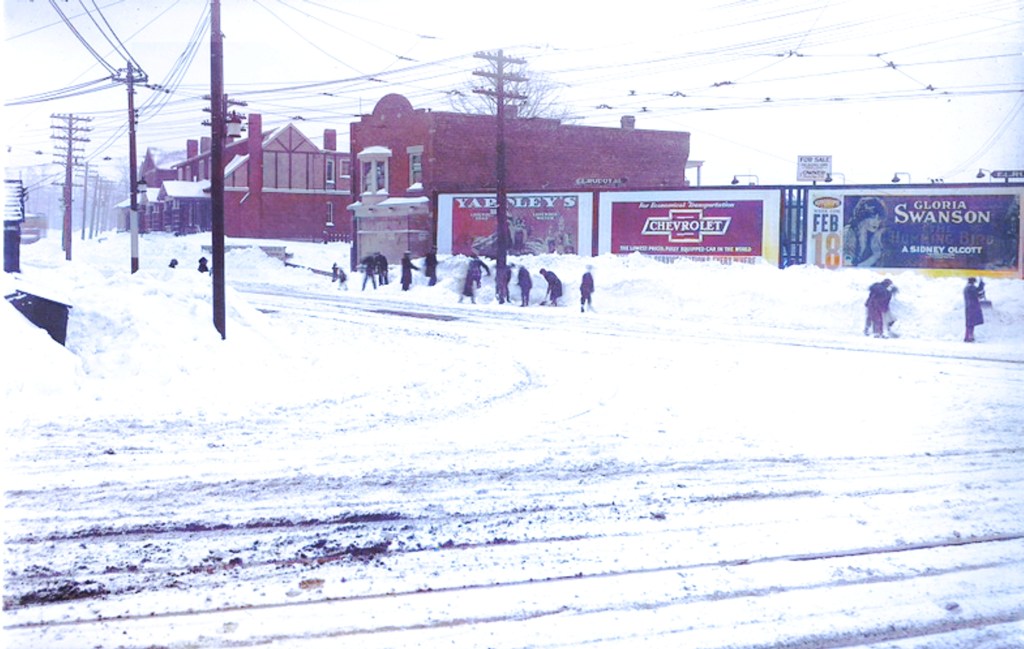
Snow conditions, Gerrard and Coxwell, Alfred J. Pearson Date: February 25, 1924 
Eureka Club, Globe, Feb. 25, 1924 The Eureka Club was founded at 6A Redwood.. The lane next to the apartment building is now Luella Price Lane for the founder of the Eureka Club. 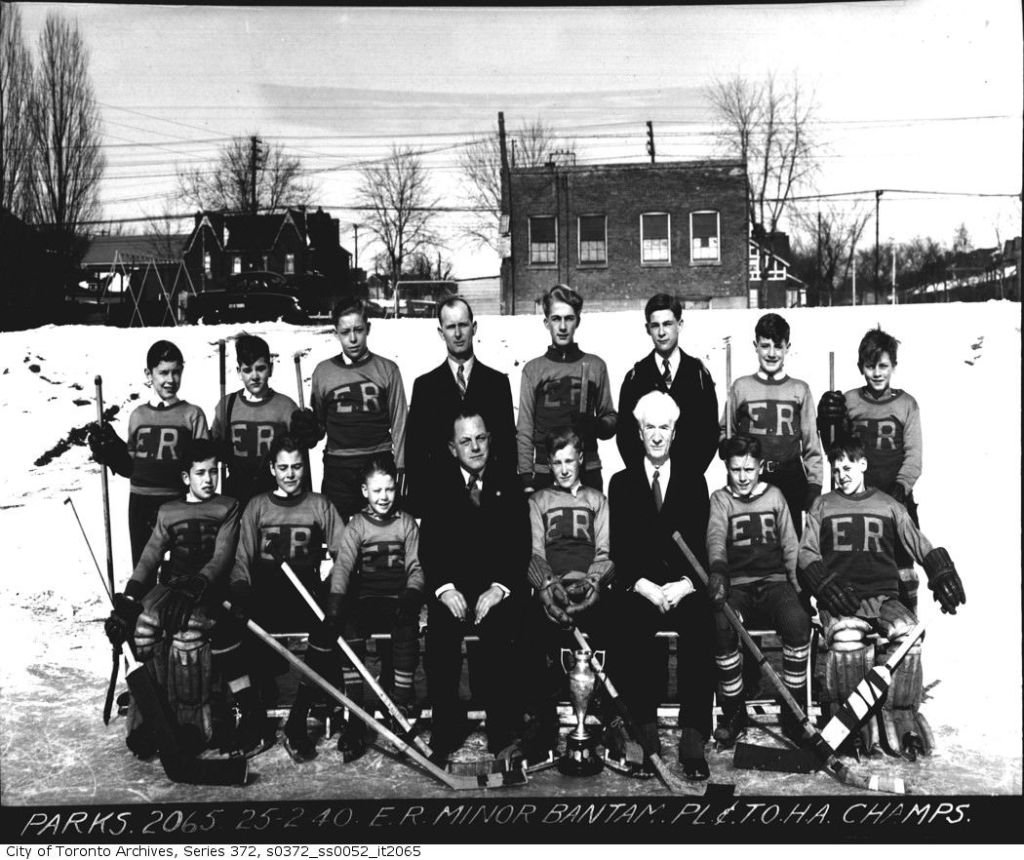
East Riverdale Minor Bantams Playground and T.O.H.A. Hockey Team February 25, 1940, City of Toronto Archives 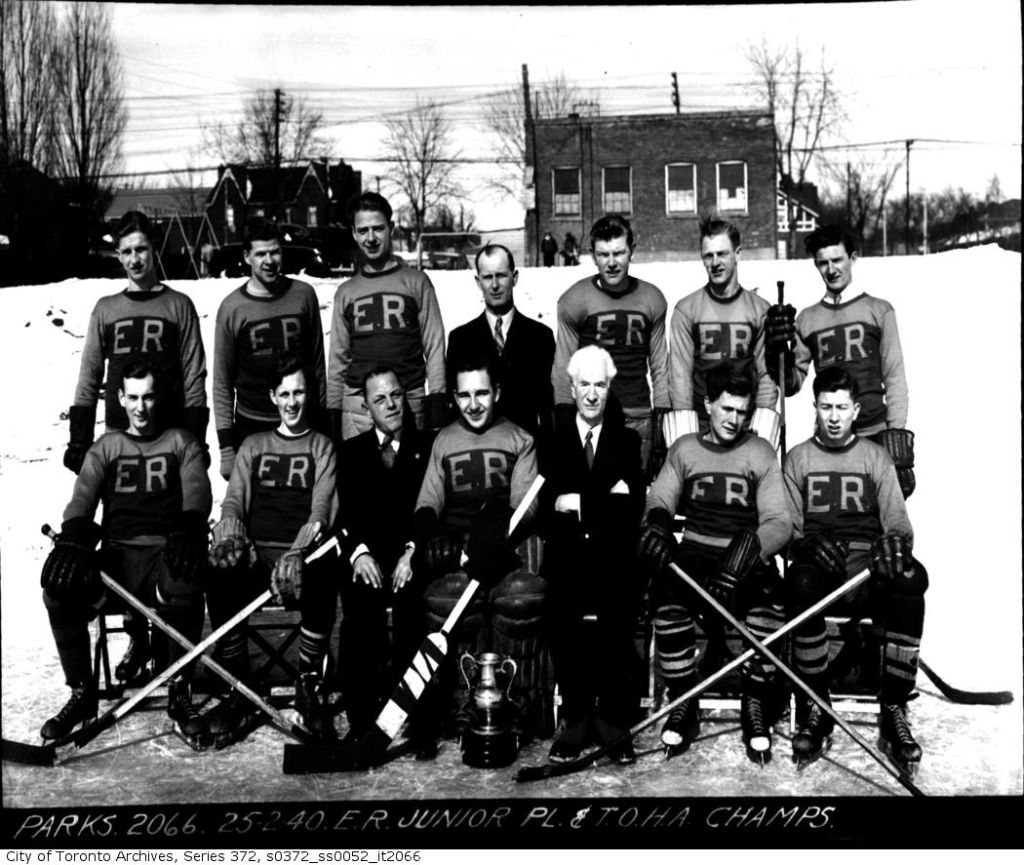
East Riverdale Playground Juniors — Playground and T.O.H.A. Champions February 25, 1940, City of Toronto Archives 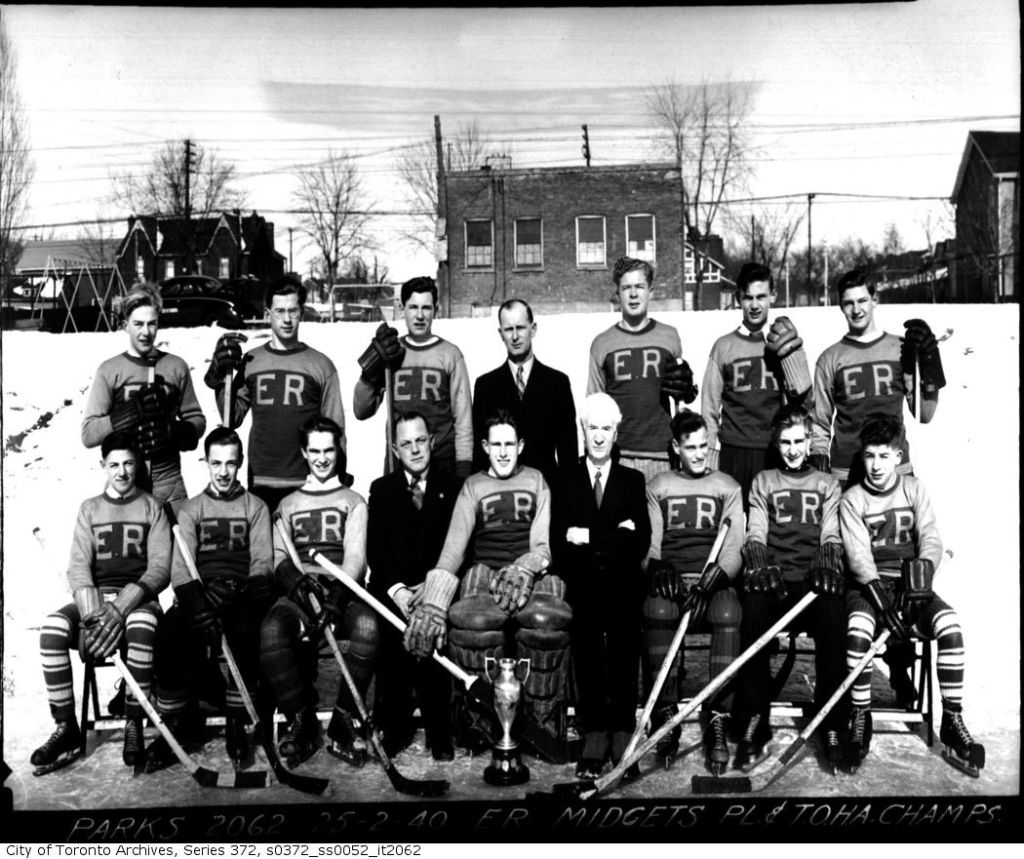
East Riverdale Playground Midgets — Playground and T.O.H.A. Champions February 25, 1940, City of Toronto Archives Snow Coxwell and Upper Gerrard, February 25, 1924 -
February 23 in the past: a visual tour of Gerrard Street from Greenwood to Coxwell
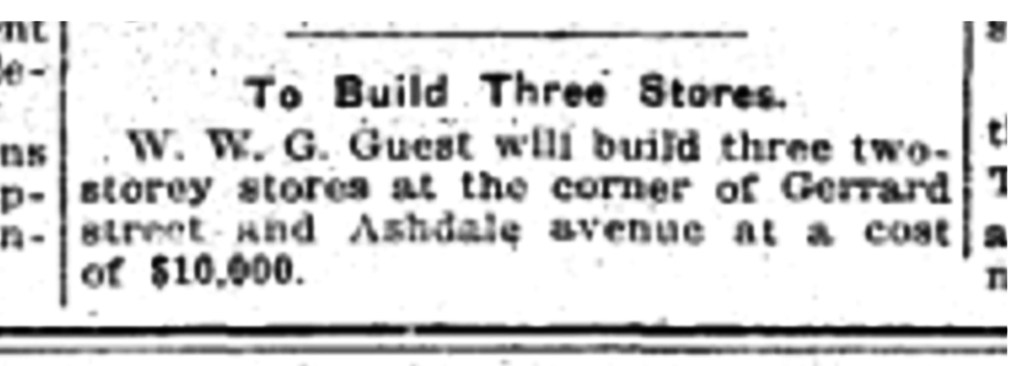
Three new stores Gerrard and Ashdale, Toronto Star, Feb. 23, 1913 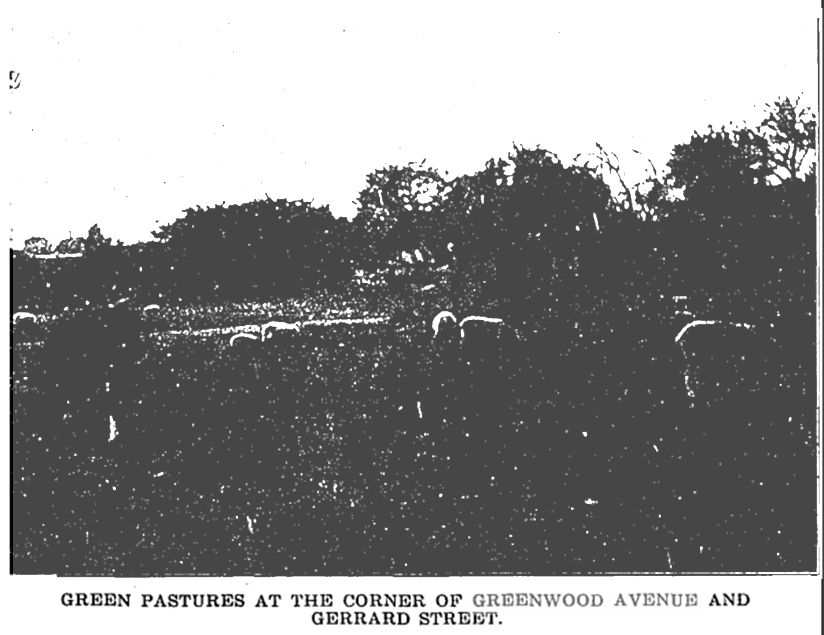
Sheep grazing Gerrard and Greenwood, Globe, June 4, 1909 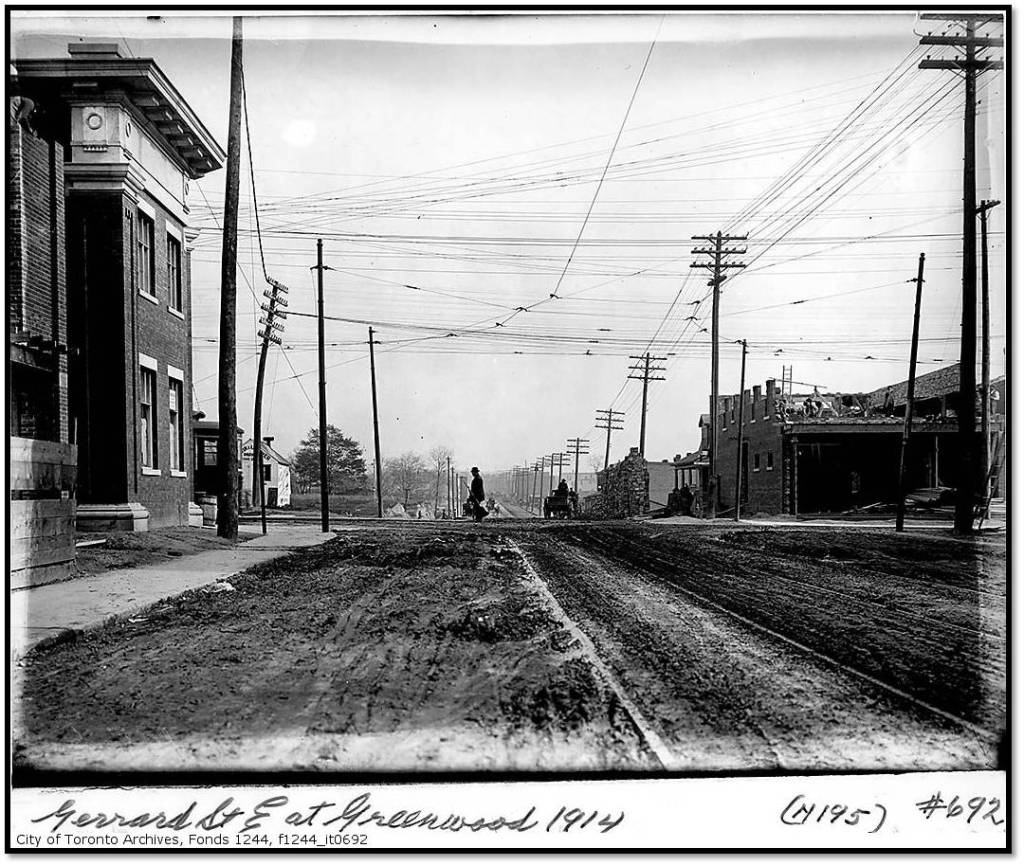
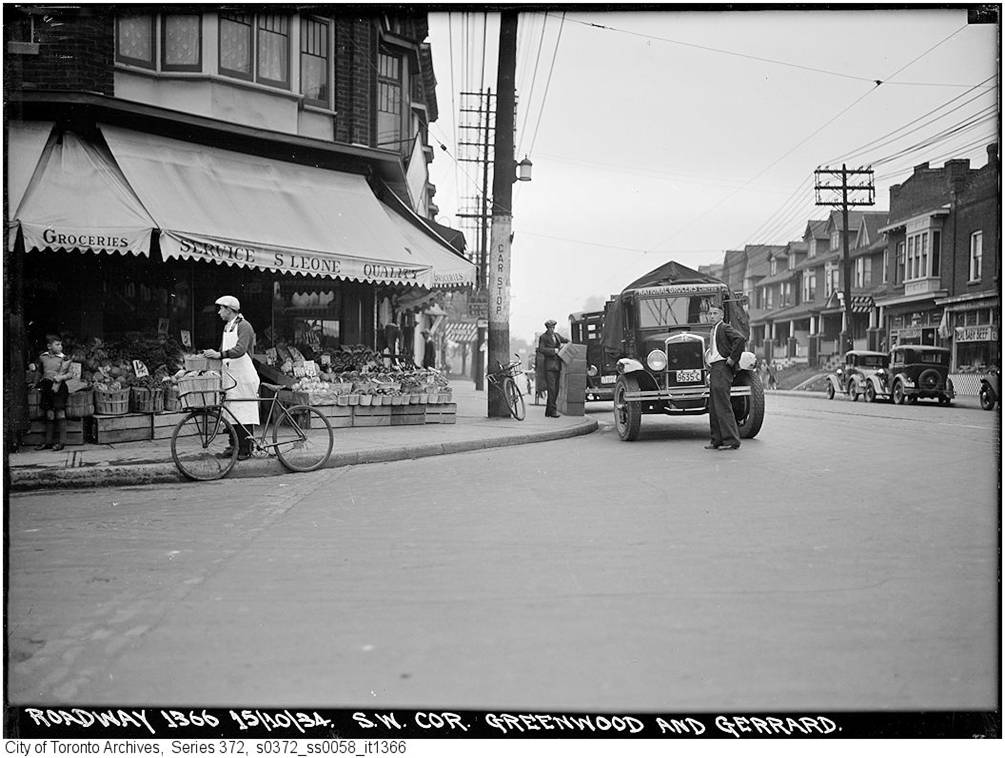

Douglas Fairbanks in “The Thief of Bagdad” – Ideal Bread Company Limited, Ideal Bread – Purity Flour, two billboards and a painted wall advertisement located on the south side of Gerrard Street East opposite Redwood Avenue. View is looking south-west, showing the south side of Gerrard Street East. opposite the Redwood Theatre 
Looking west on Gerrard towards Greenwood between 1920 and 1926, advertisement on the side of a building. 
Gerrard Street east of Greenwood Avenue 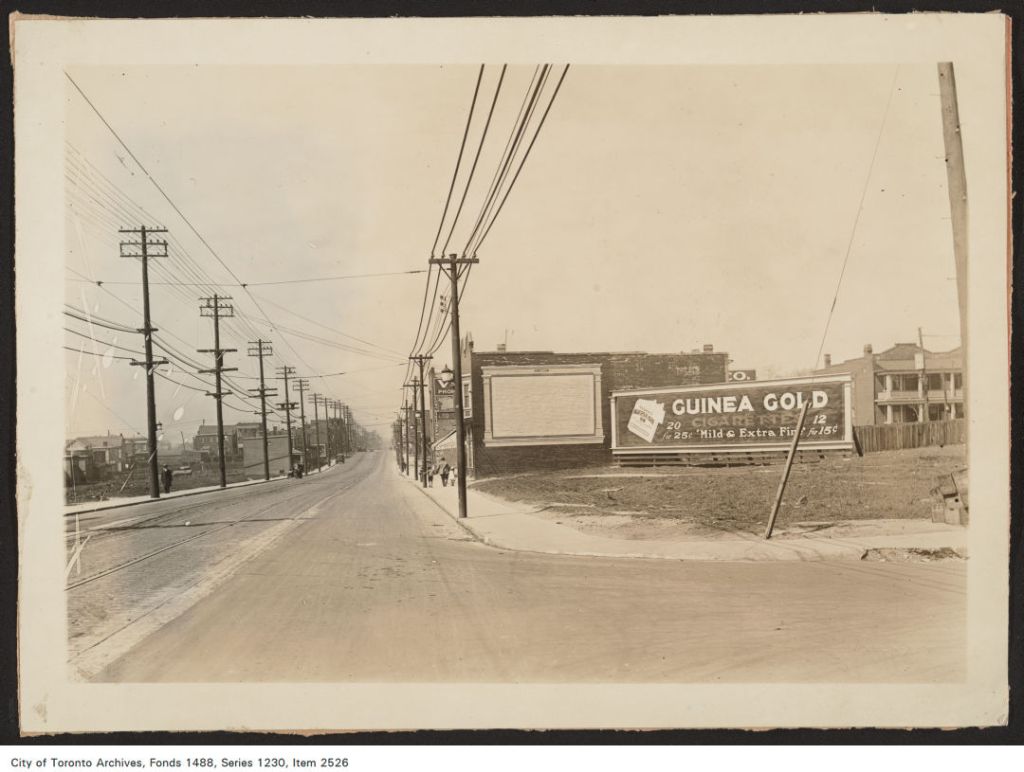
Looking west on Gerrard towards Greenwood from Woodfield Road, between 1920 and 1926, advertisement on the side of a building. The apartments on Highfield Road (right of photo) are distinctive. 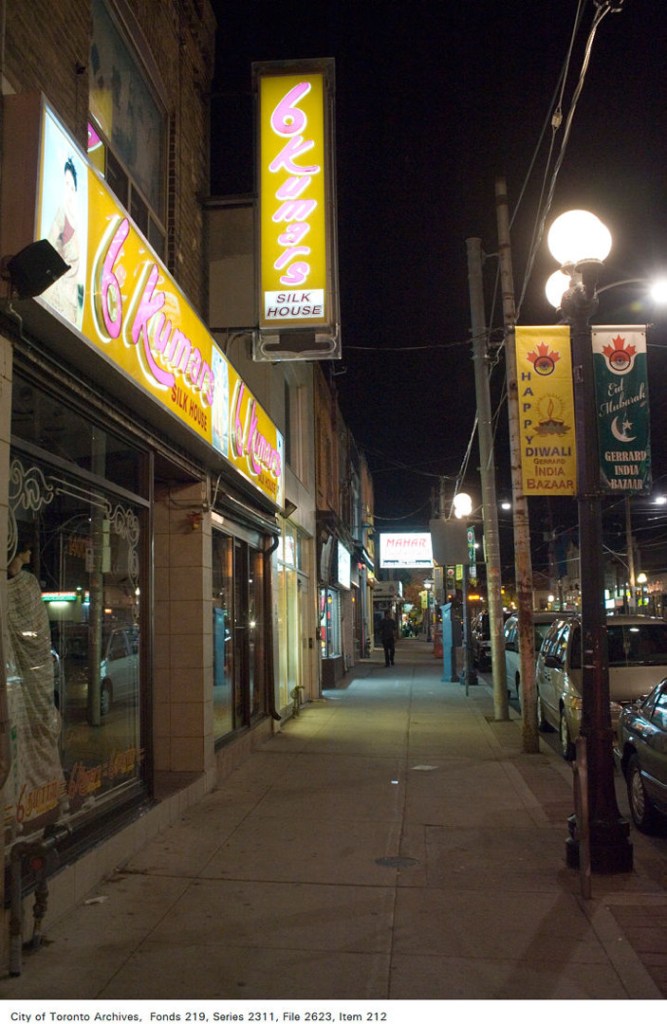
Little India streetscape, Gerrard Street East, north side, looking east near Woodfield Road – October 10, 2008 
Morley Avenue (Woodfield Road) and Gerrard St fill, April 28, 1912 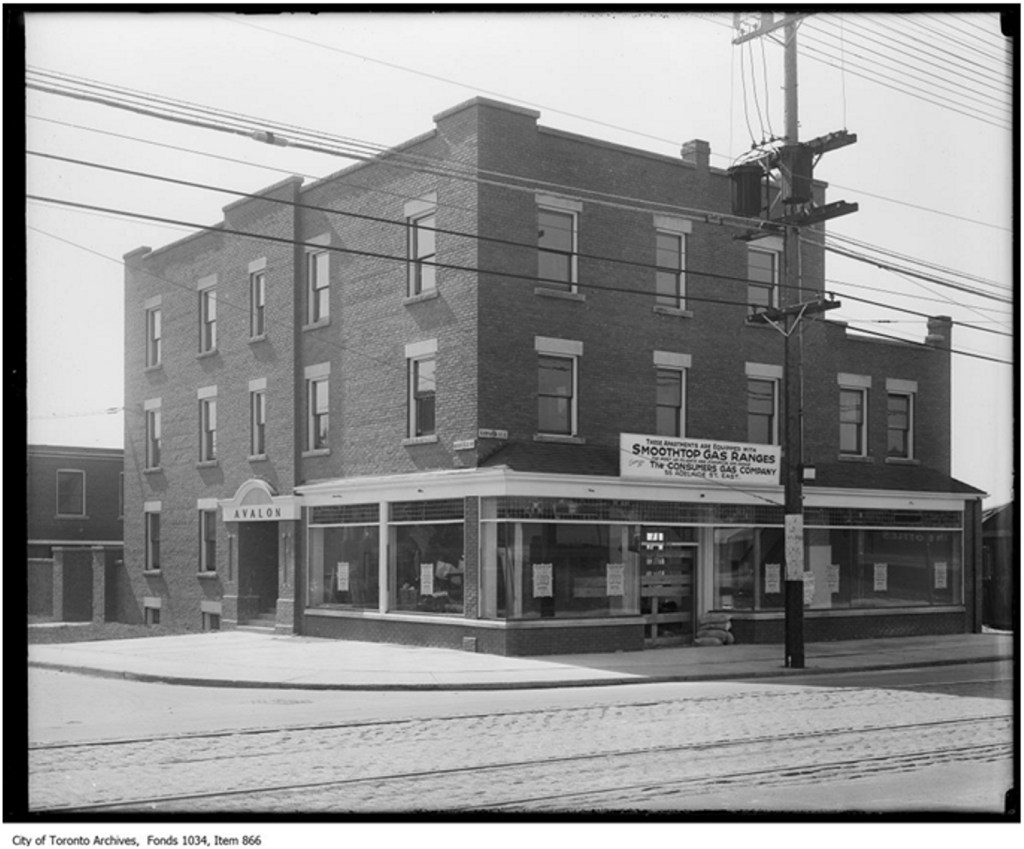
Southwest corner of Gerrard and Woodfield 
Hamilton’s Hardware, Gerrard St. E., s. side, e. of Hiawatha Rd., 1920, Shows Mr. & Mrs. John Hamilton, with son Jim 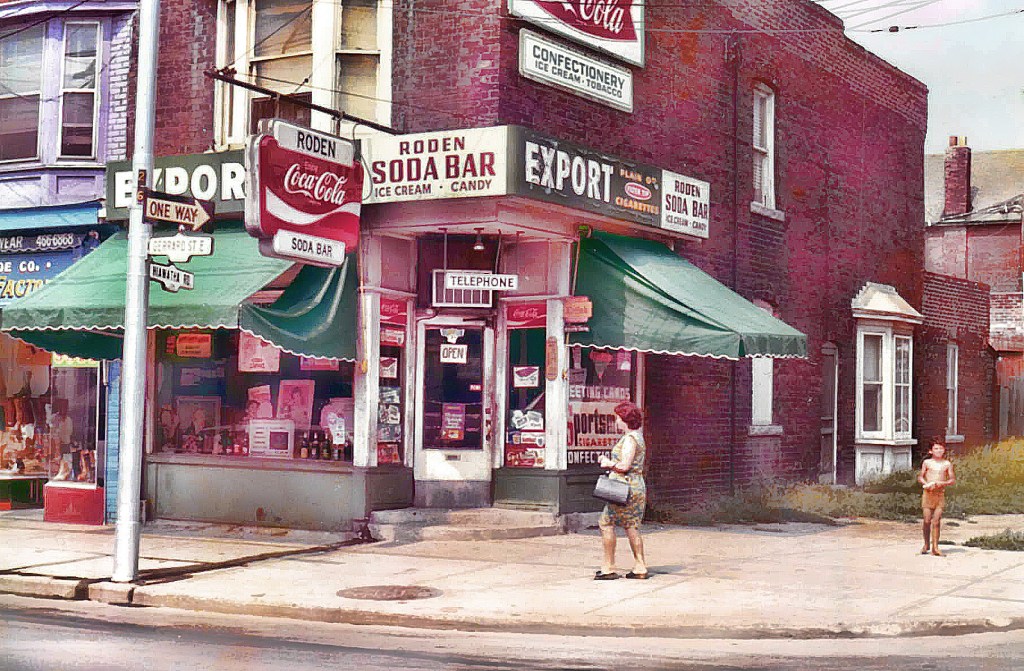
Gerrard and Hiawatha 1960s 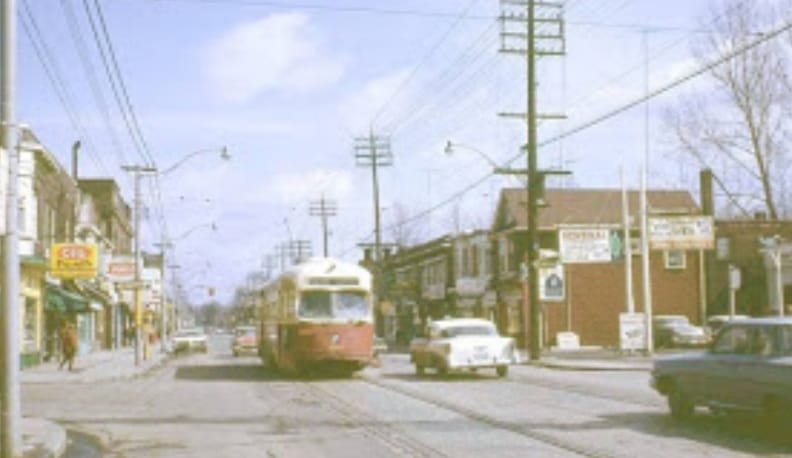
Gerrard & Hiawatha ca 1966 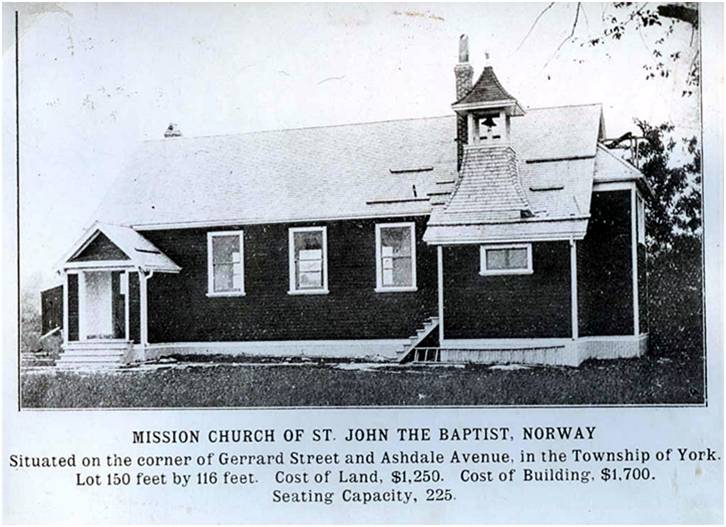
St. Monica’s Church, Ashdale and Gerard (where the library is) 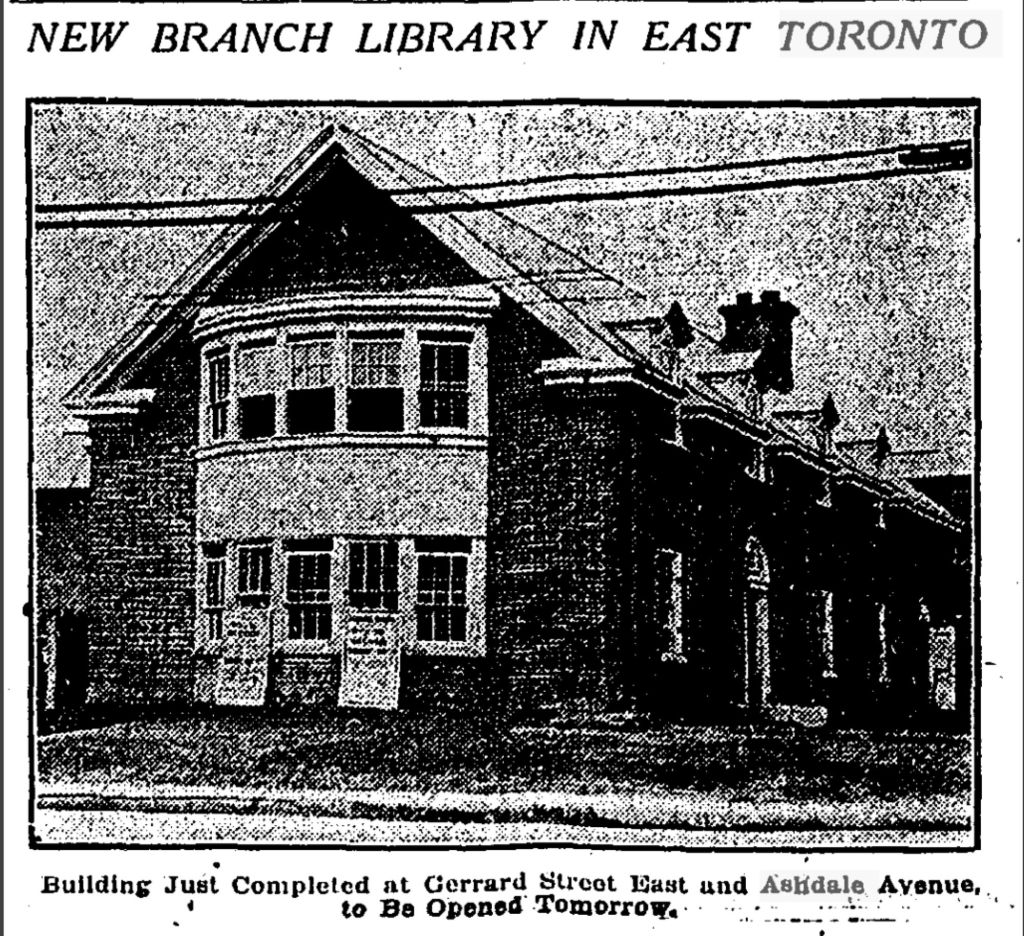
Gerrard Ashdale library, Globe, May 14, 1924 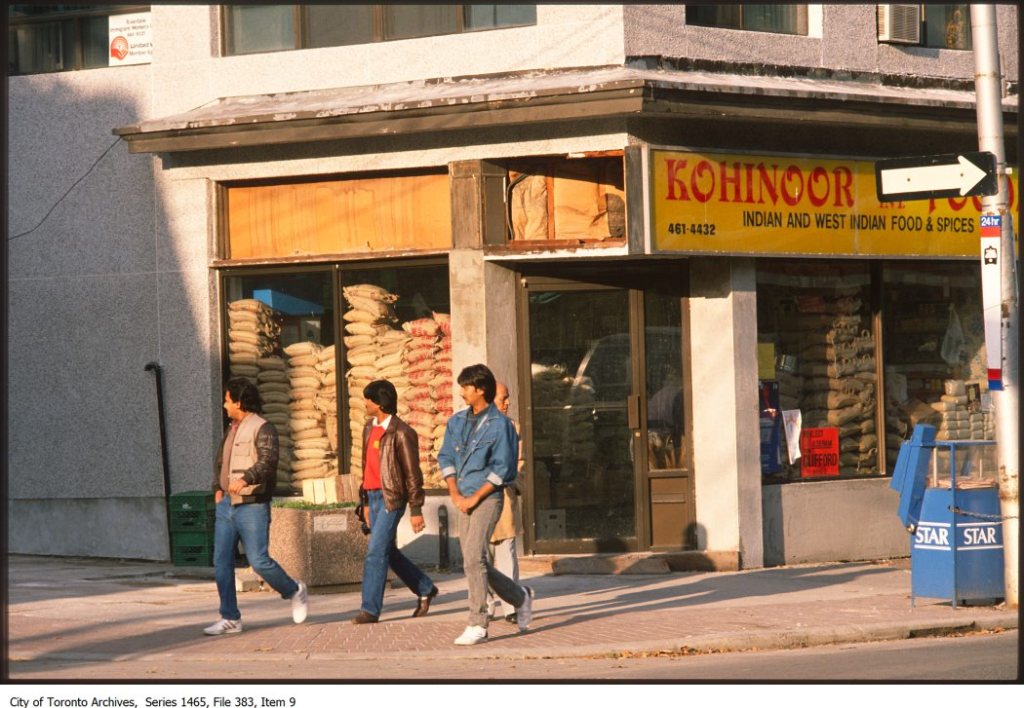
North-east corner of Gerrard and Ashdale – [between 1975 and 1988] 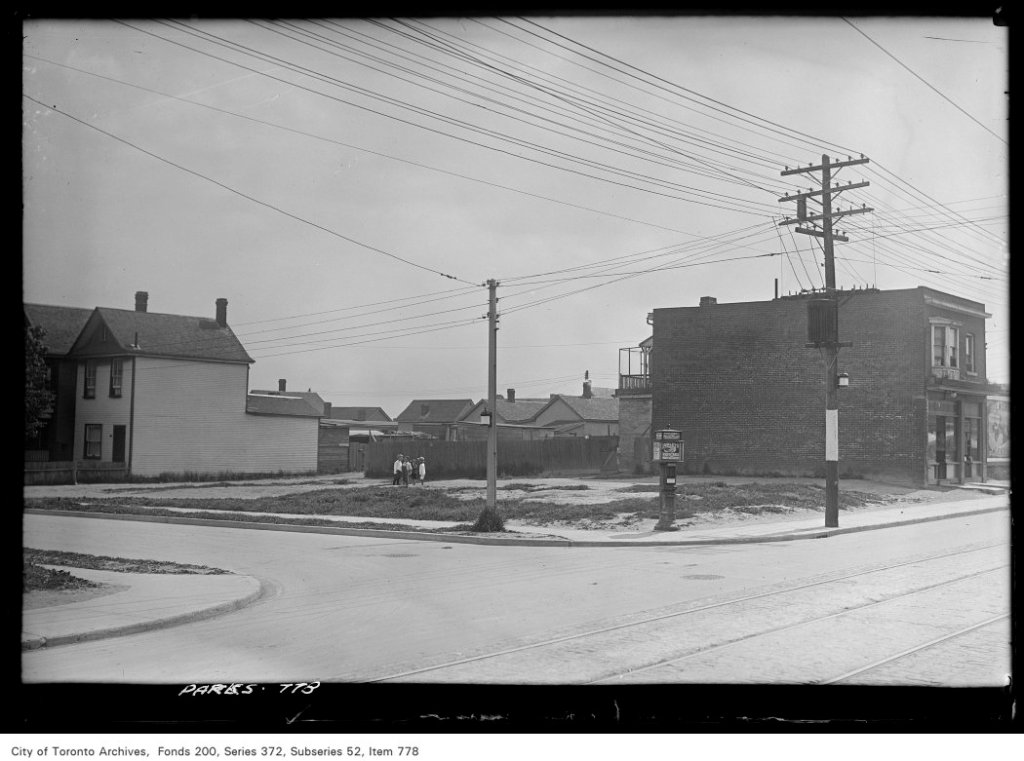
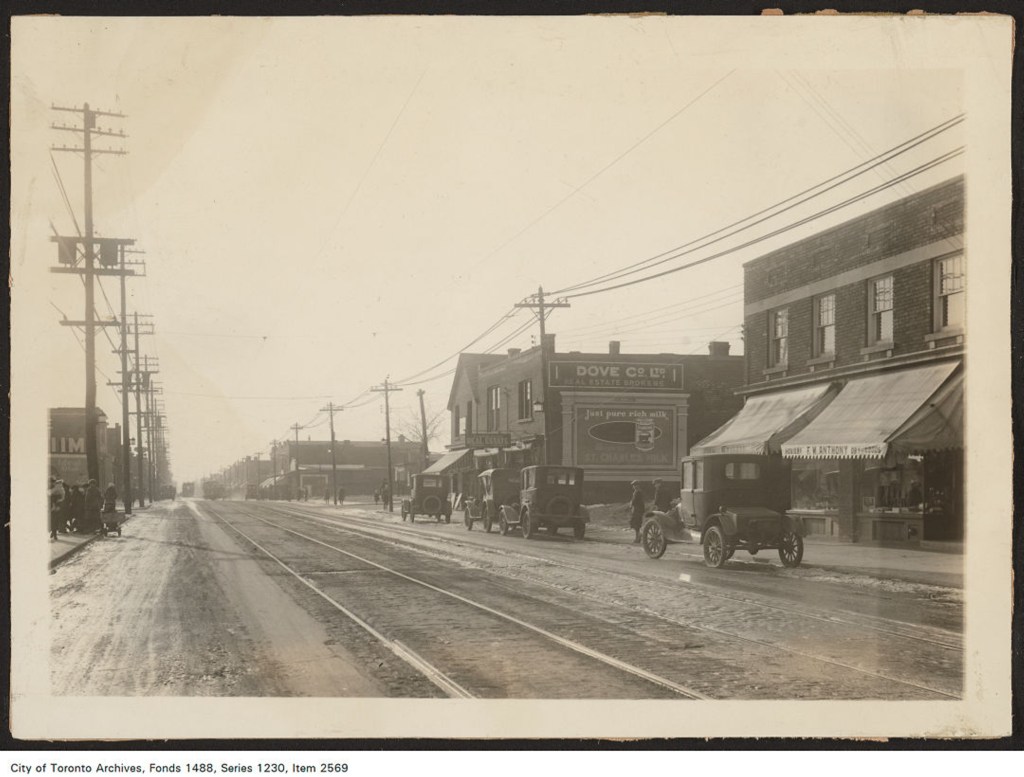
Site of the Black Pony, Gerrard Street and Rhodes Avenue, south west corner, June 16, 1919 Creator: Goss, Arthur, 1881-1940 Ad T.F. Dove and Co Ltd, Real Estate Brokers, 1614 Gerrard St E, just west of Coxwell Ave. View is looking west along Gerrard Street 
-

February 21 in local history: Fires
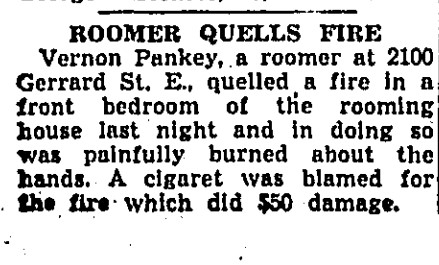
Vernon Pankey injured, fire rooming house, 2100 Gerrard St E, Globe and Mail, February 21, 1948 As I research the history of the neighbourhood from the beginning of the 20th century when the Ashbridge’s and Small estates were broken up for housing, I’m struck by just how many fires there were. This makes sense at a time when many houses were tarpaper shacks, built closely together in Shacktowns and even more substantial houses were had roofs of wooden shingles. Coal and wood fueled furnaces and chimney fires were common. So I’m posting some of those fires street by street. I start with Vernon Pankey on 2100 Gerrard Street East, injured in a fire on February 21, 1948, four years before I was born.

I am focusing on residential, business and some small factory fires. Brickyard fires were so common that they deserve a post of their own.
William “Stinky” Harris’s glue factory at Coxwell and Danforth was susceptible to fire as fats and oils rendered from animal carcasses are very inflammable. Sometimes our neighbourhood even appeared in the Big Apple news: Losses by Fire. Toronto, Ontario, Sept. 22—Harris’s glue factory, on Danforth Avenue, was completely destroyed by fire this morning. Loss,$25,000.00; partially insured. New York Times, September 23, 1900.

Harris Glue Factory Fire, Danforth and Coxwell, The Gazette, Sept. 24, 1900 The glue factory on Danforth Road burned down on September 22, 1900, causing about $6,000 worth of damage, a considerable sum at the time. The factory was a three-story brick building, 125 feet long and 60 feet wide, just outside the city limits, on “glebe land”. About 40 men were thrown out of work by the fire. Toronto Star, Saturday, September 22, 1900
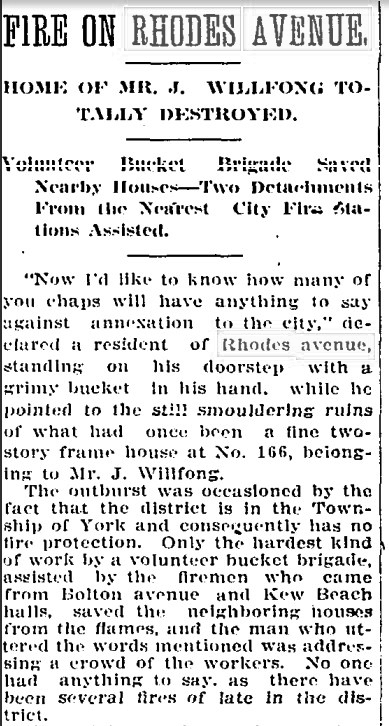


Fire, 1597 Gerrard St E at Coxwell, Globe, April 18, 1910 
Fire, 1600 Gerrard St. East, Globe, May 12, 1913 WIllfong fire, Globe, January 4, 1909
At the time Erie Terrace (later renamed Craven Road) was too narrow for the City’s fire trucks to drive on. So this narrow street, known as “Bootlegger’s Alley”, with shacks packed in side by side was particularly vulnerable to conflagrations that could quickly spread from house to house.

Fire 47 and 49 Carven Road, Monetary Times, Vol. 64, No. 4, p 52 Earl Terrace is a typo. This was Erie Terrace. 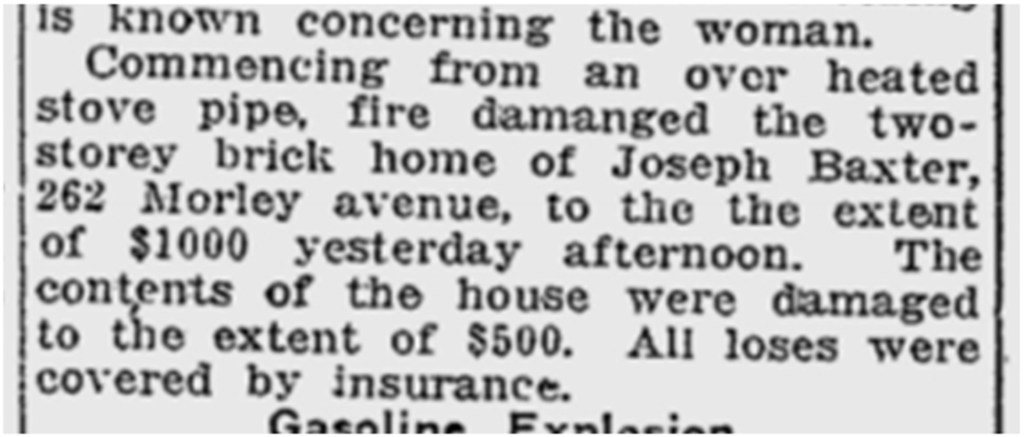
Fire 262 Morley Ave, south of Gerrard St E, Toronto World, January 19, 1915 
Fire, 50 Rhodes Ave., Monetary Times, May 28, 1915 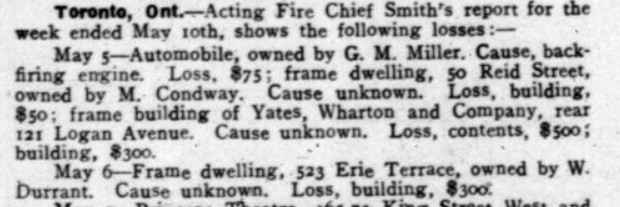
Fire, 523 Craven Rd., Monetary Times, May 28, 1915 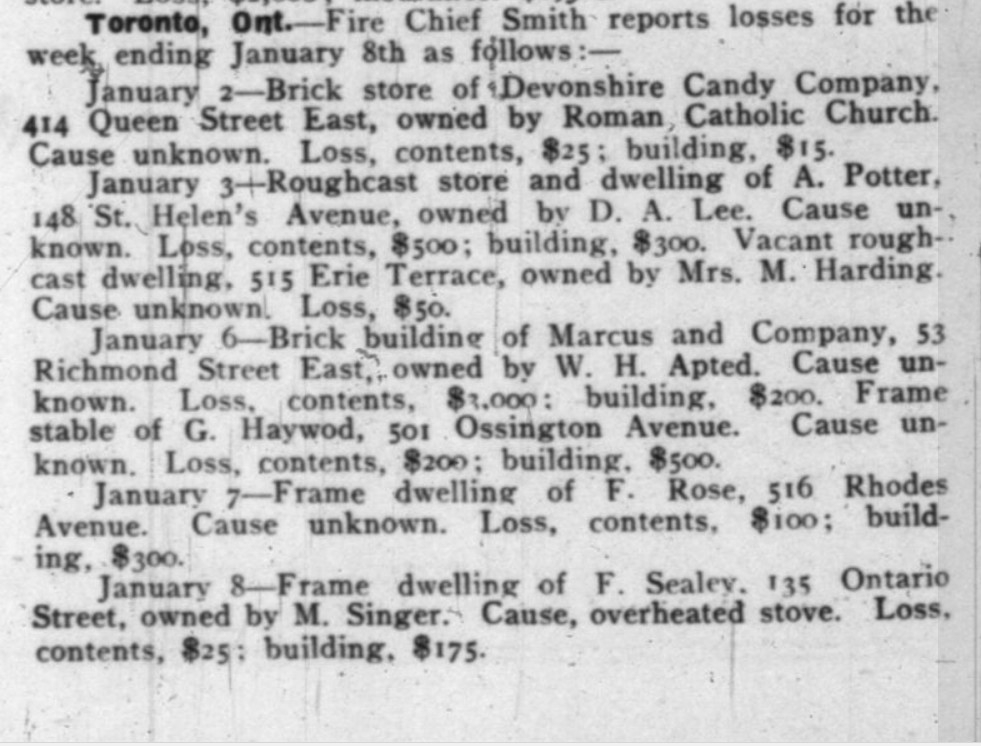
515 Craven Rd, Monetary Times, January 14, 1916 
Fire, 1418 Gerrard St E at Hiawatha, Globe, March 2, 1917 
Fire 193 Craven Rd, Toronto Star, March 15, 1917 
Fire, 335 Rhodes Ave, between Fairford and Gerrard, Toronto Star, Feb. 2, 1918 
Streetcar on fire Upper Gerrard and Gainsborough, Toronto Star, Feb. 9, 1918 Brush and grass fires were common. Embers and coals flying off of the trains started many such blazes, but people also set fires to clear weeds and overgrowth as well as leaves in autumn. Sometimes they got out of hand. As well children playing with matches and the occasional arsonist played a role.

Grass fire Coxwell and Gerrard, Toronto Star, April 15, 1918 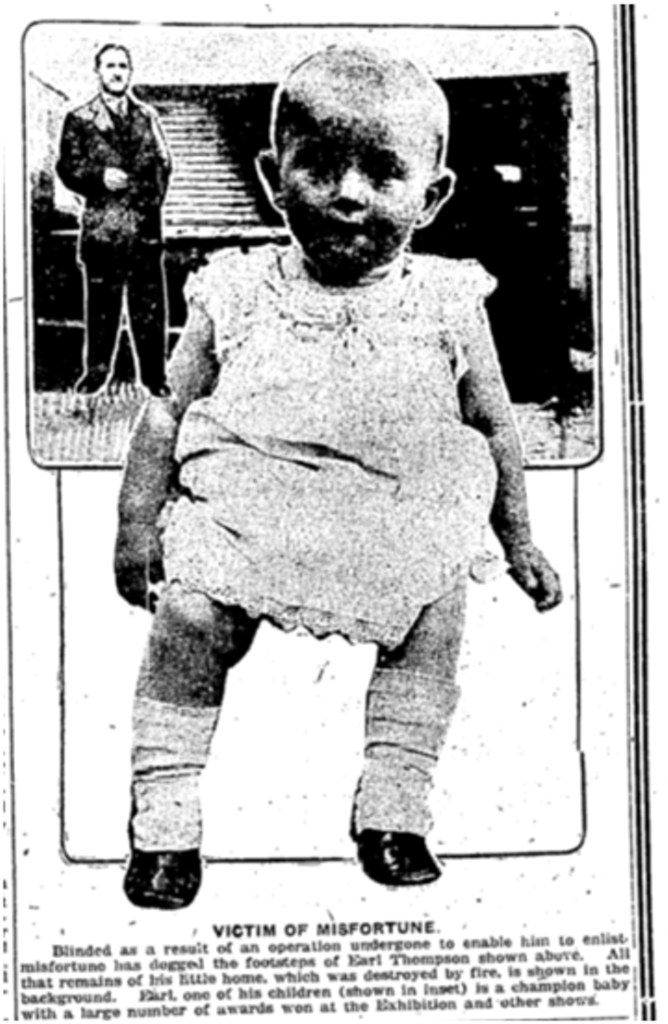
Thompson fire, Craven Road, Toronto Star, January 15, 1920 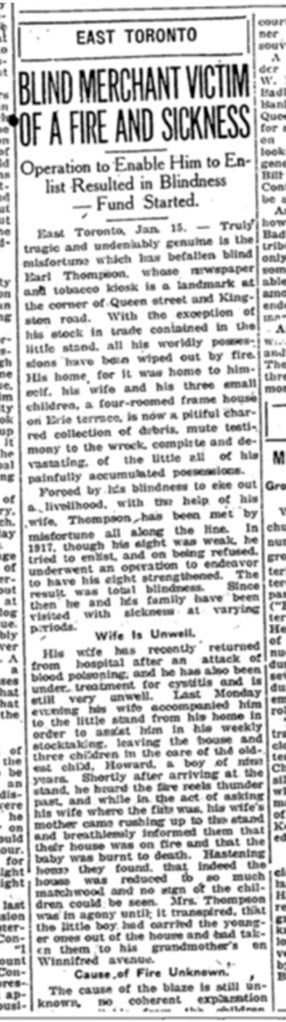
Thompson fire, Craven Road, Toronto Star, January 15, 1920 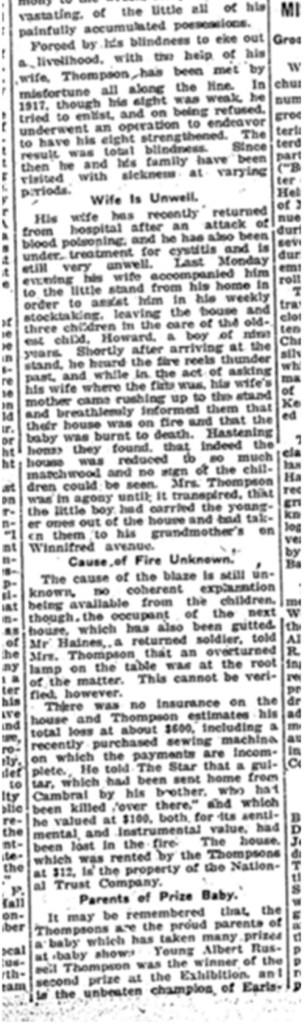
raven Road, Toronto Star, January 15, 1920 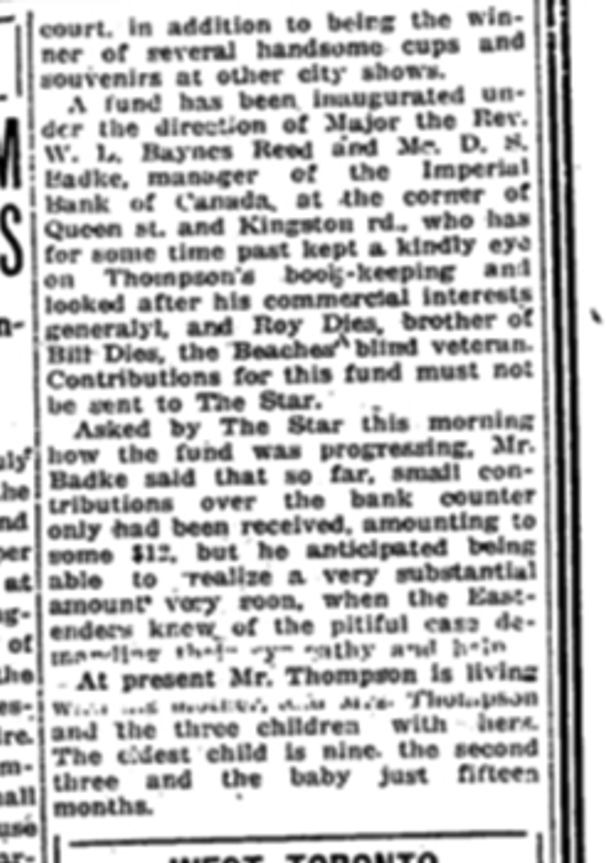
raven Road, Toronto Star, January 15, 1920 
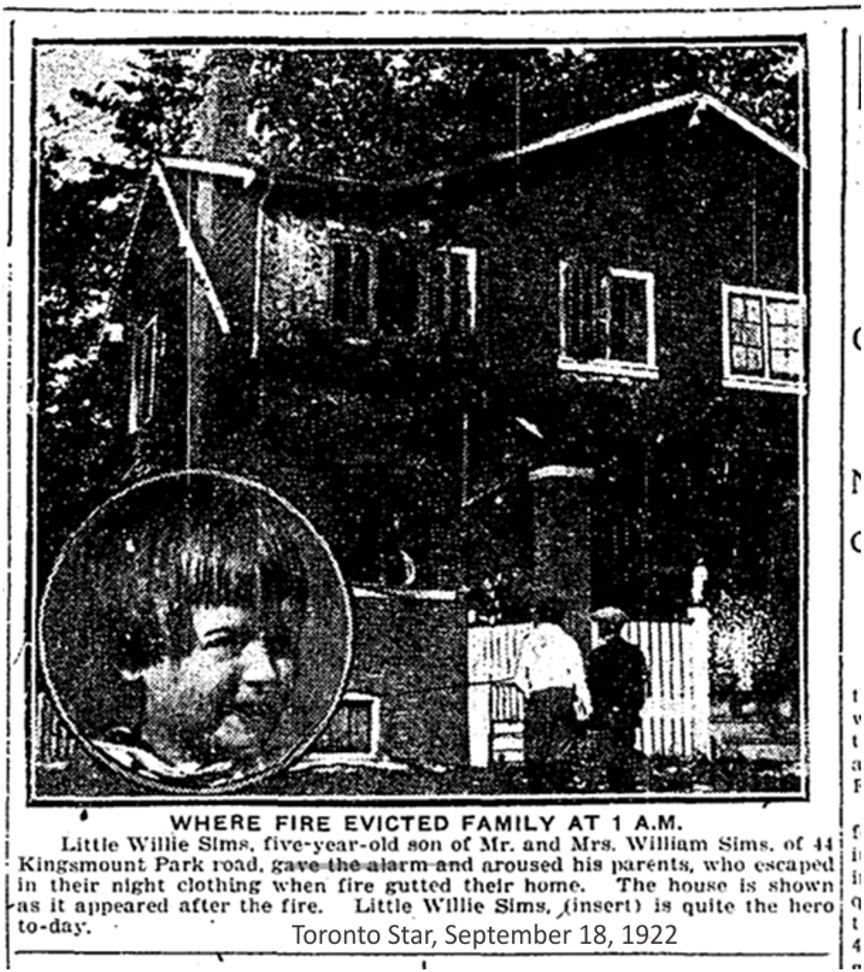
House fire, 44 Kingsmount Park Rd, Toronto Star, September 18, 1922 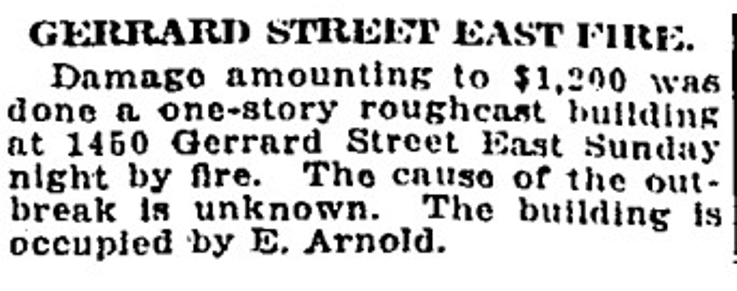
Fire, 1450 Gerrard St E at Craven Rd, Globe, October 13, 1924 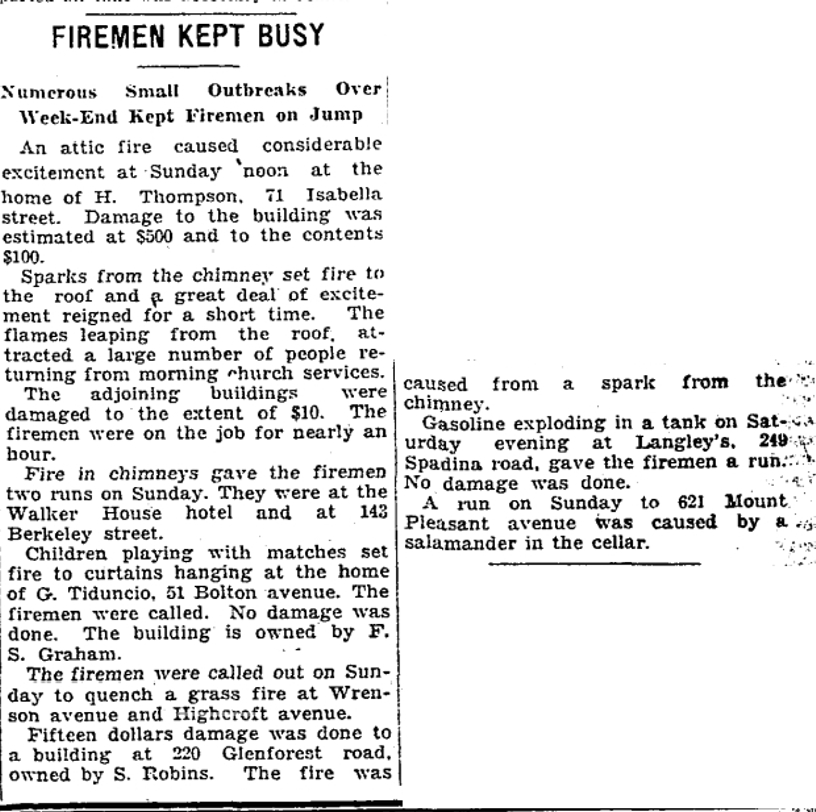
Grass fire, Wrenson Road and Highcroft Ave., Toronto Star, March 19, 1926 Belle Ewart was an ice company that used teams of horses to deliver ice across the city. Stables were and still are very vulnerable to fires with lots of hay and straw. Sometimes in hot weather fires even started by spontaneous combustion. And horses are notorious for panicking in a fire and need expert help to get out or they will run back into the flames. A barn or stable makes a death trap for livestock, horrifying to watch.

Fire Belle Ewart stables, 433 Gainsborough Road, Globe, June 1, 1927 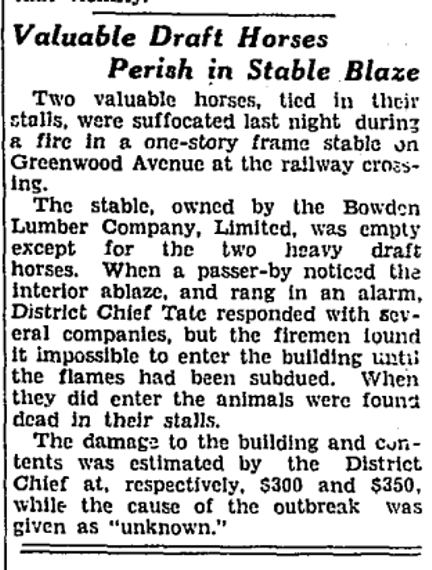
Fire, Bowdens Lumberyard, Greenwood and Walpole, Globe, January 9, 1930 
Fire at Earl Haig School, February 18, 1932 
Fire, Hollywood Crescent, Toronto Star, January 25, 1936 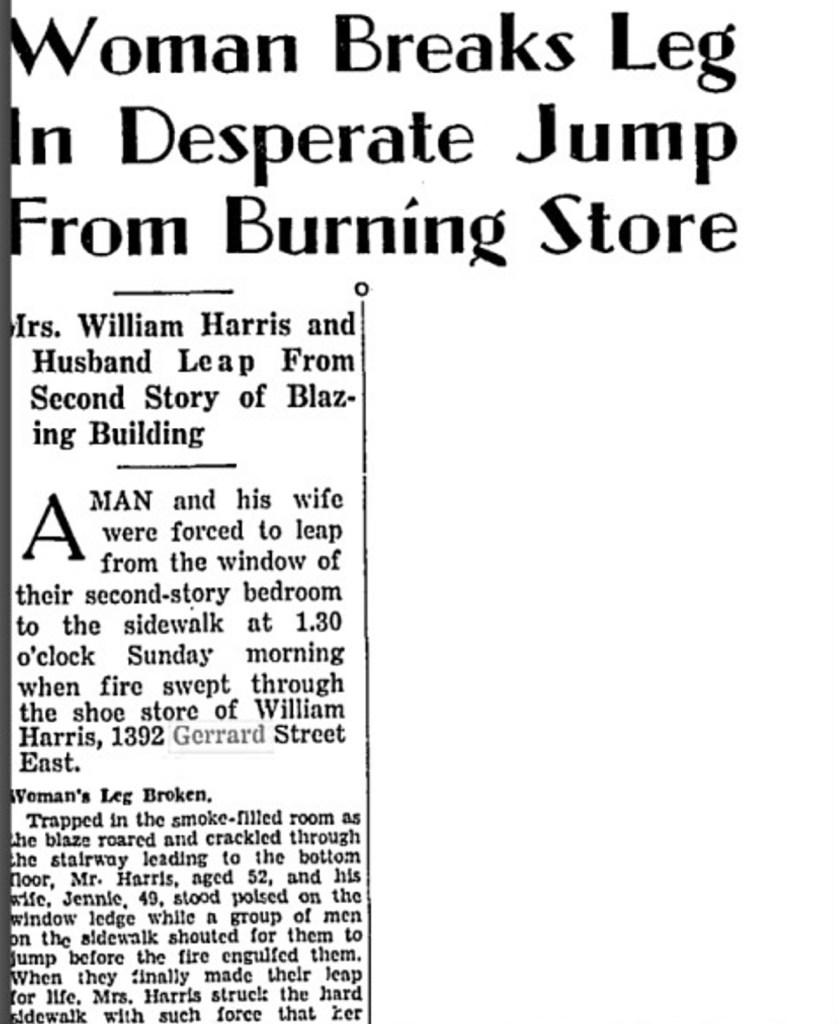
Fire, Harris Shoe Store 1392 Gerrard St E at Woodfield, Globe, February 24, 1936 1 
Fire, Harris Shoe Store 1392 Gerrard St E at Woodfield, Globe, February 24, 1936 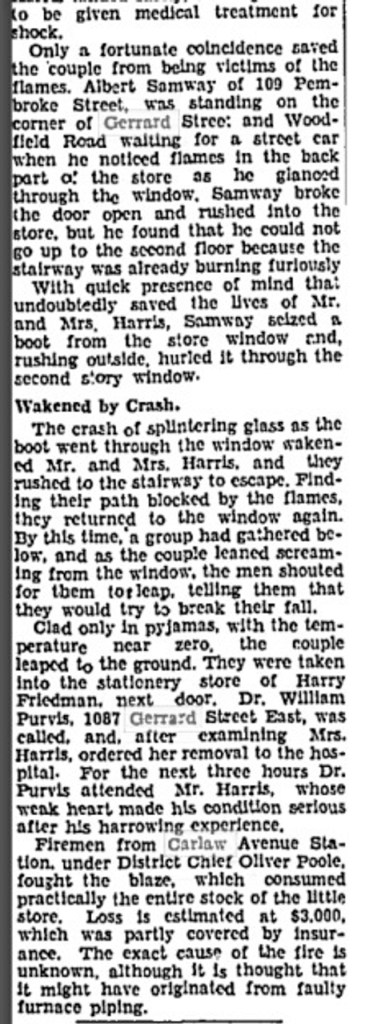
Fire, Harris Shoe Store 1392 Gerrard St E at Woodfield, Globe, February 24, 1936 
Fire, 1622 Gerrard St E, Dr. Braund’s office damaged, Globe and Mail, January 7, 1941 Below: Fire at the Acme Ruler Company, Globe and Mail, June 11, 1942
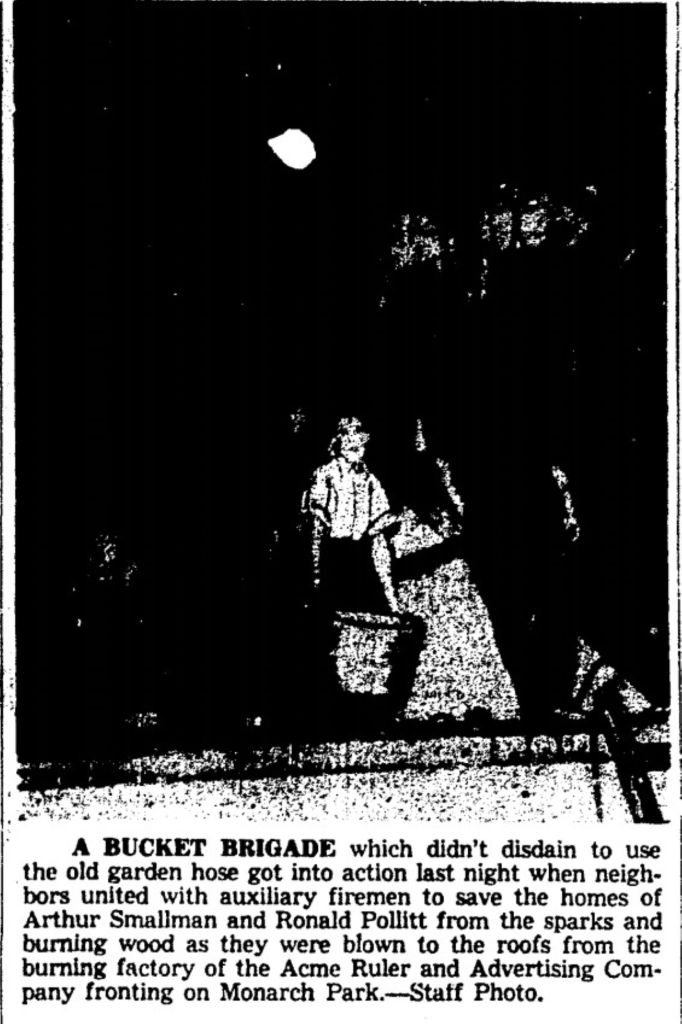


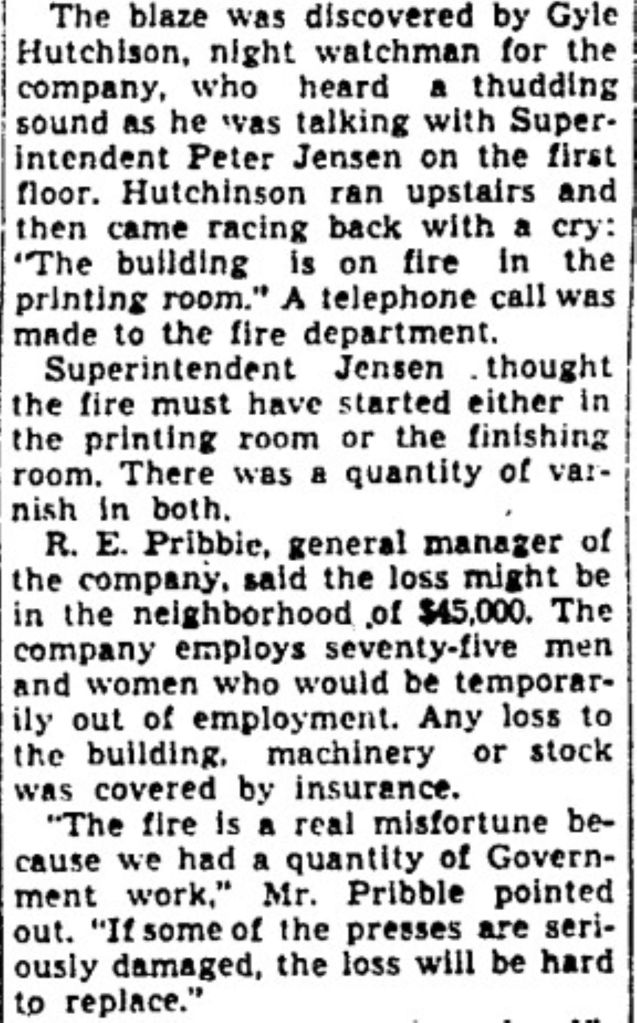

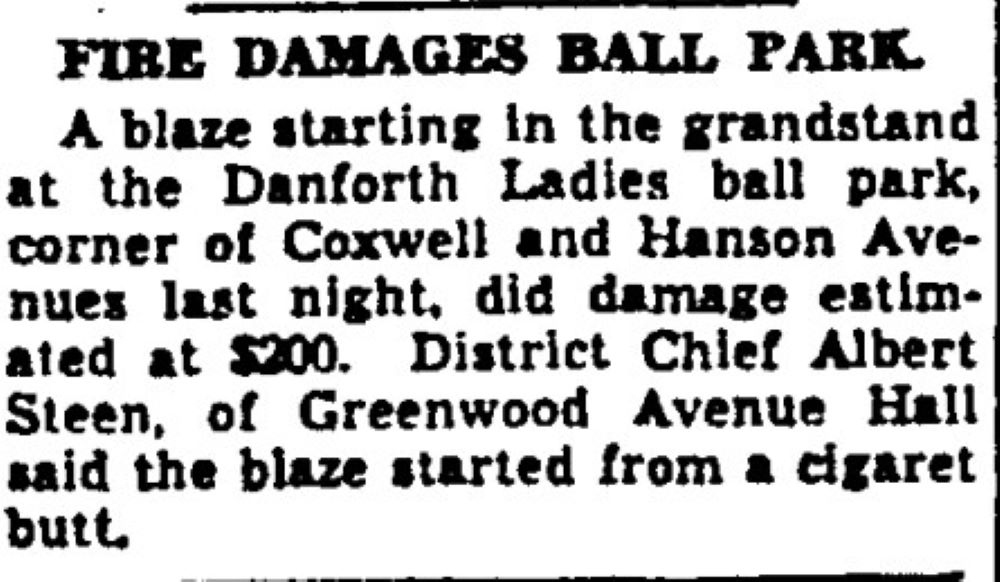
Fire Ladies Ball Park, Coxwell Stadium, Globe and Mail, August 22, 1942 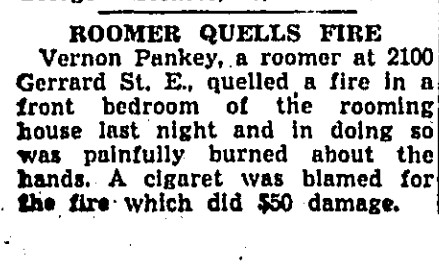
Vernon Pankey injured, fire rooming house, 2100 Gerrard St E, Globe and Mail, February 21, 1948 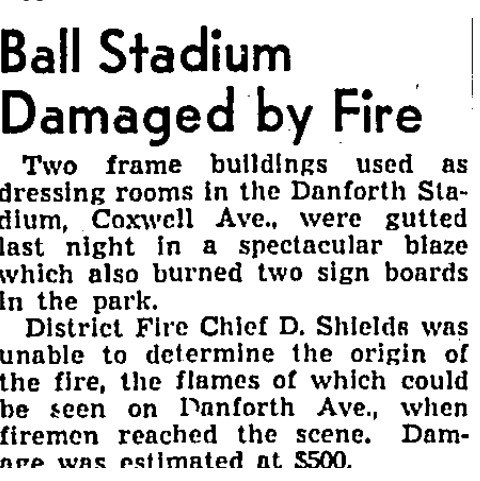
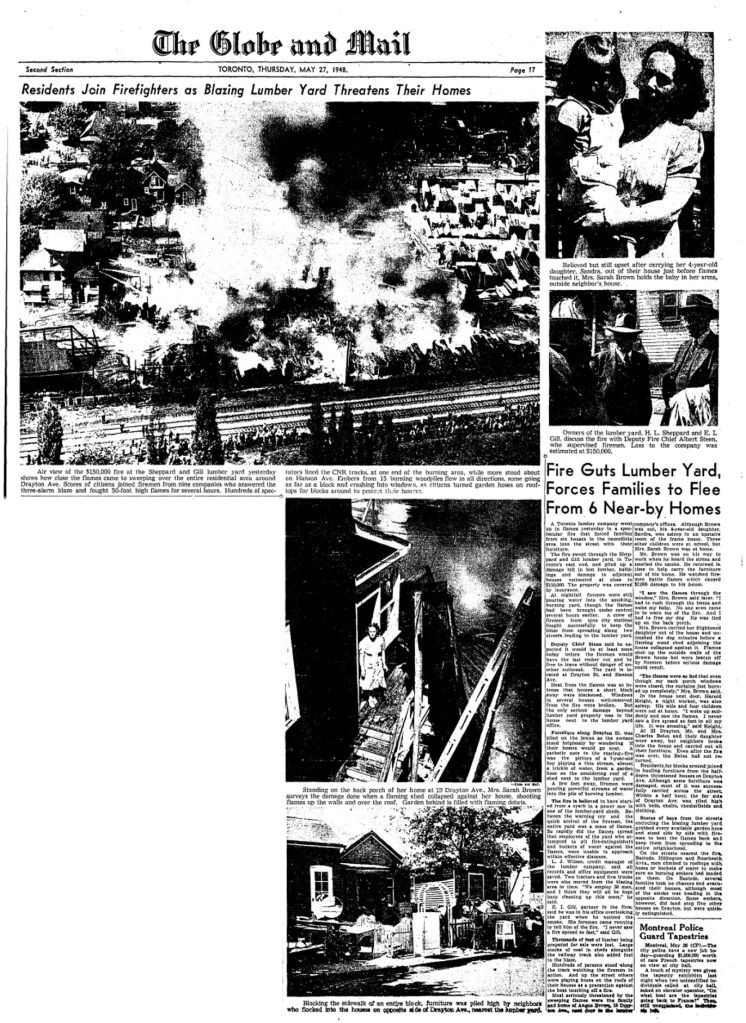
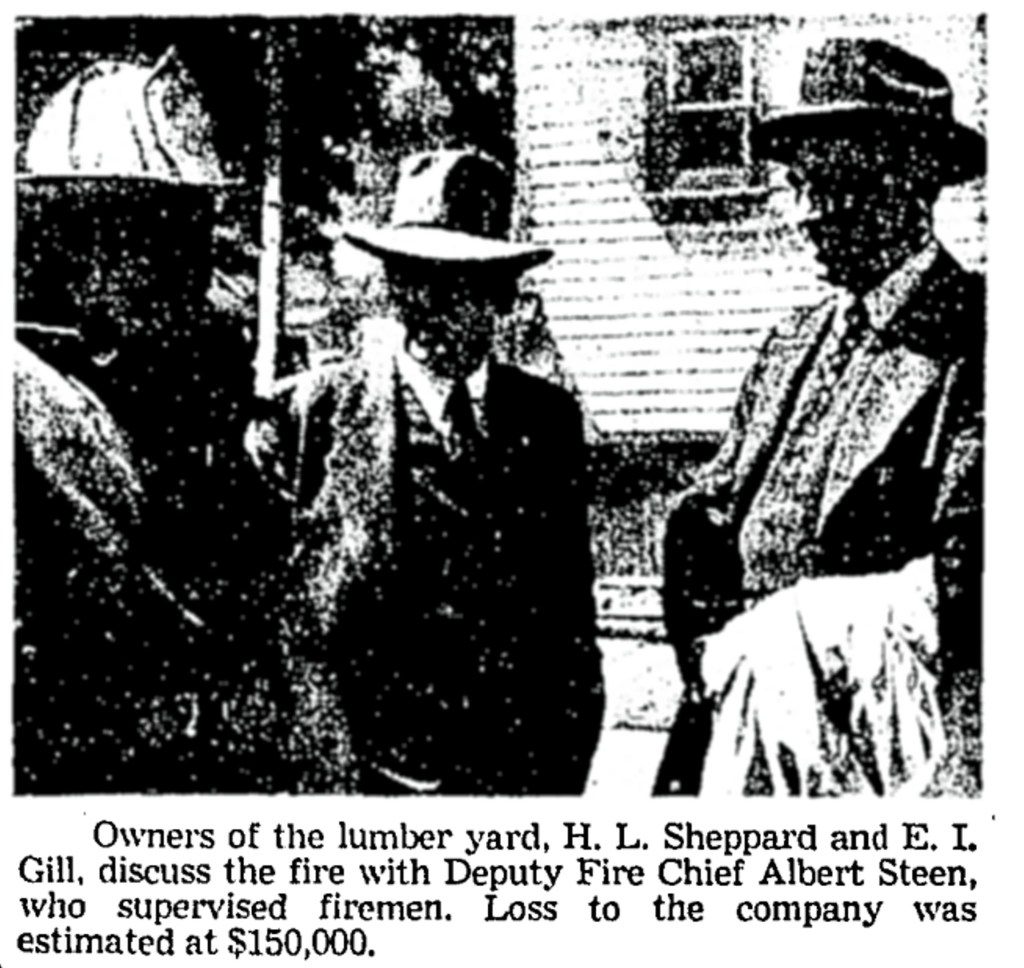
Fire Coxwell Stadium, Globe and Mail, March 27, 1948 Some fires like the one at the lumberyard at Drayton and Hanson Street in May 1948 were spectacular. But in this case neighbours worked together to save each other’s property and lives too.



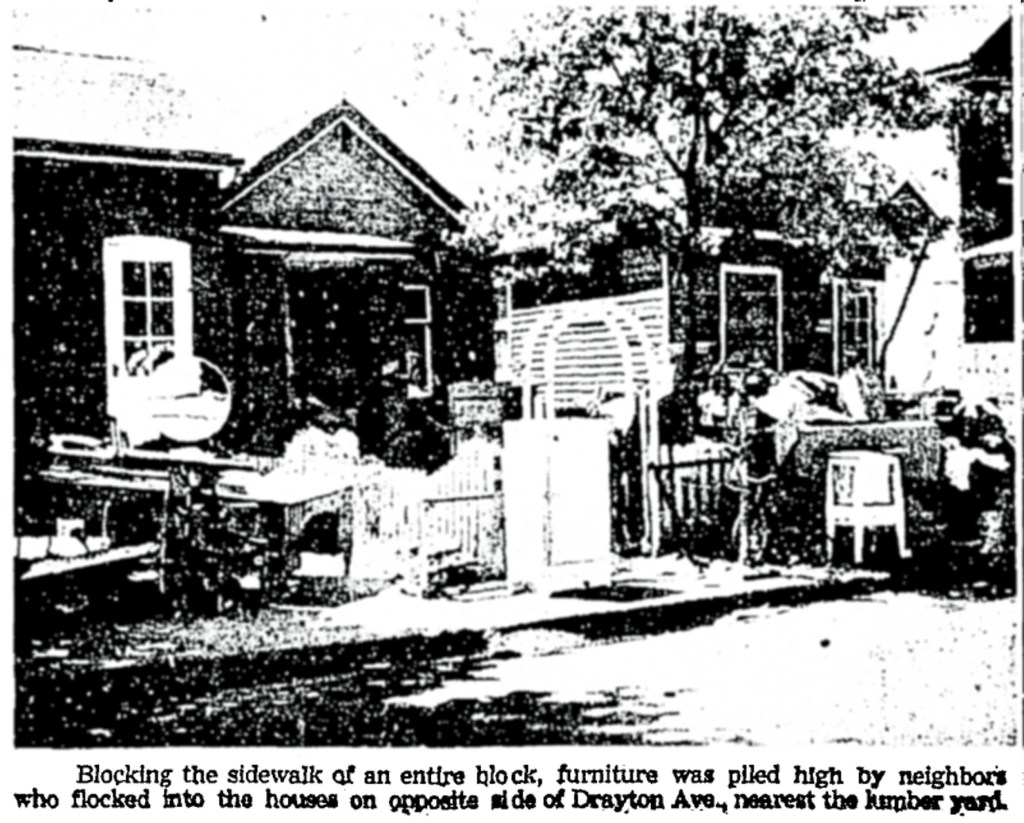


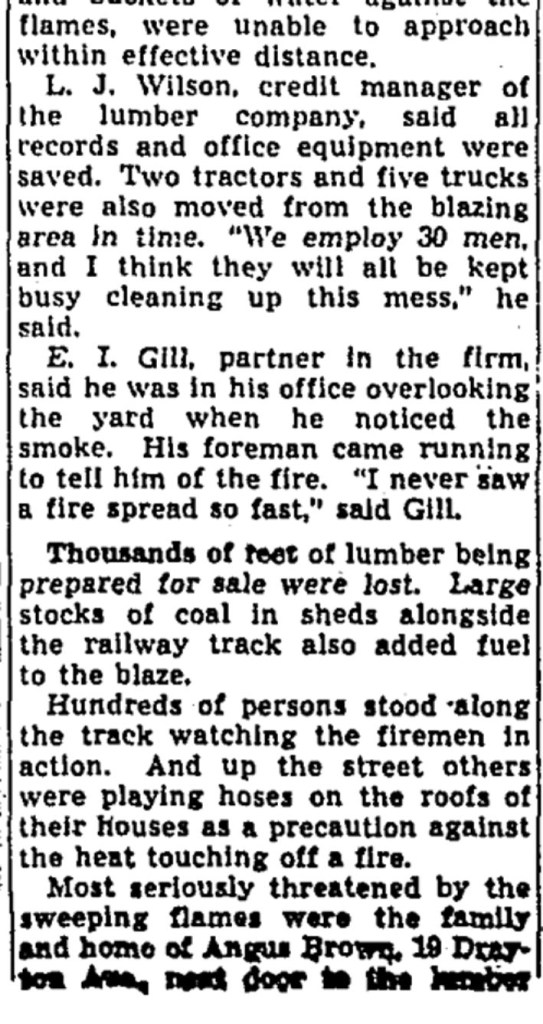
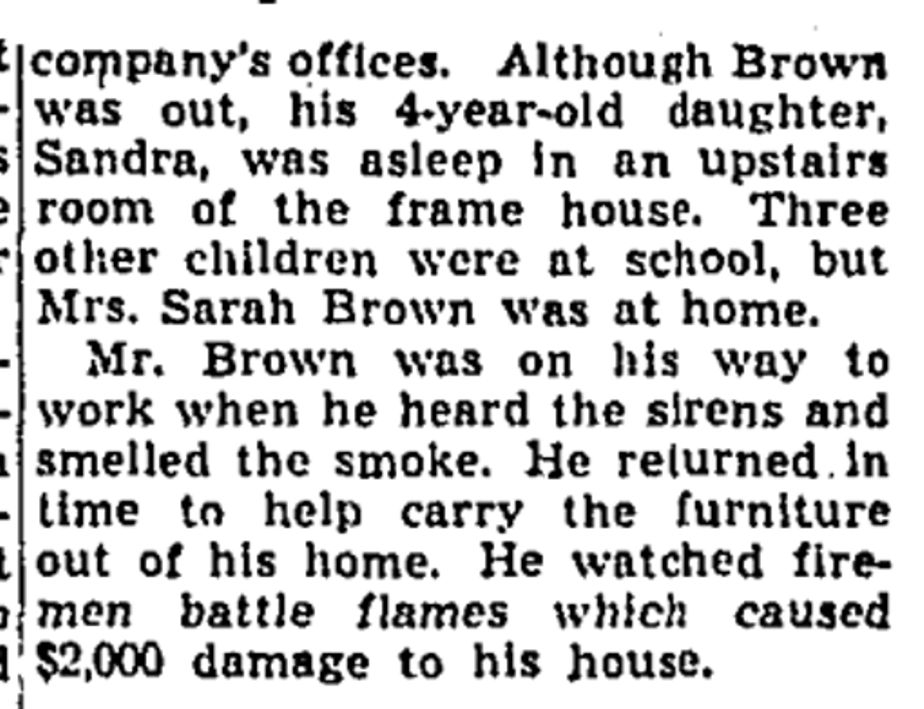

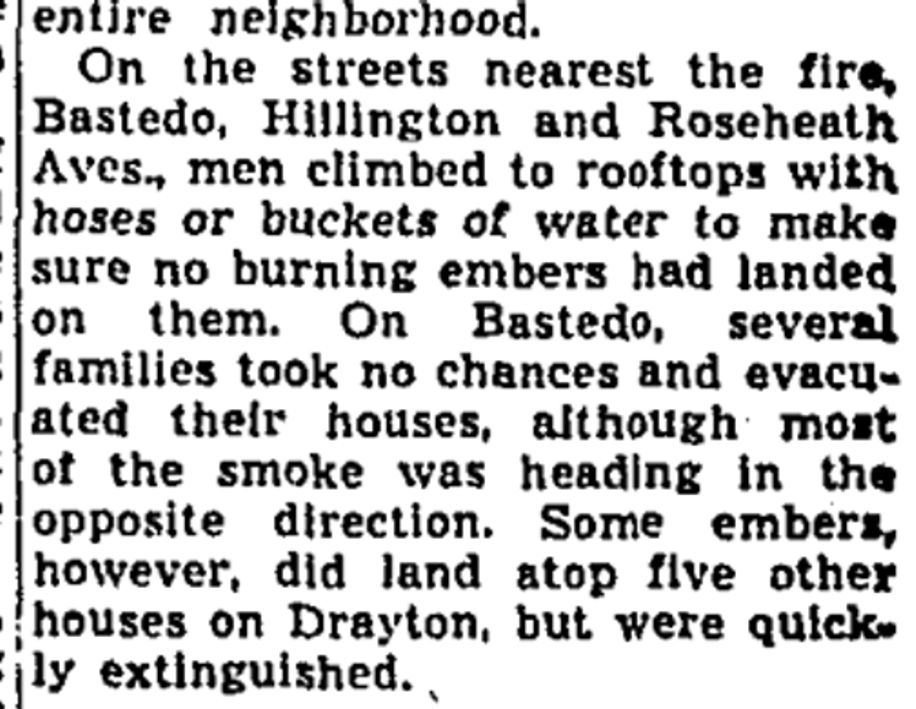


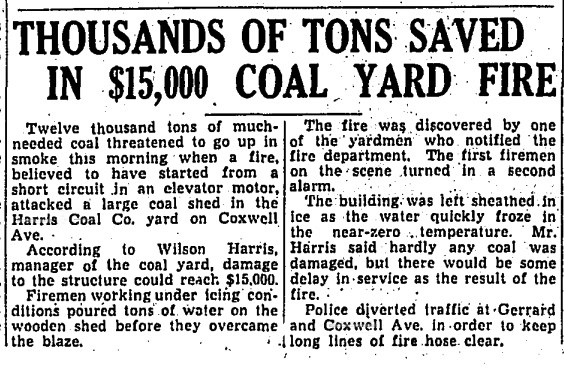
Harris Coal fire, Coxwell Ave, Toronto Star, February 22, 1950 
Firebug, Rhodes and Craven, Globe and Mail, May 16, 1950 
Fire, 10 Walpole Ave, Globe and Mail, November 25, 1950 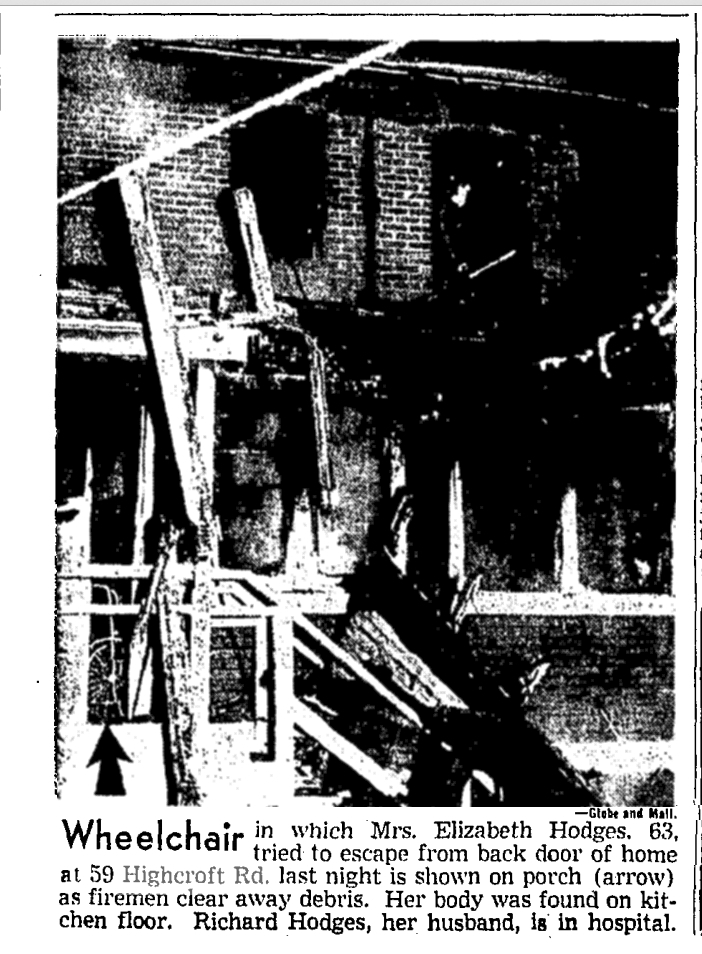
Fire, 59 Highcroft Rd, Globe and Mail, February 3, 1951 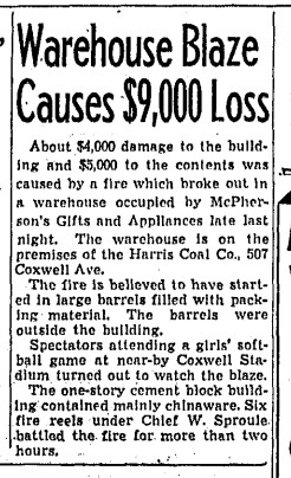
Fire near Harris Coal, Coxwell Ave, Globe and Mail, August 24, 1951 Fires at Christmas were common with highly combustible trees and decorations. Even if the only victim was a budgie, it would have traumatized the children. (I know. My home burned when I was in Grade Three.)

Fire, 93 Gainsborough Rd, Globe and Mail, December 23, 1955 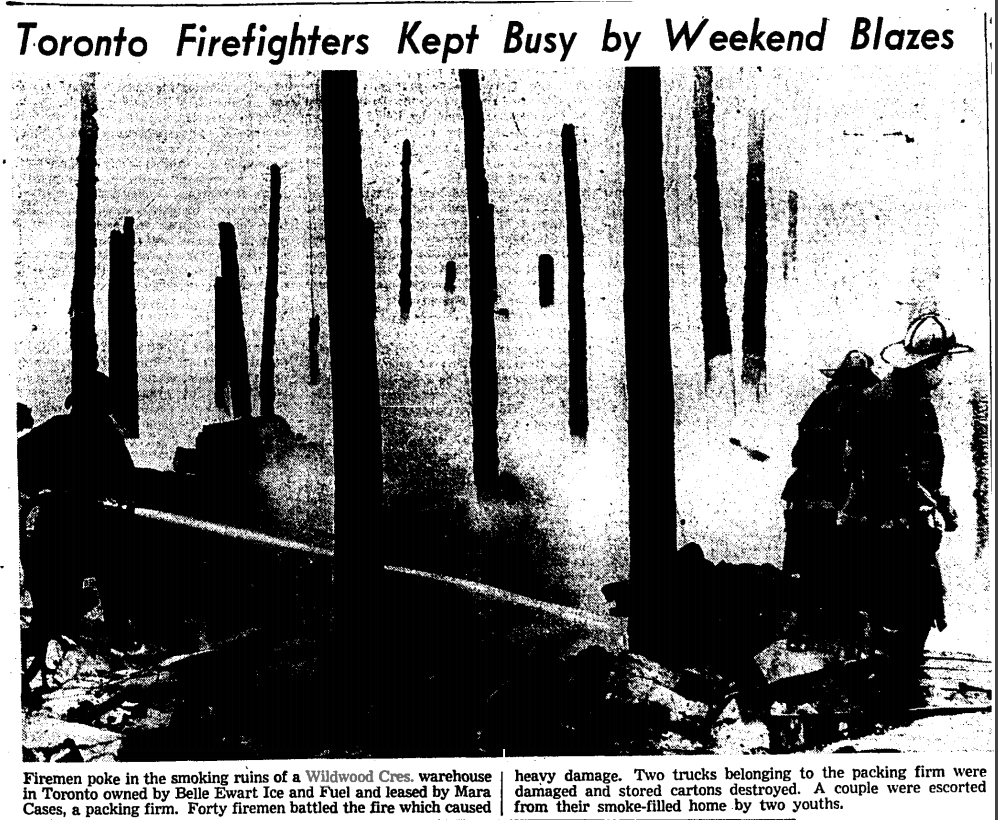
Fire Belle Ewart Fire Belle Ewart, Wildwood Crescent, Globe and Mail, March 6, 1961 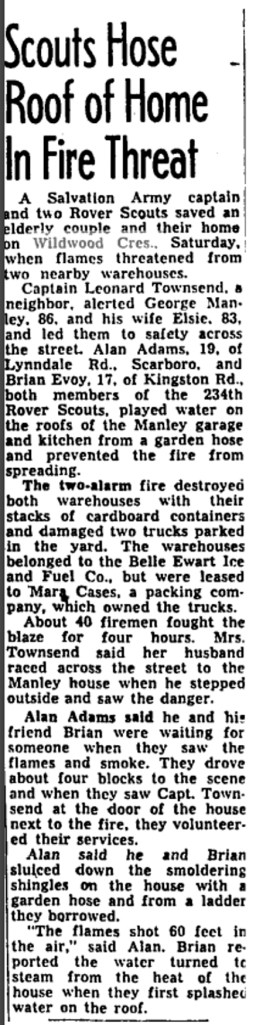
Fire Belle Ewart, Wildwood Crescent, Globe and Mail, March 6, 1961 
Fire Belle Ewart, Wildwood Crescent, Toronto Star, March 6, 1961 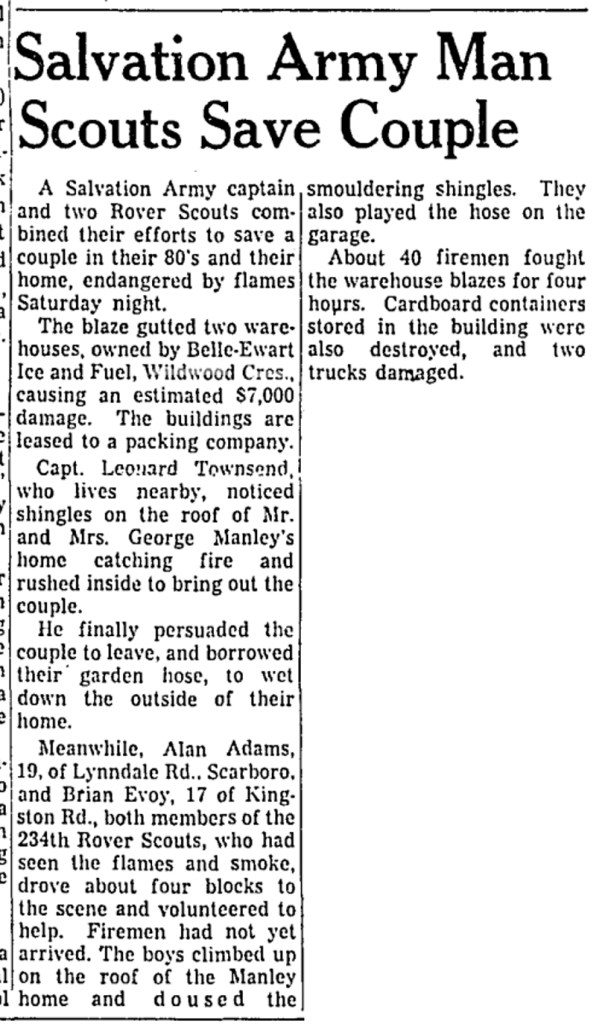
Fire Belle Ewart, Wildwood Crescent, Toronto Star, March 6, 1961 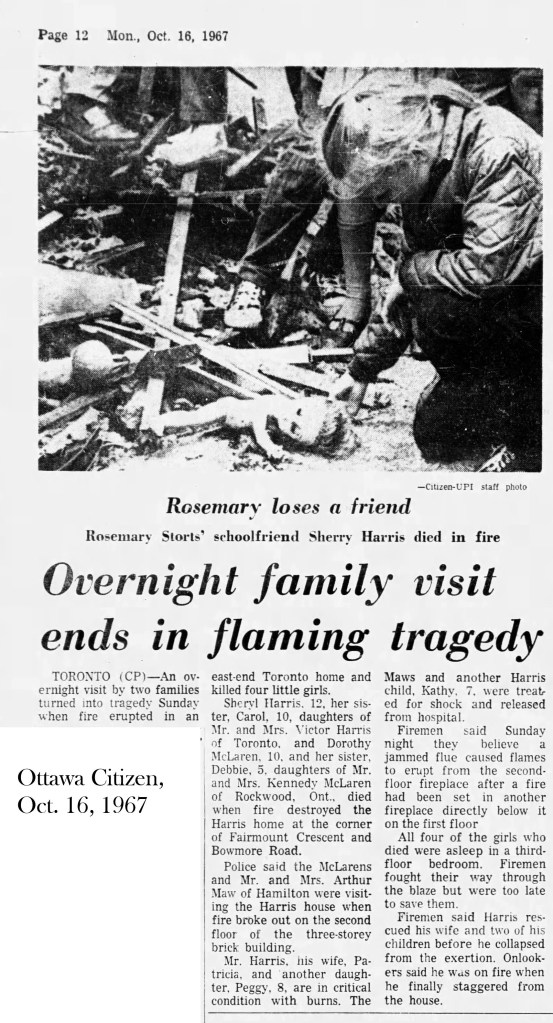
Fire Bowmore Road and Fairmount Crescent, Ottawa Citizen, Oct. 16, 1967 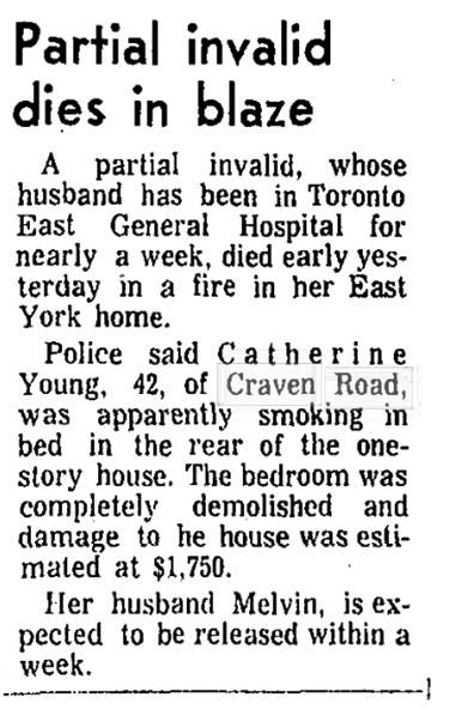
Woman dies in fire, Craven Rd, Globe and Mail, December 9, 1972 Generally my coverage of historical events ends in the early 1970s because of copyright restrictions. It’s not that fires stopped happening.
-

February 19th in Midway’s past
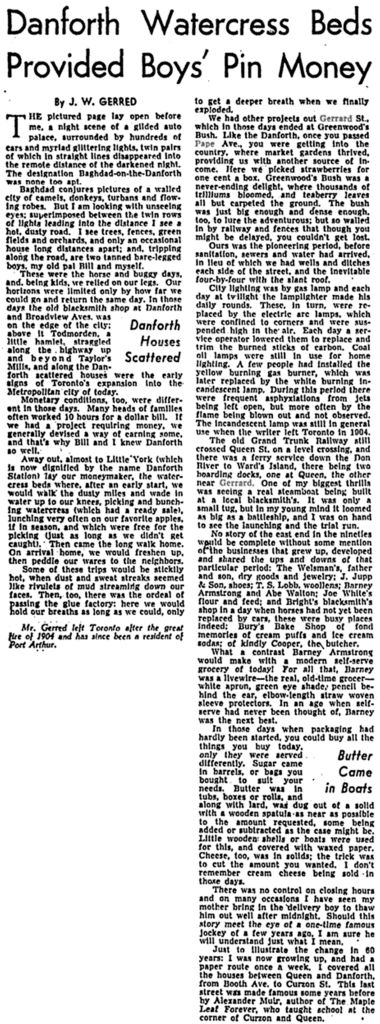
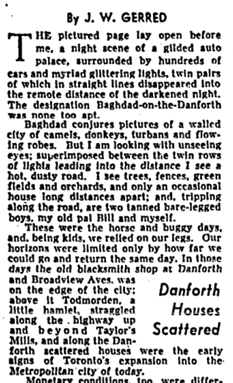
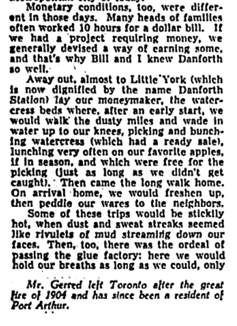
Danforth Watercress Beds, J. W. Gerred, Globe and Mail, Feb. 19. 1955 
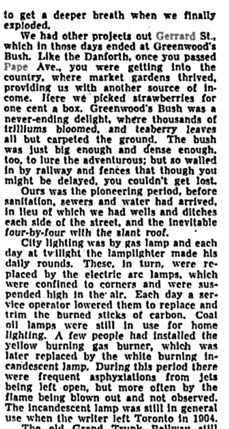
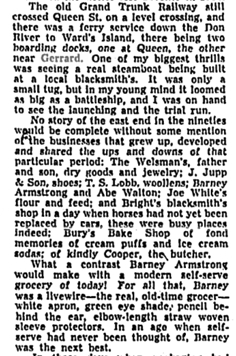
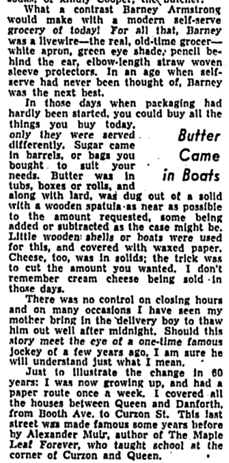
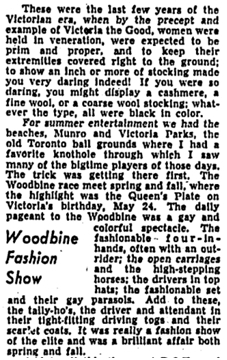
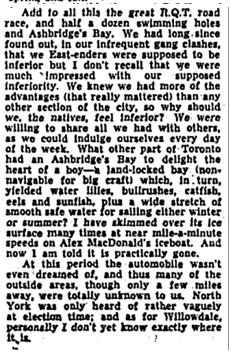
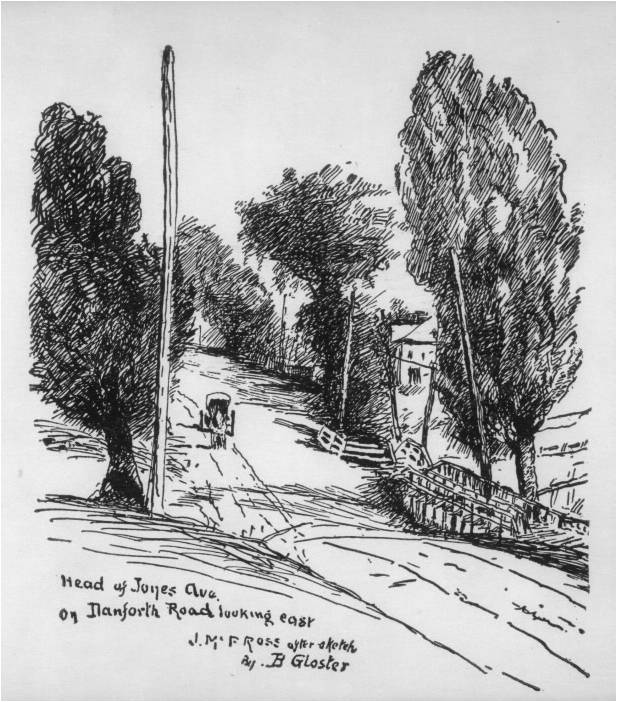
1890s Danforth at Jones 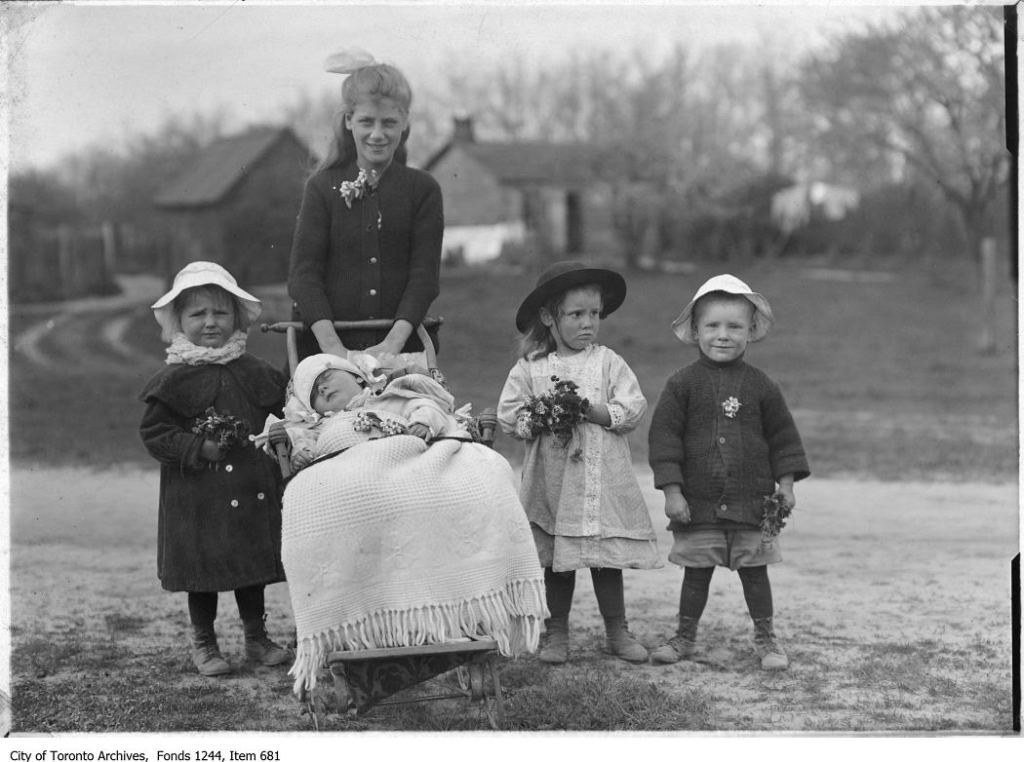
Group of children, Danforth Avenue. – [1910?] 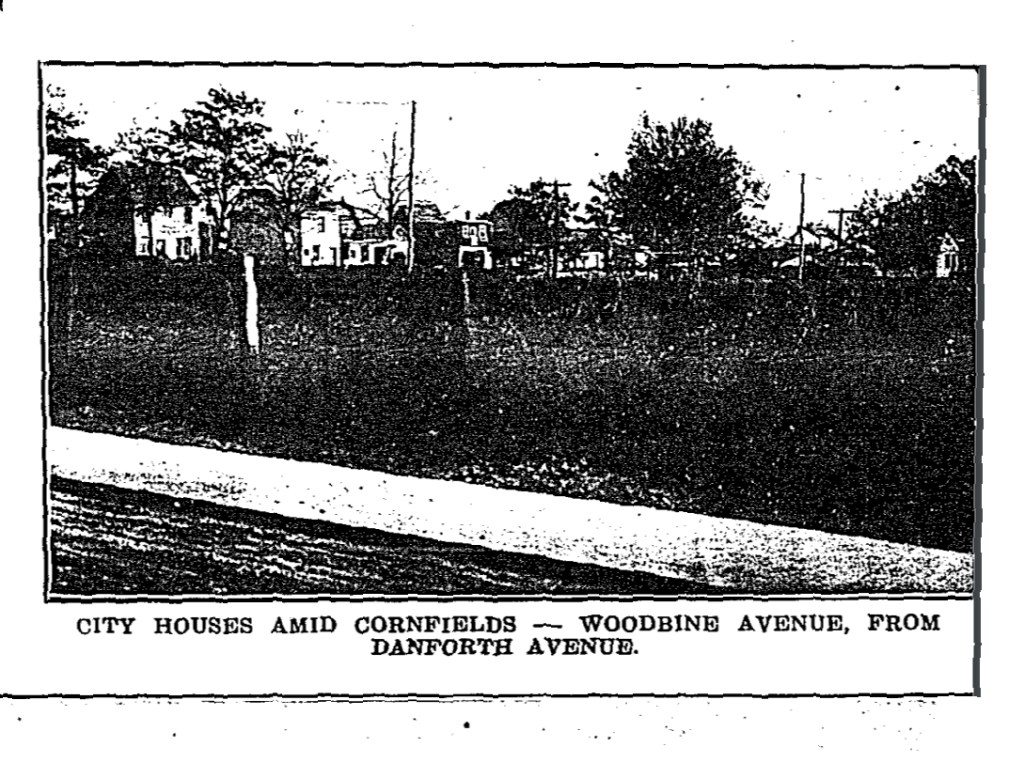
Danforth and Woodbine, Globe, November 5, 1913 
Danforth and Coxwell Ave., Globe, November 5, 1913 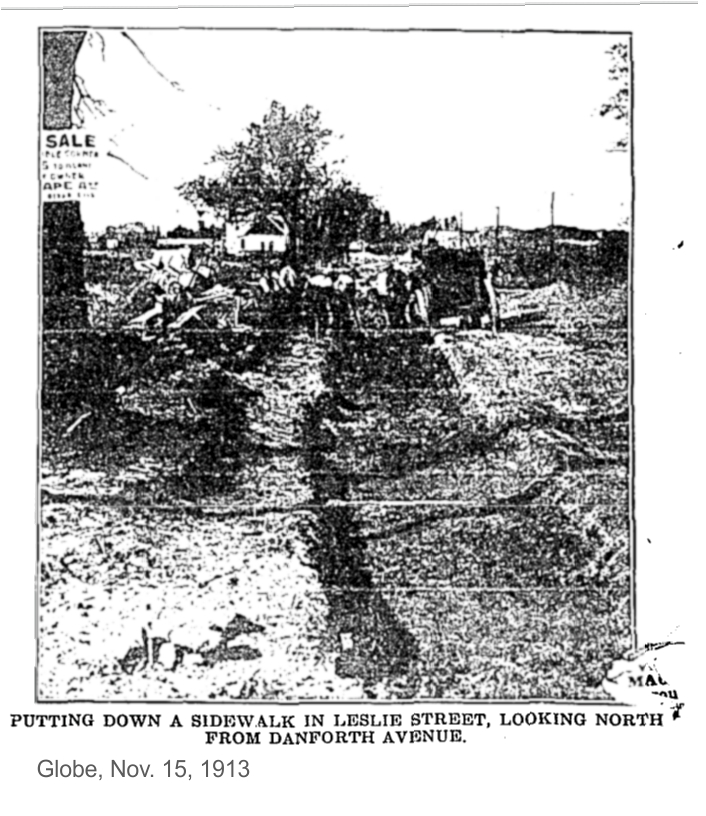
Donlands and Danforth, Danforth and Coxwell Ave., Globe, November 5, 1913 New house and garage, Danforth Avenue. – [ca. 1921] -

February 14th in Midway: Cridland Bros.
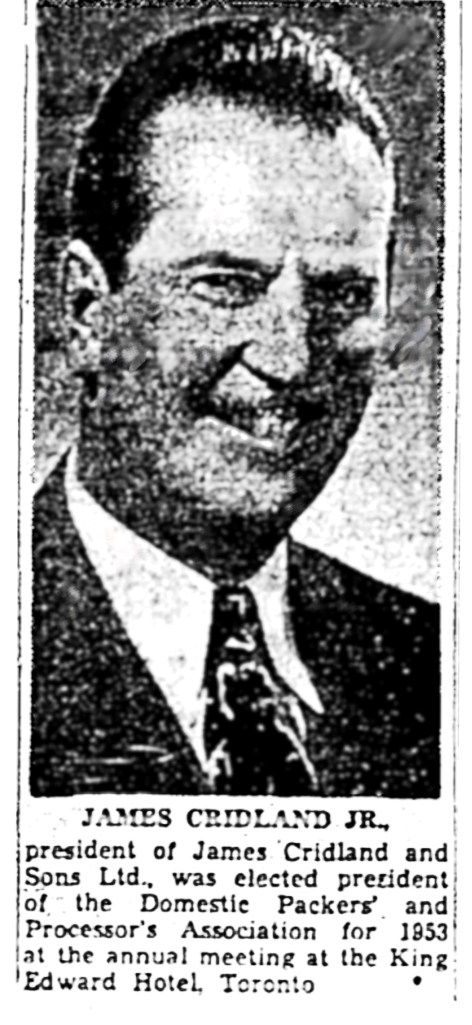
James Cridland Jr, Toronto Star, February 14, 1953 Family background:
Thomas Cridland married Joane Farrant of Culmstock, Devon, England. She was born in May 1667 and they had a son Francis who had a son Thomas born in 1744 in Hemyock, Devon. He and his wife Alice and a son John born in 1769 in Hemyock. In 1796 he married Susanna Scadding. They had a son John Cridland in 1801 who married Jane Gillard in 1836 also in Hemyock. Their son James Cridland (1847-1897) married Elizabeth Blackmore Pyke (1848-1881) and they came to Toronto in the mid 1870s. After his wife died he remarried (Anna Maria Fyfe). James Cridland went to work for William “Piggy” Davies, the pork packer who helped found Canada Packers. His son James Cridland (1877-1952) founded Cridland & Sons.
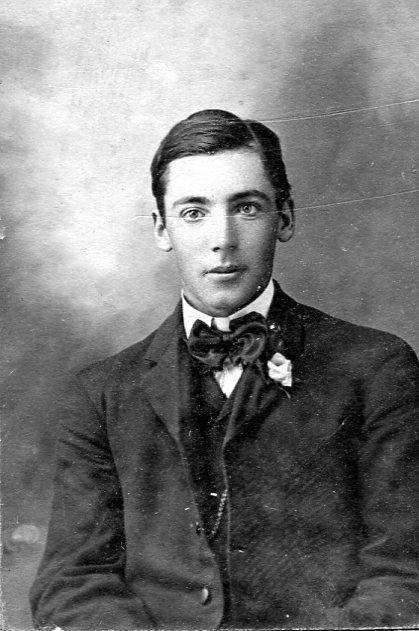
James Cridland (1877-1952) It should also be noted that the Cridland ancestor, Susanna Scadding, was from the same family as early Toronto settler John Scadding and his more famous son, the Rev. Henry Scadding (1813-1901) who wrote “Toronto of Old” (1873).
The Cridland Bros. plant opened in 1915.

Boner wanted, Cridlands, Toronto Star, April 29, 1920 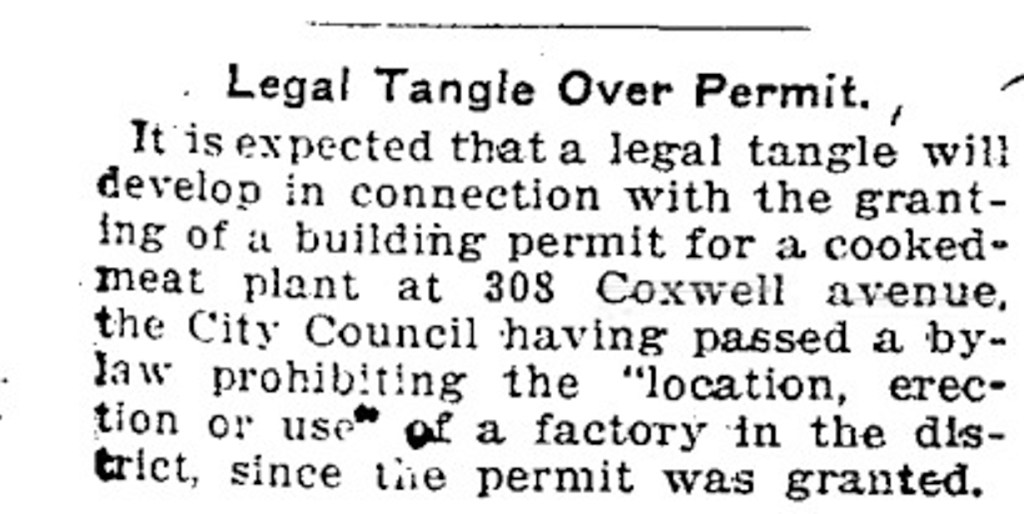
Cridland’s meat zoning problem, Toronto Star, September 25, 1920 
Toronto Star, Sept. 15 1920 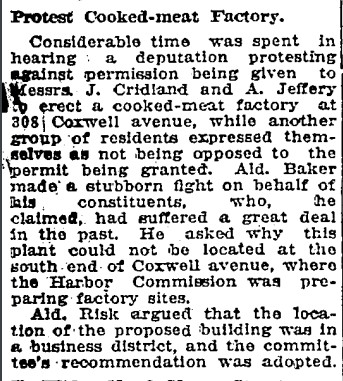
Cridland and Jeffrey meat plant Coxwell, Globe, February 22, 1921 
Ad, Cridlands, from the History of the Fire Dept, 1922 
Cridland & Sons picnic at Scarborough Heights Park, approx. 1922 or 1923 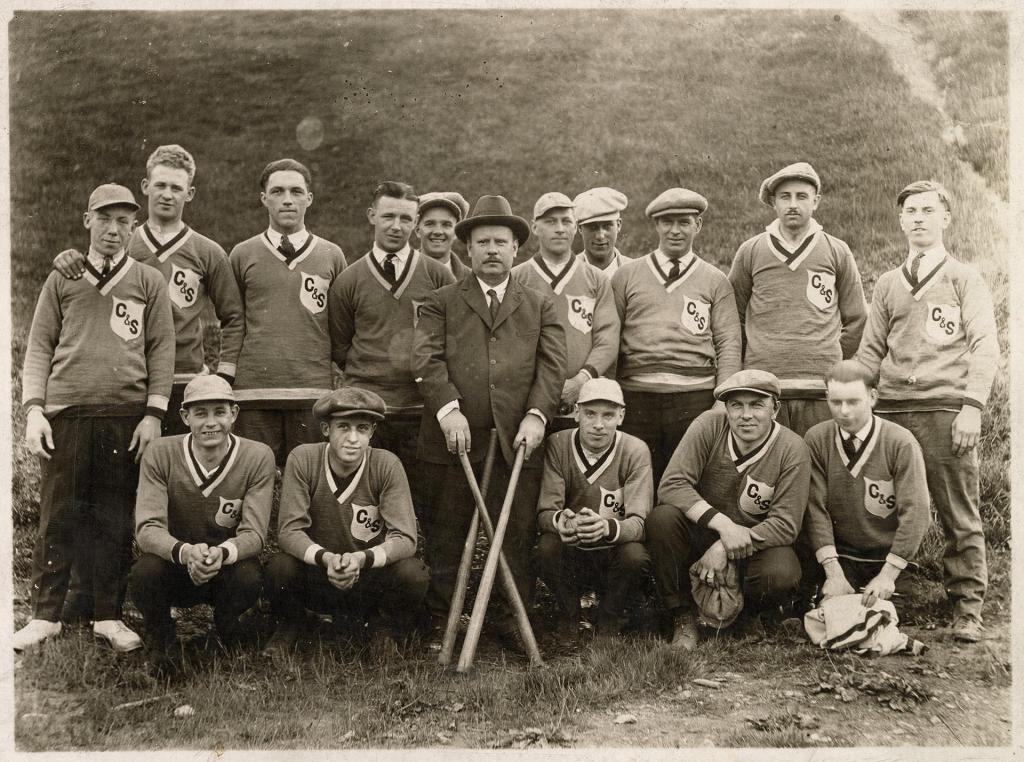
Cridland and Sons baseball team 1922, TPL 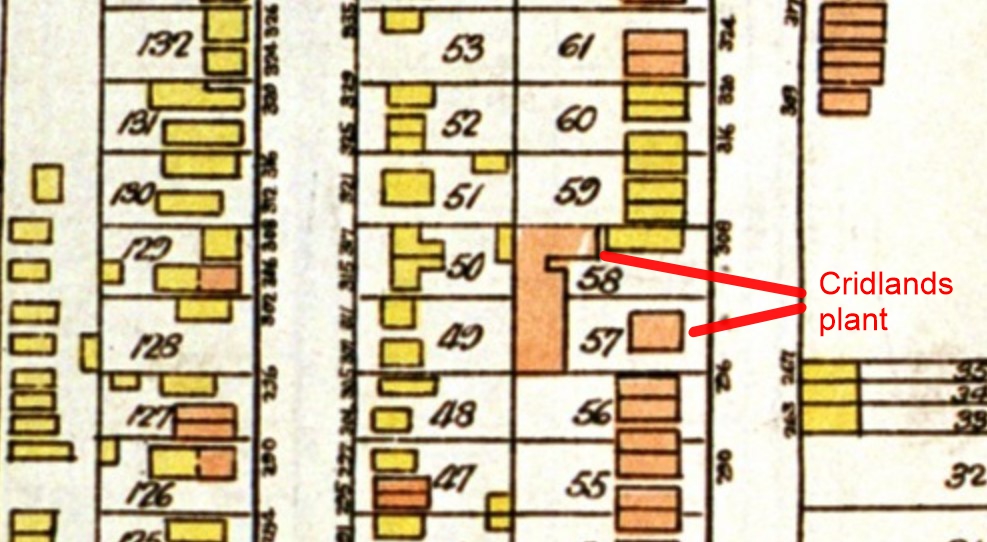
1924 Cridlands site, Goad’s Atlas 1924, 306-308 Carlaw Ave., Lot 8, Subdivision Plan 214 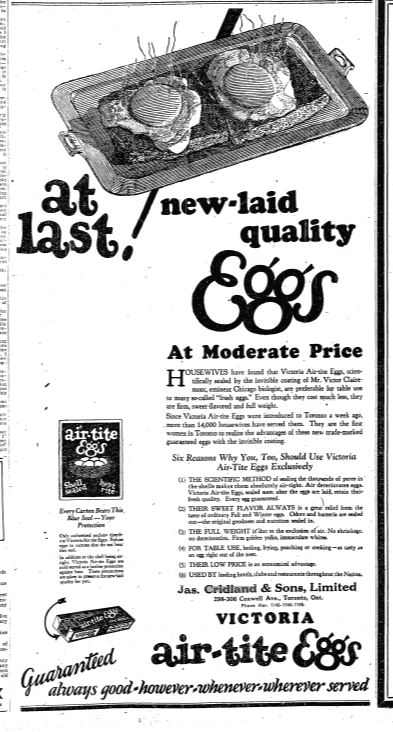
Air Tite Eggs, Cridlands, Toronto Star, November 13, 1925 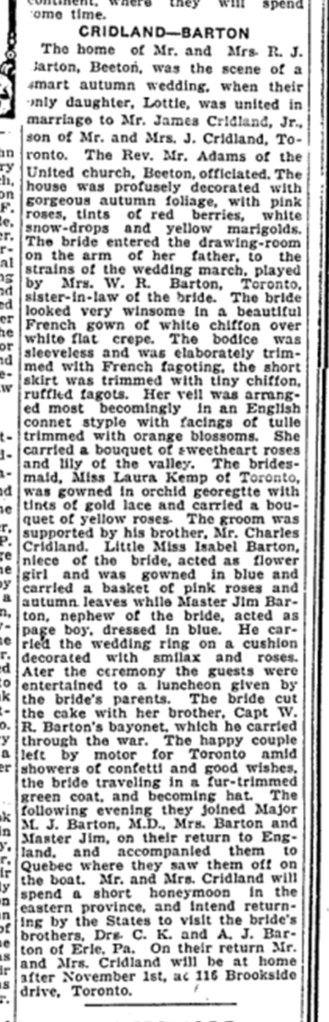
Cridland-Barton marriage, Toronto Star Oct. 14, 1925 
Gerrard and Coxwell, looking north, (Way Department) – June 17, 1926 
1926 Cridlands, Coxwell Avenue detail 
Cridlands ad, Toronto Star, 04 Apr 1928 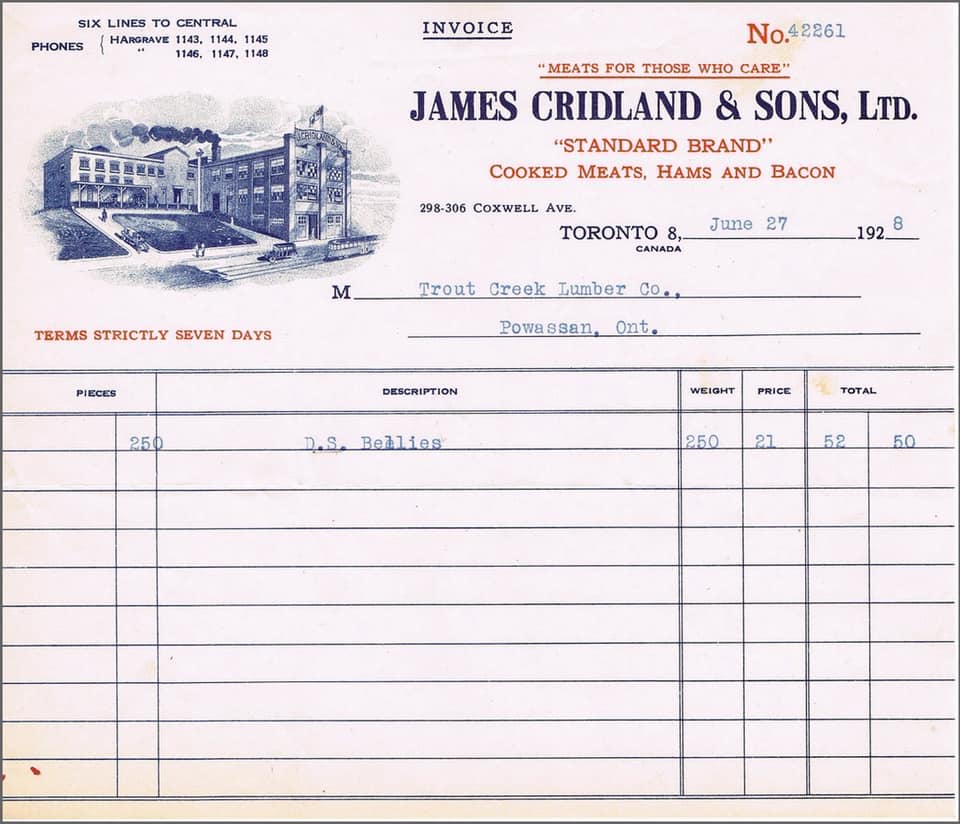
Invoice, James Cridland & Sons Ltd. 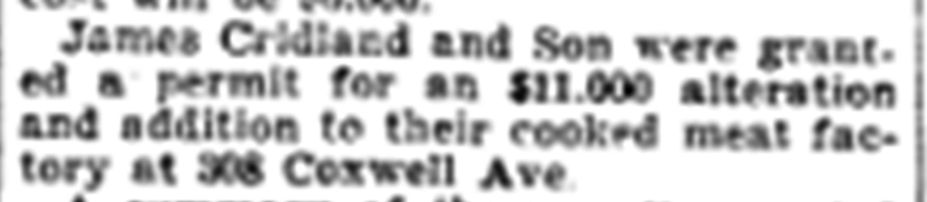
Alterations to Cridland plant, Toronto Star, Dec. 27, 1929 
Cridland expands, Globe, December 23, 1929 
Cridland ad, Ottawa Citizen, May 19, 1932 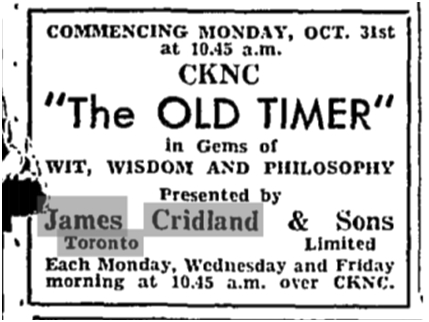
Cridland radio show, Globe, Oct 31, 1932 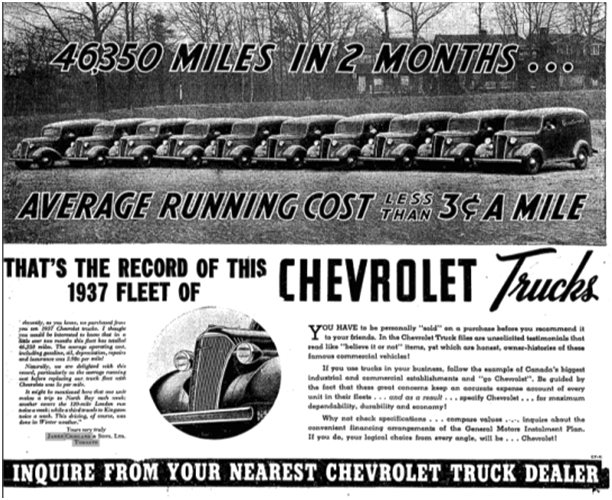
Cridlands, Globe and Mail, July 23 1937 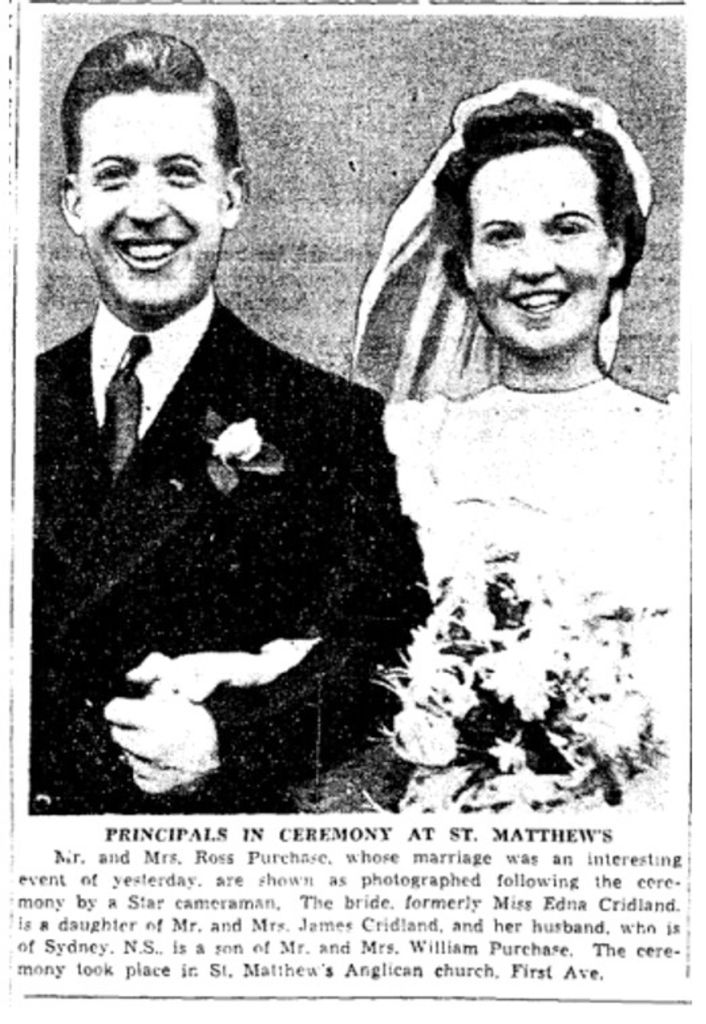
Edna Cridland marriage, Toronto Star, July 24, 1941 
Cridland-Thomson engagement, Toronto Star, June 27, 1942 
Cridland-Neale engagement, Toronto Star, May 29, 1944 
Death of William Cridland, Globe and Mail, June 10, 1948 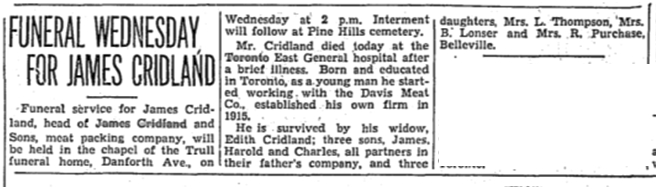
James Cridland, funeral, Toronto Star, Oct. 20, 1952 
Obituary, Globe and Mail, October 21, 1952 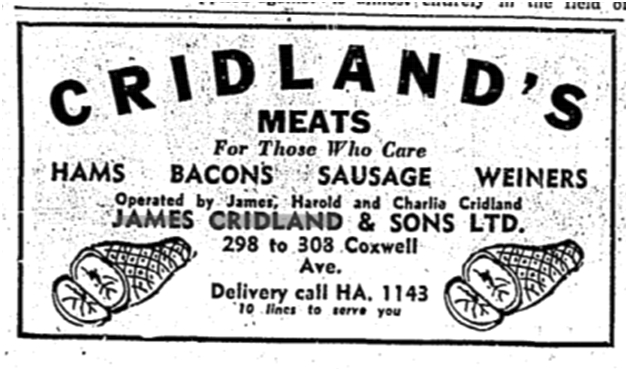
Toronto Star Nov. 20. 1952 
ad, Toronto Star, April 16, 1953 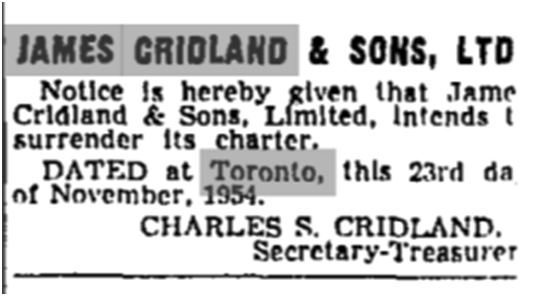
Cridland winds up, Globe and Mail, Nov. 26. 1954 
Cridland meats building 1959 and 1920’s, courtesy Scott Turner 
Edith Maud Cridland obituary, Globe and Mail, Dec. 16, 1965 -

February 9 in Toronto’s Midway: Featuring the 506 Streetcar

Streetcar on fire Upper Gerrard, Toronto Star, Feb. 9, 1918 
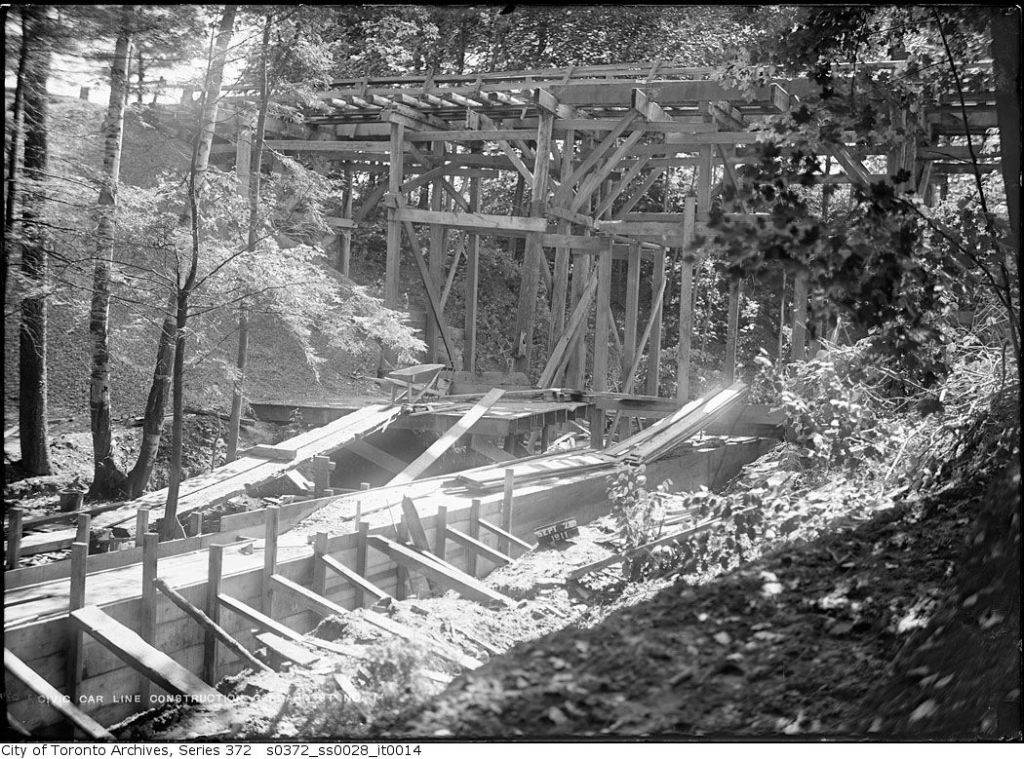
Building the Gerrard Street Car line, 1911 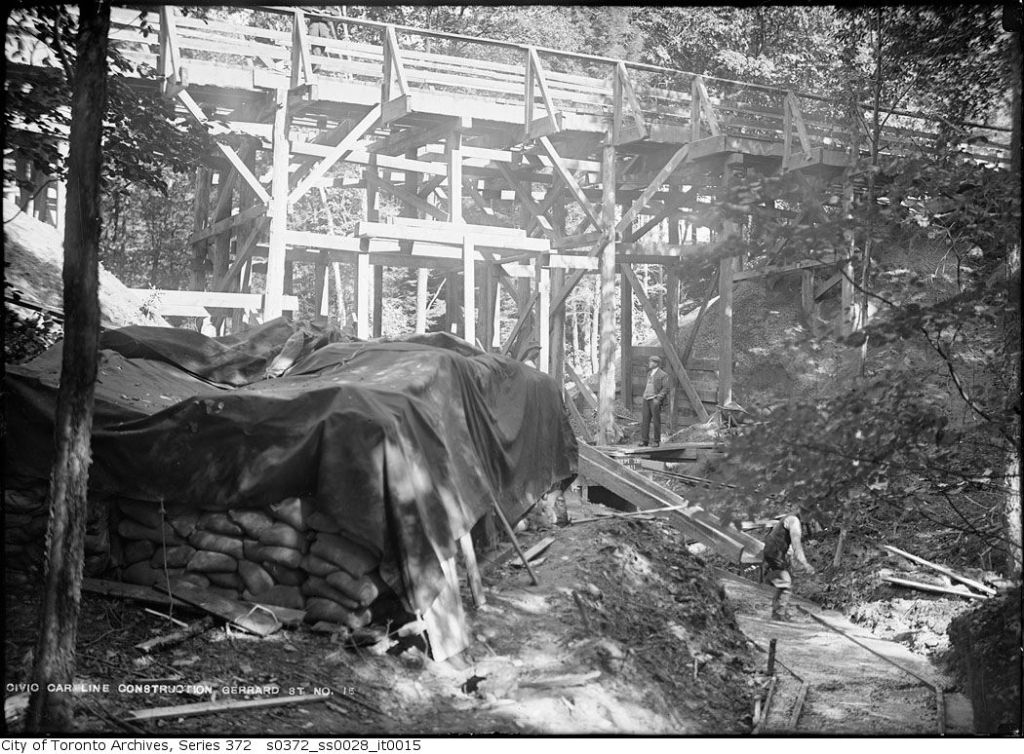
Building the Gerrard Street Car line, 1911 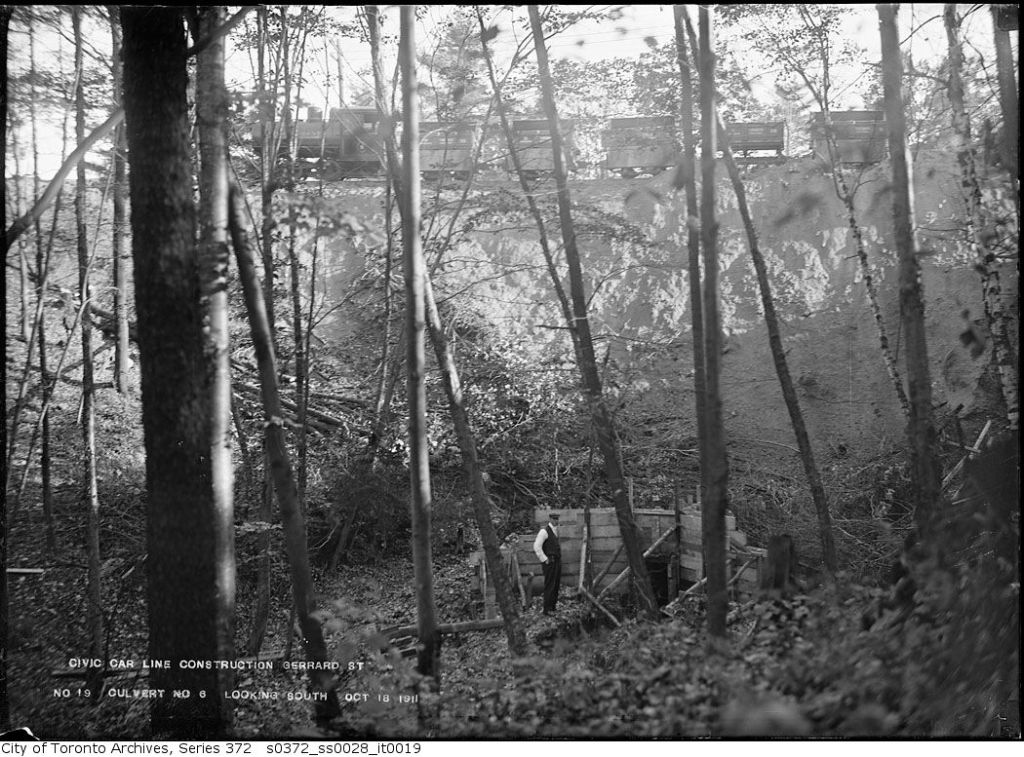
Building the Gerrard Street Car line, 1911 
Building the Gerrard Street Car line, 1911 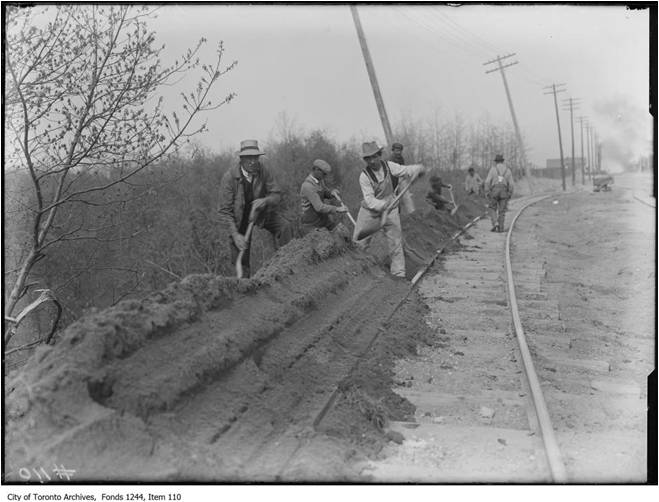
Building the Gerrard Street Car line, 1911 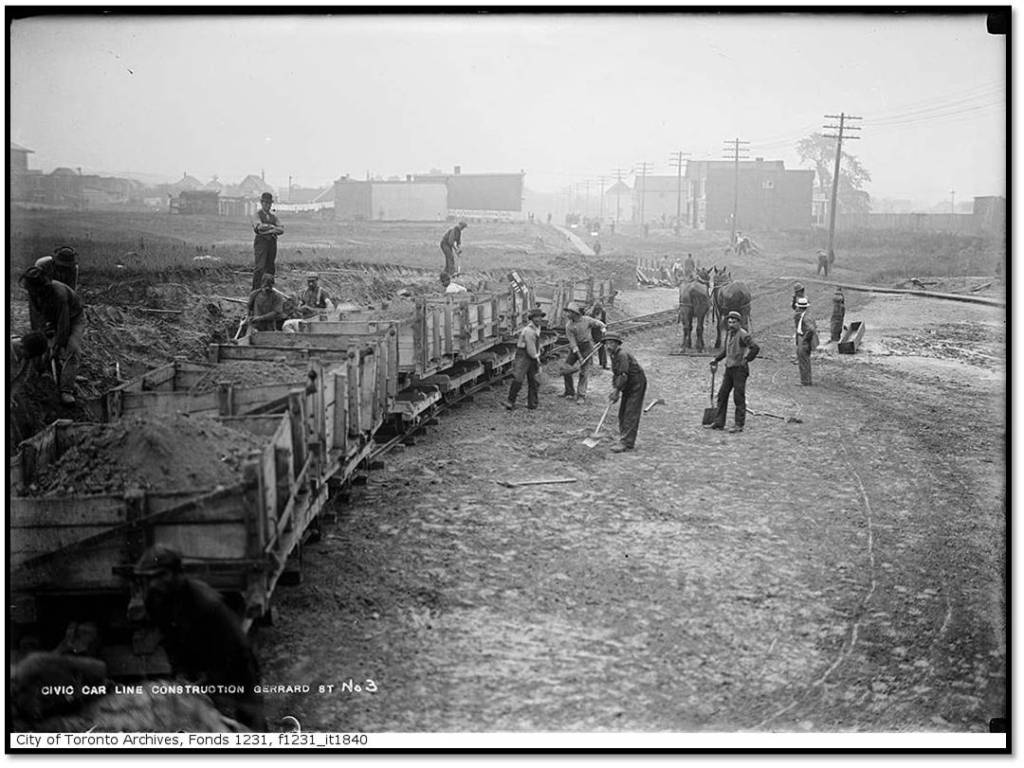
Building the Gerrard Street Car line, 1911 
Building the Gerrard Street Car line, 1911 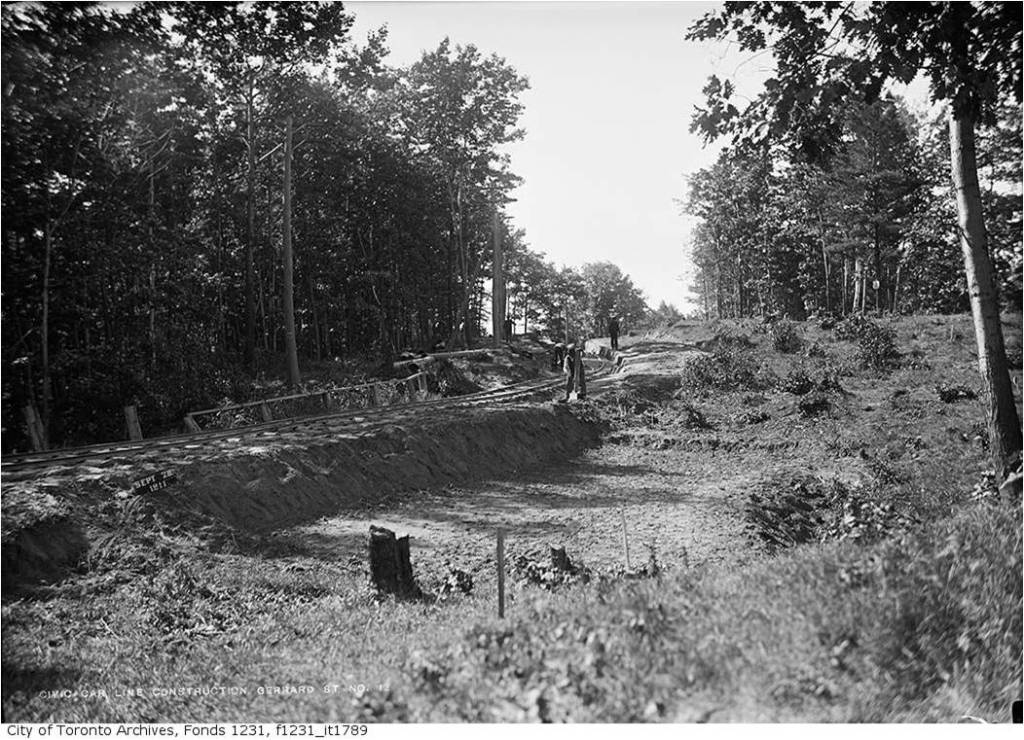
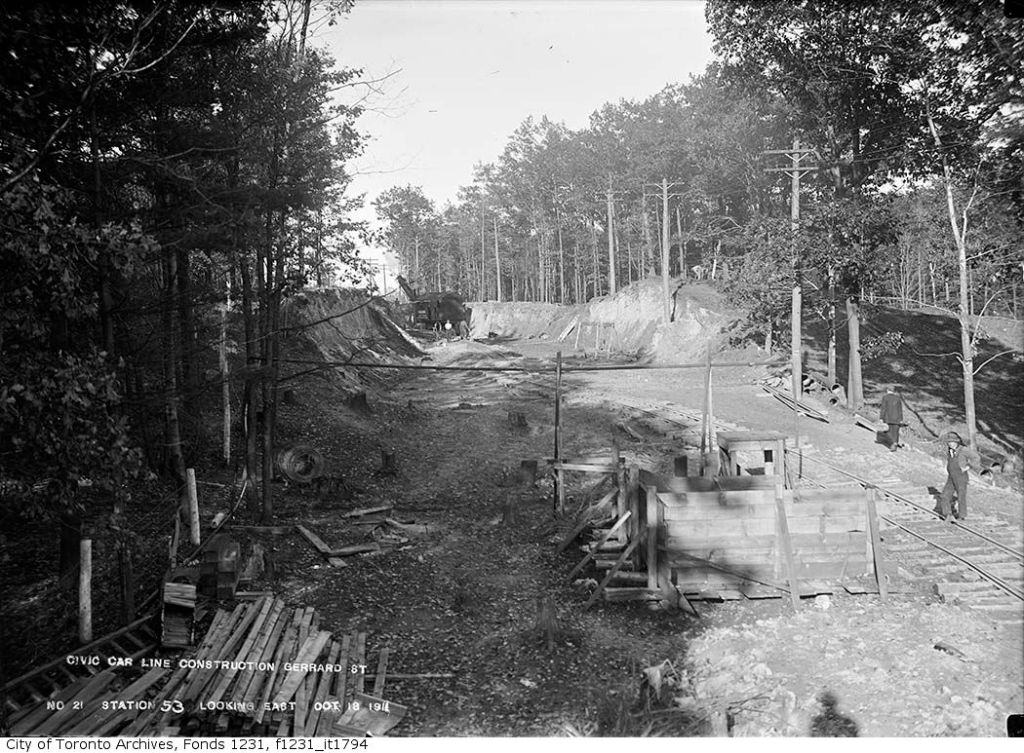
Building the Gerrard Street Car line, 1911 
Building the Gerrard Street Car line, 1911 
Building the Gerrard Street Car line, 1911 
Building the Gerrard Street Car line, 1911 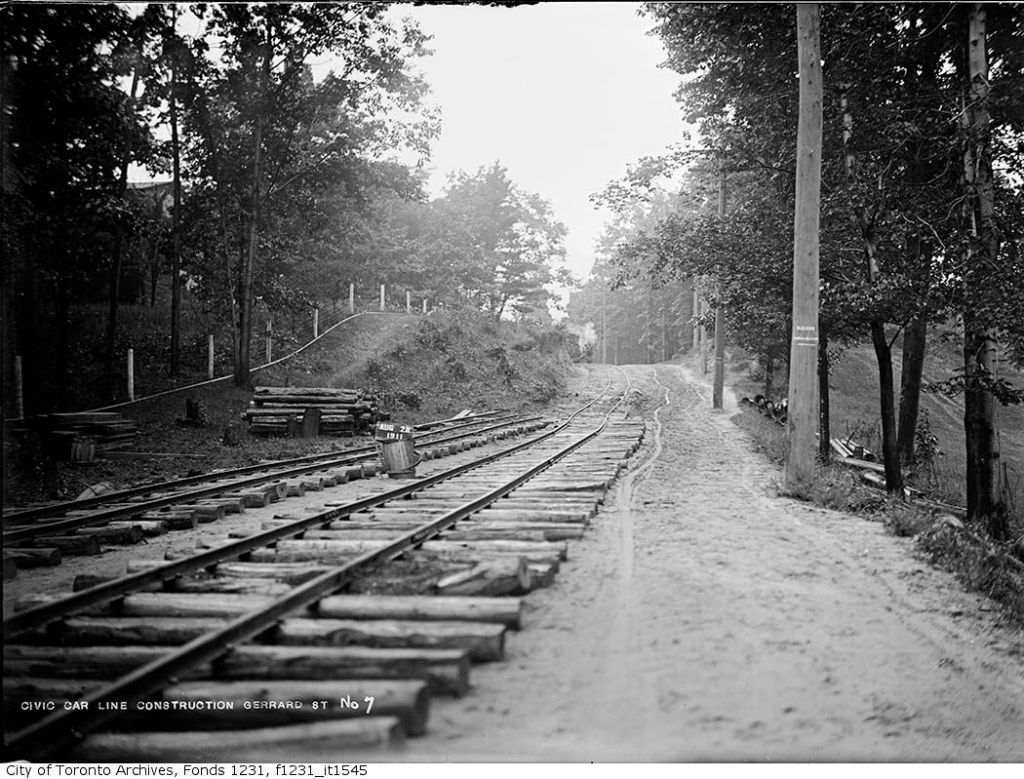
Building the Gerrard Street Car line, 1911 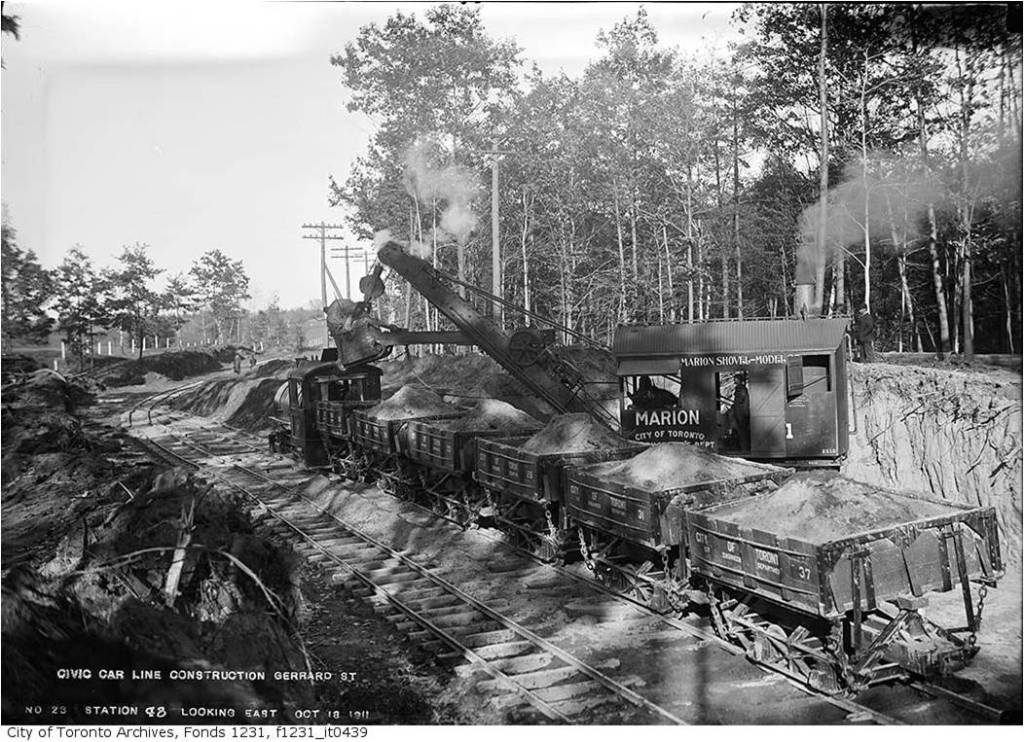
Building the Gerrard Street Car line, 1911 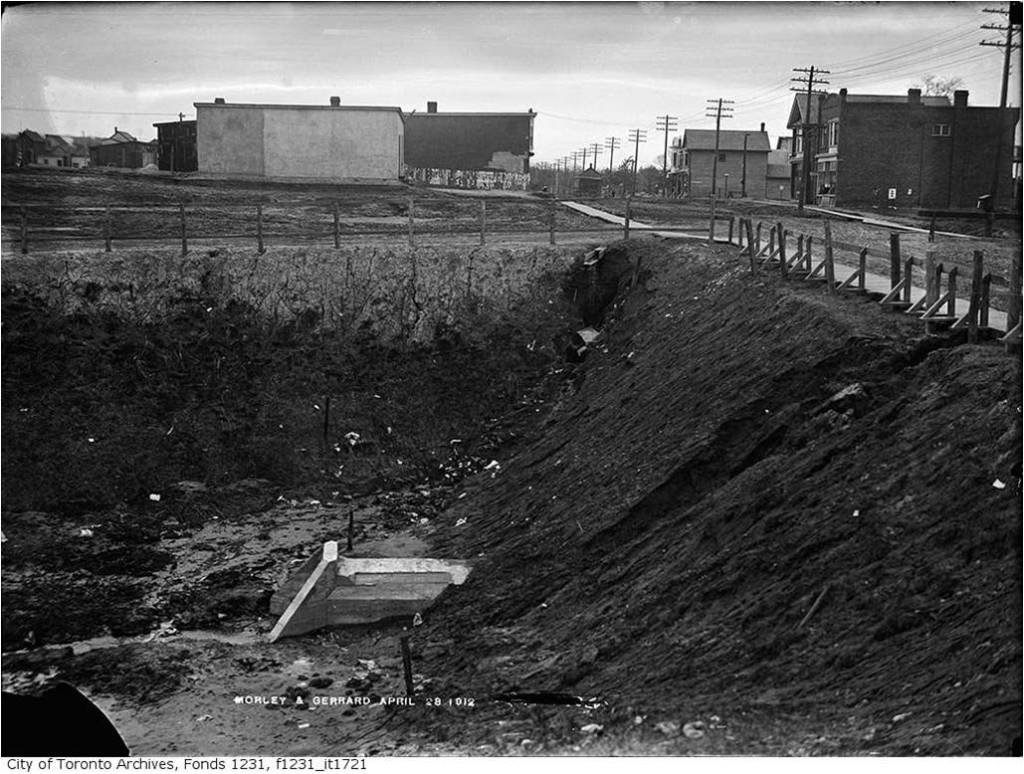
Building the Gerrard Street Car line, 1911 
Building the Gerrard Street Car line, 1911 
Gerrard car line construction, Toronto Star, November 16, 1911 
Route and Car barns, Toronto Star, December 11, 1912 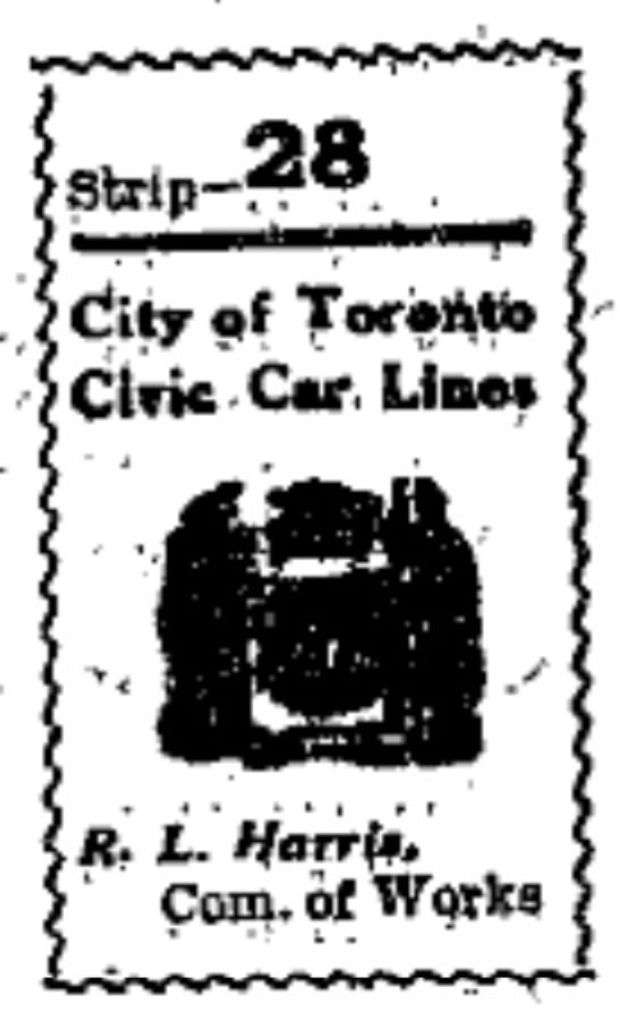
Ticket, Civic car line, Toronto Star, December 19, 1912 
Toronto Civic Railways Car No. 3 – February 24, 1913 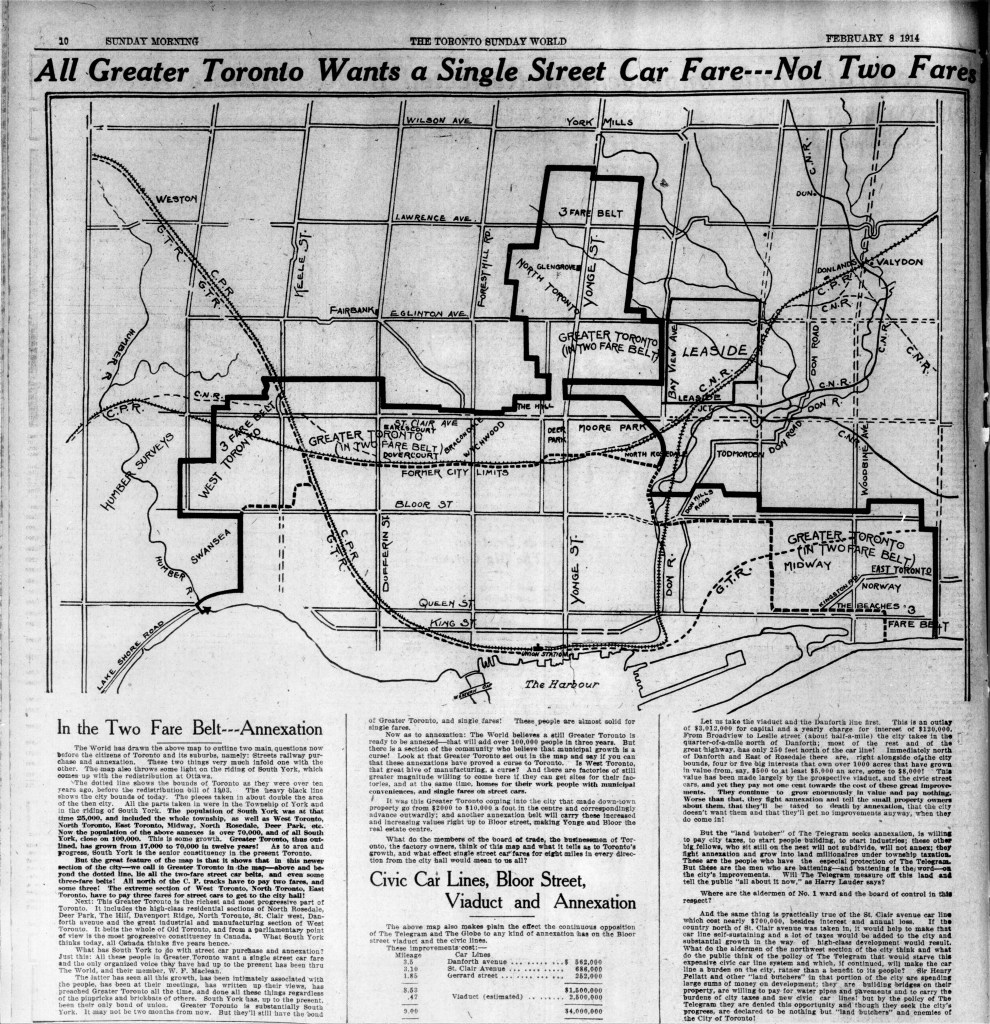
One fare system, Civic Streetcars, Toronto Sunday World, February 8, 1914 
New streetcars, Globe, Aug. 17 1922 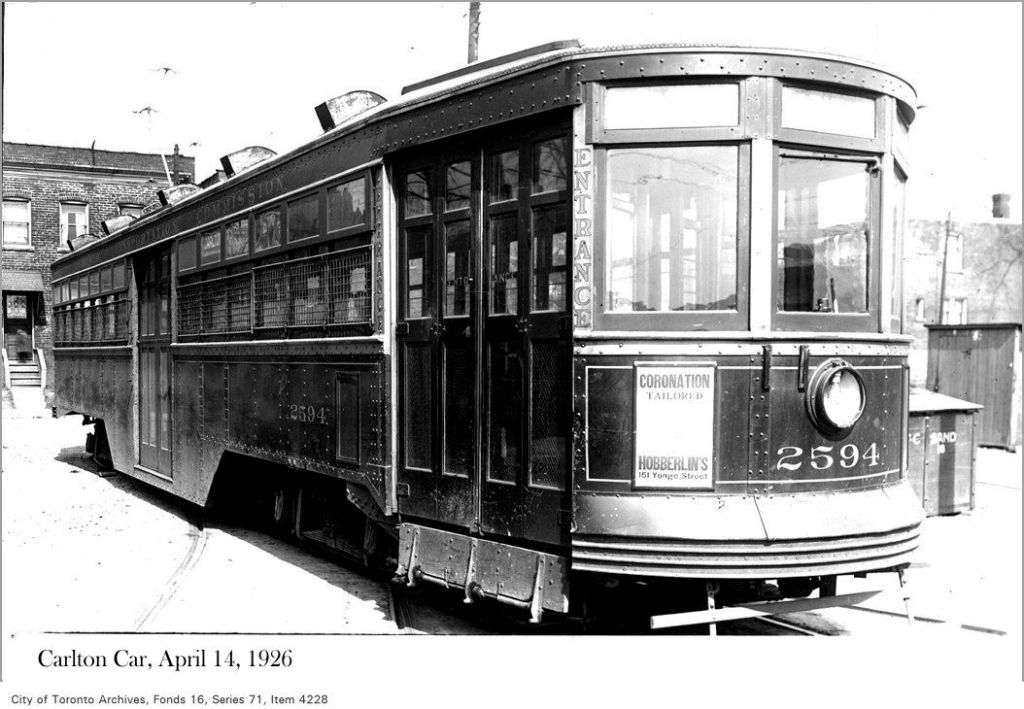
Carlton Car, April 14, 1926 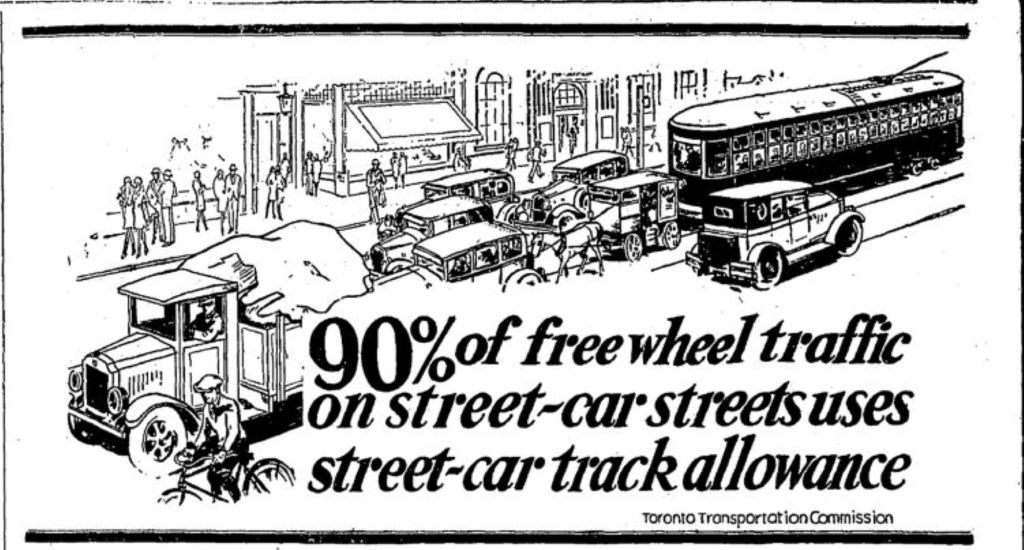
TTC Advertisement, Globe, June 26, 1928 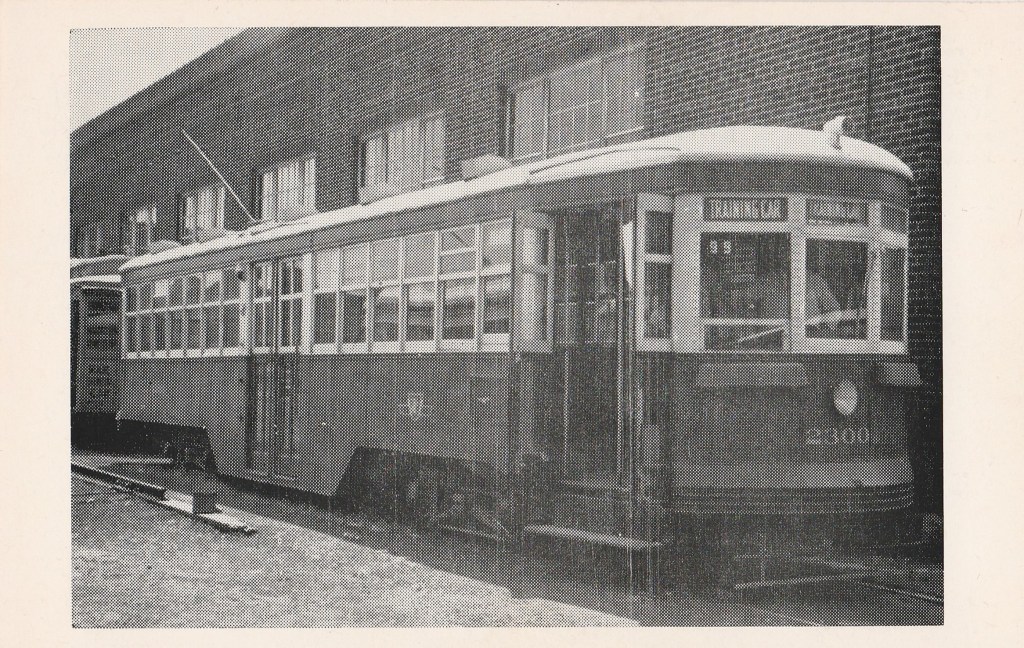
Toronto’s first Peter Witt, 2300, at the TTC’s Hillcrest Shops in July 1960 (front) 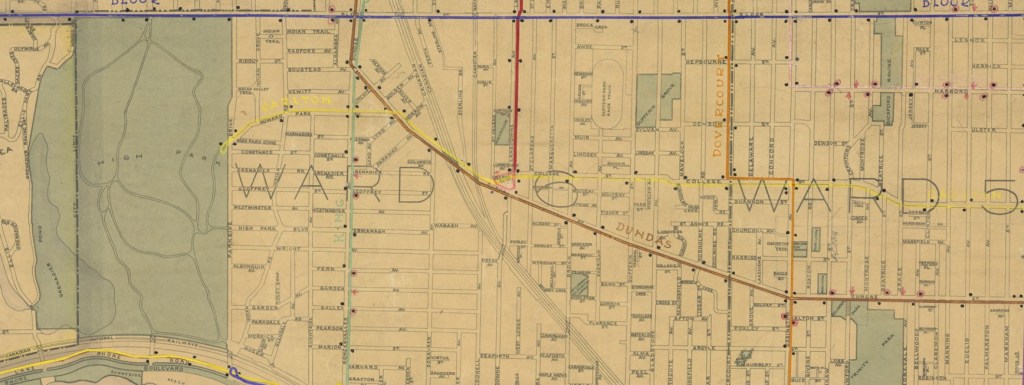
Route of Carlton Streetcar, 1934 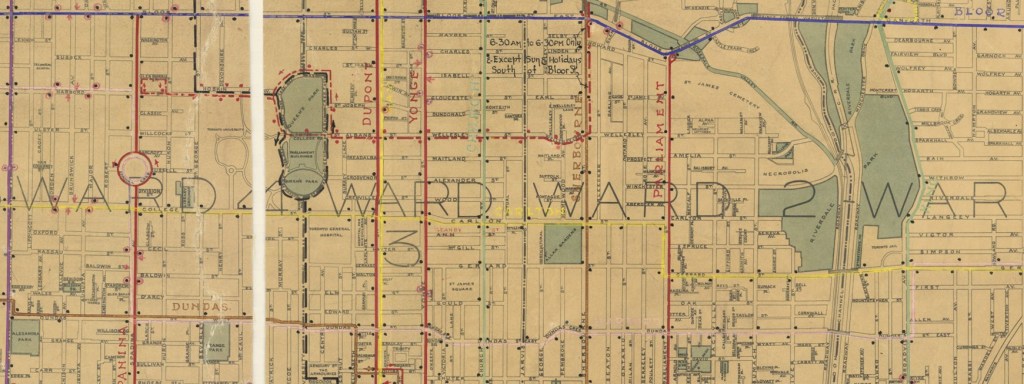
Route of Carlton Streetcar, 1934 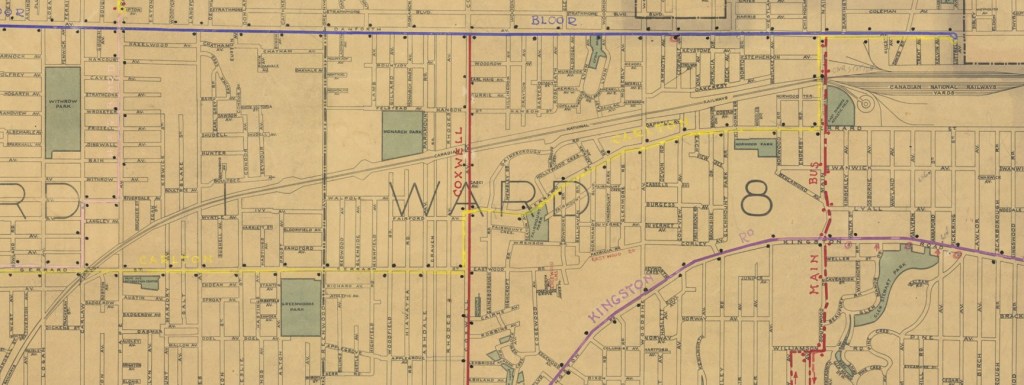
Route of Carlton Streetcar, 1934 
Carlton car at High Park loop, postcard, collection of Joanne Doucette 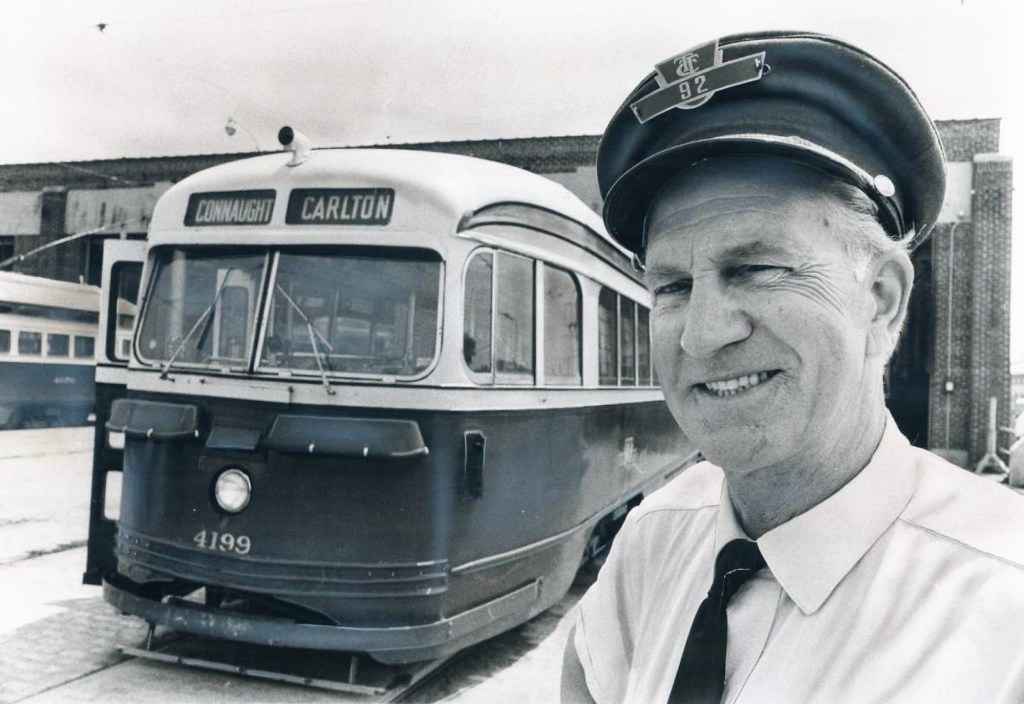
The oldest streetcar in service in Toronto is 31-year-old Car 4199, July 29, 1971 by Bob Olsen 
2017 Greenwood and Gerrard photo by J Doucette -
February 4 Chickens in the ‘Hood
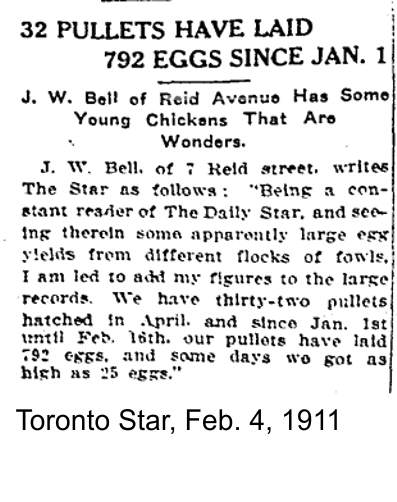
J.W. Bell, chickens, 7 Reid Ave, Toronto Star, February 4, 1911 
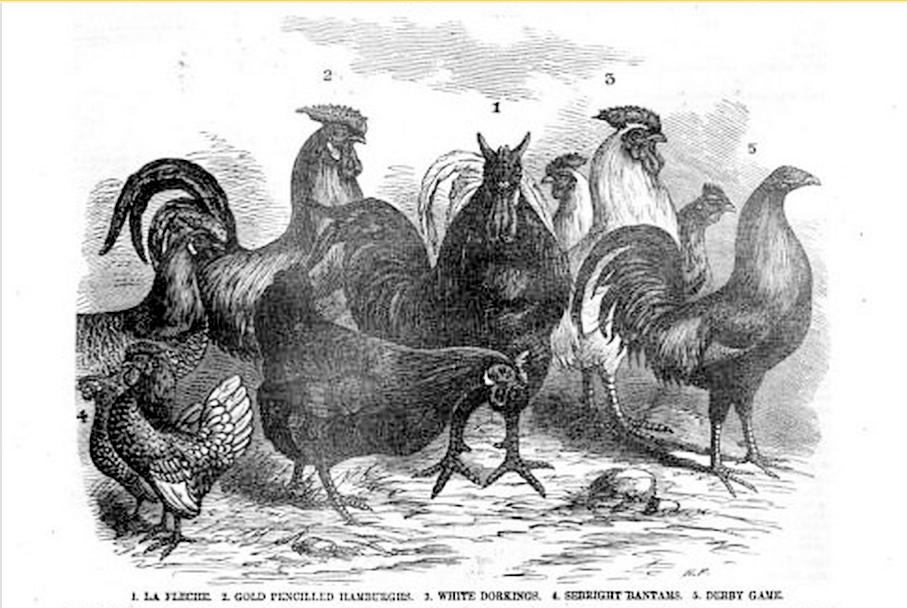
Chickens, Canadian Farmer magazine, 1867 
Chickens on Coxwell Avenue, Canadian Poultry Review [Vol. 19, no. 9 (Sept. 1896)] 
Ship your live chickens to the Harris Abattoir, Toronto World, May 20, 1910 
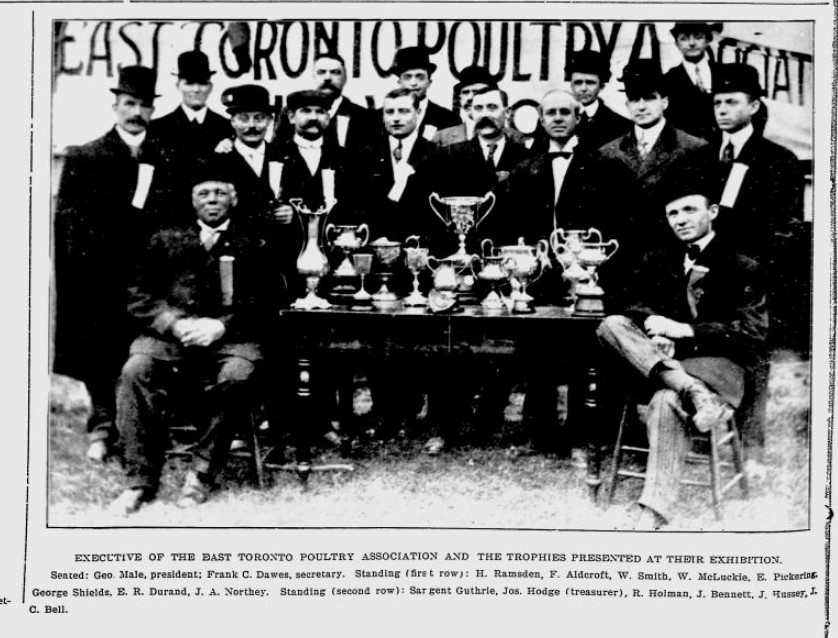
East Toronto Poultry Association, Toronto Sunday World, Feb. 5, 1911 
Chickens, Wrenson Road, Toronto Star, March 8, 1920 
Canada Farmer magazine, chicken 1866 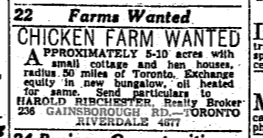
Chicken farm wanted, Gainsborough Rd, Globe and Mail, July 17, 1951
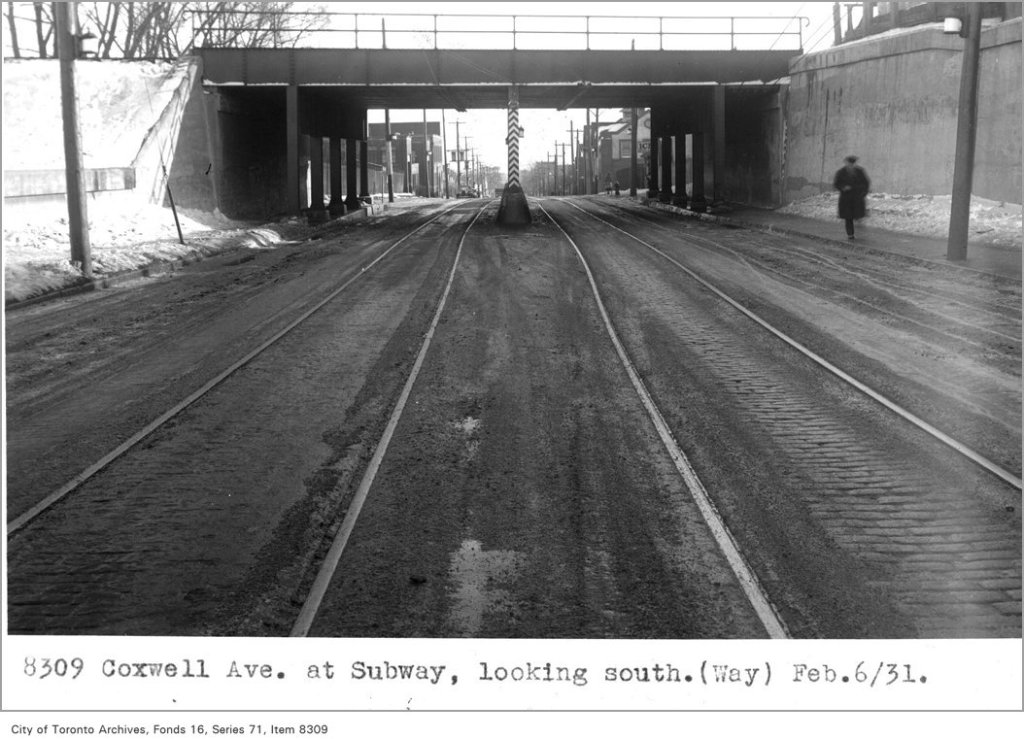

 The Midway Historical Society of Toronto