









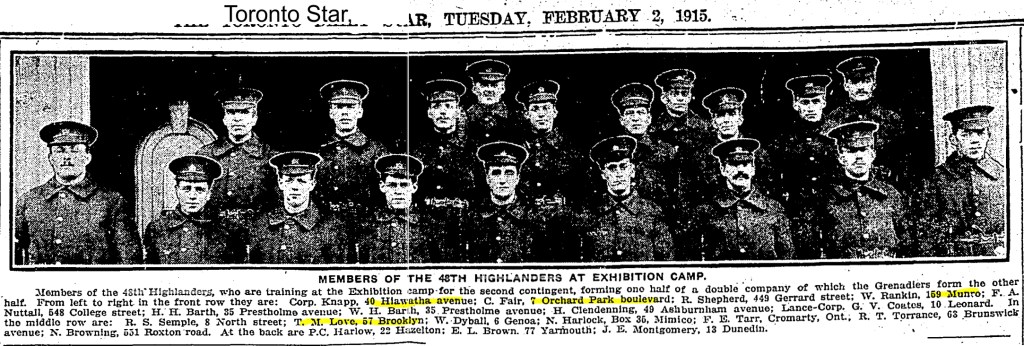
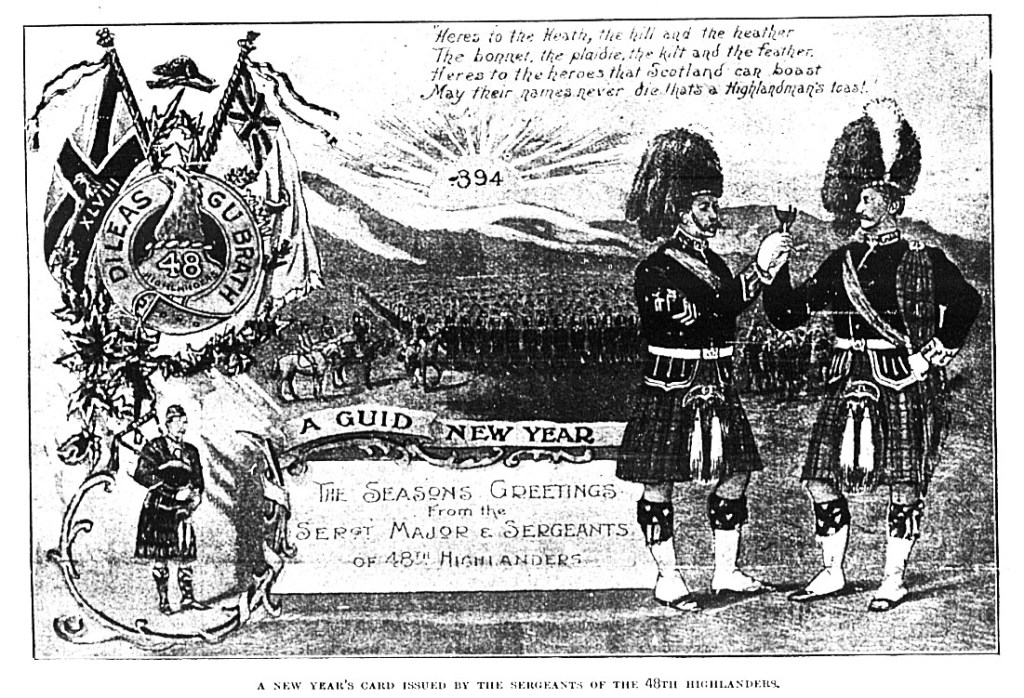
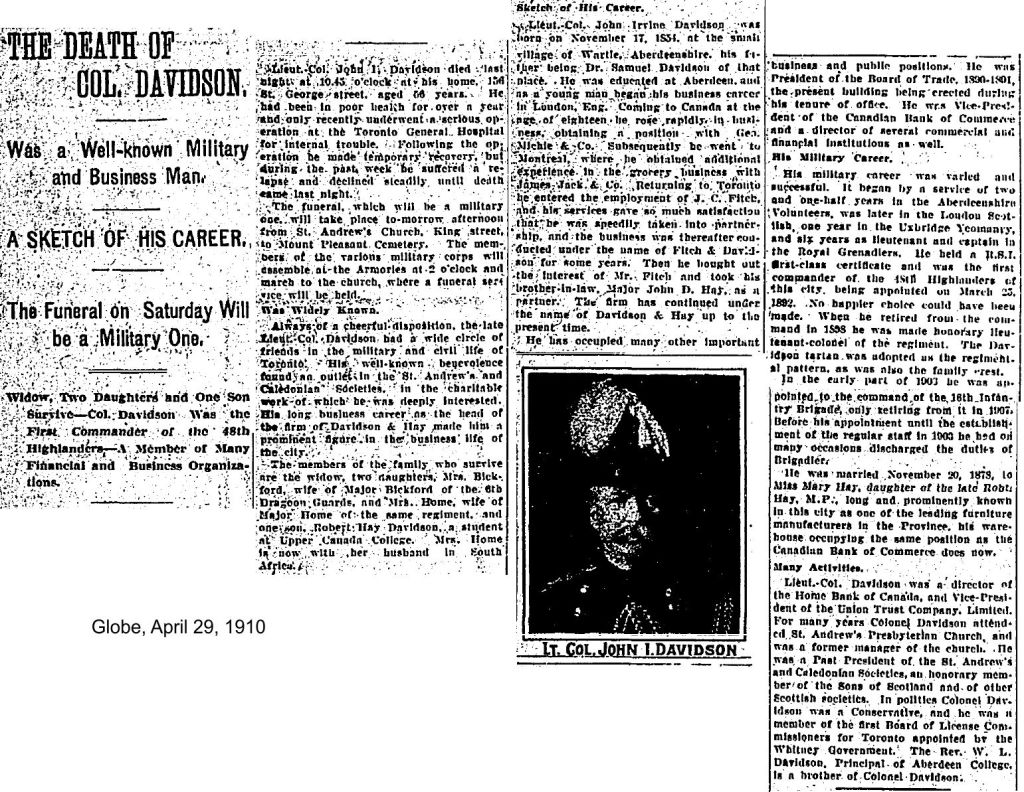
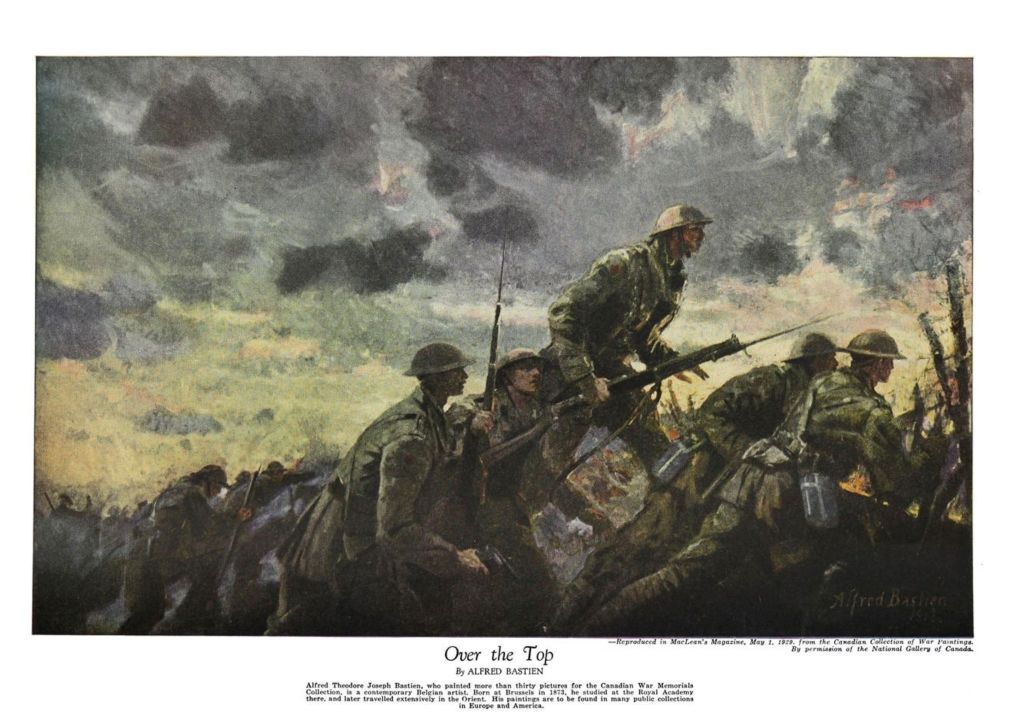
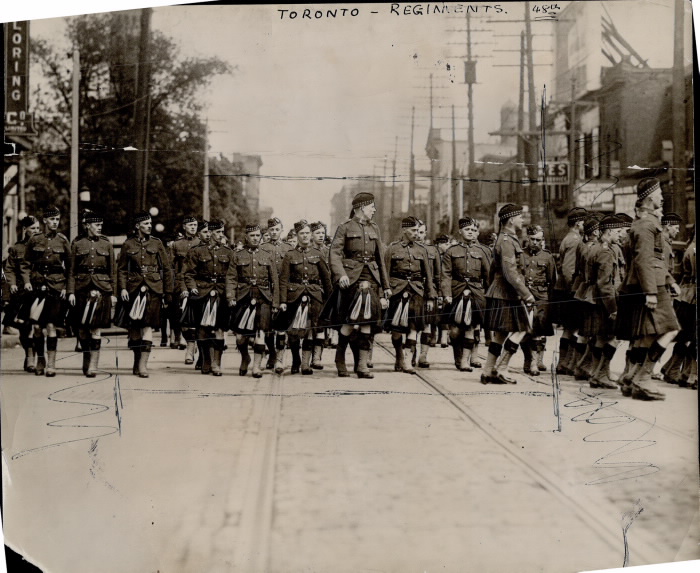
Many Midway residents eagerly enlisted in World War One, many choosing the 48th Highlanders. Founded in 1891, this Militia infantry regiment is based in downtown Toronto. They wear kilts of the Old Davidson tartan and a falcon’s head crest to honour their first Commanding Officer, John Irvine Davidson. Their motto is Dileas gu brath (“Faithful Forever”).

The First World War
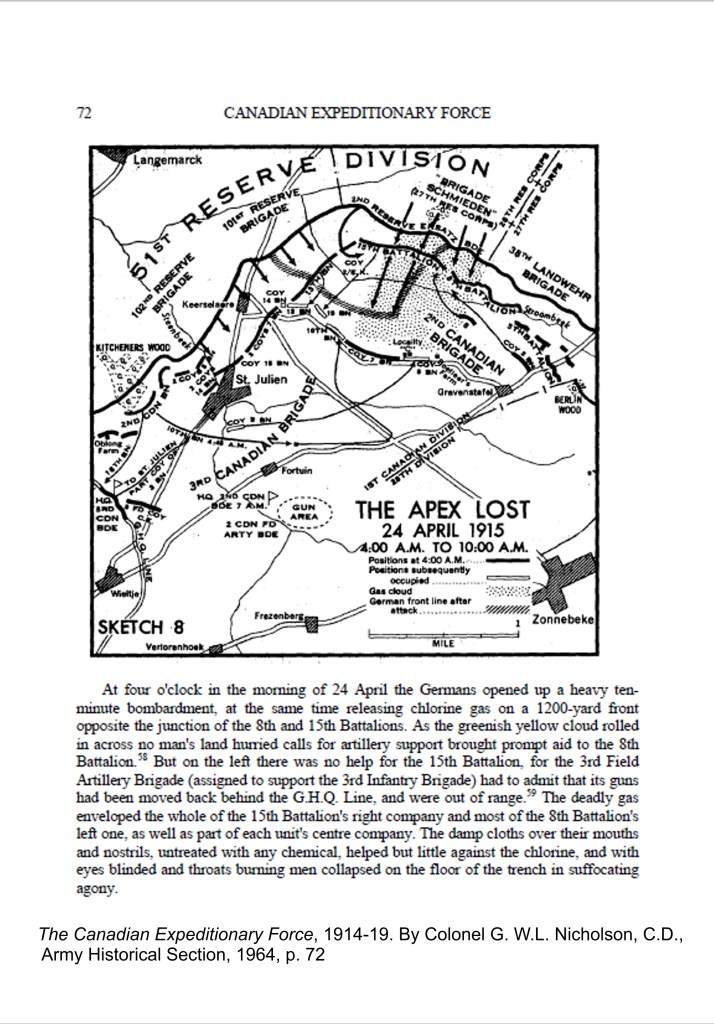
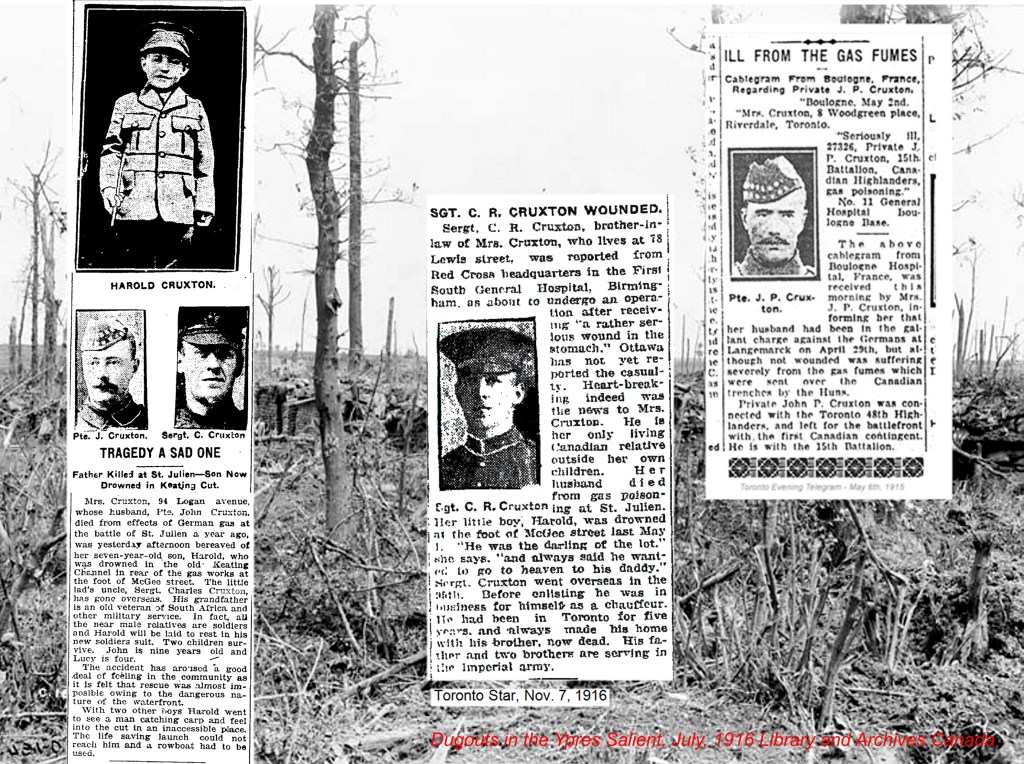
The 48th Highlanders were part of the 15th Battalion, Canadian Expeditionary Force (CEF), which was authorized on September 1, 1914. The Highlanders moved with the rest of the 15th Battalion to Valcartier, Quebec where the CEF main training camp was. The Battalion sailed for Britain on September 26, 1914, where it underwent more training on Salisbury Plain.

The Battalion arrived in France on 15 February 1915. It served with the 3rd Infantry Brigade, 1st Canadian Division in France and Flanders during and was disbanded on August 30, 1920.


The 92nd Battalion (48th Highlanders), CEF, was authorized on July 30, 1915, and left for Britain on May 20, 1916. It provided reinforcements to the Canadian Corps until January 24, 1917, when it merged with the 5th Reserve Battalion, CEF. The battalion was disbanded on September 1, 1917.




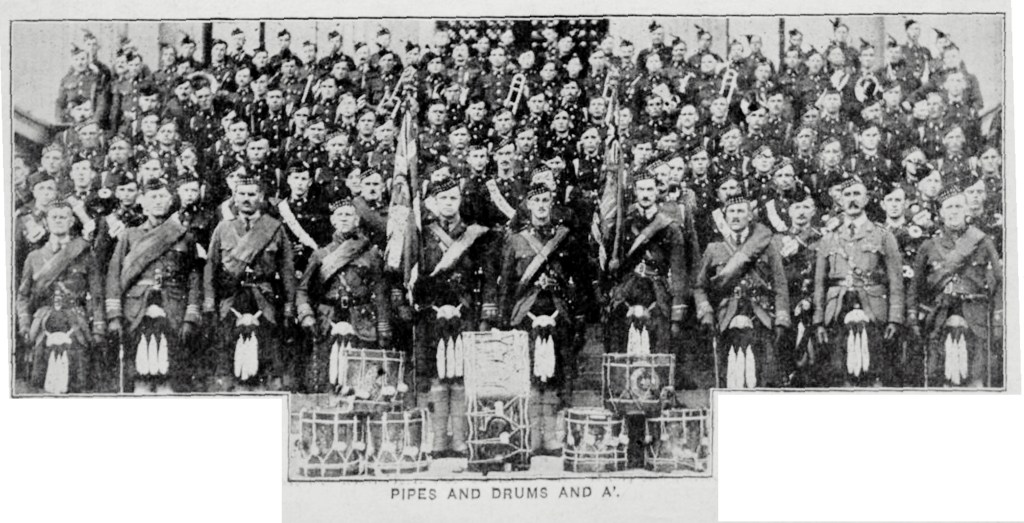
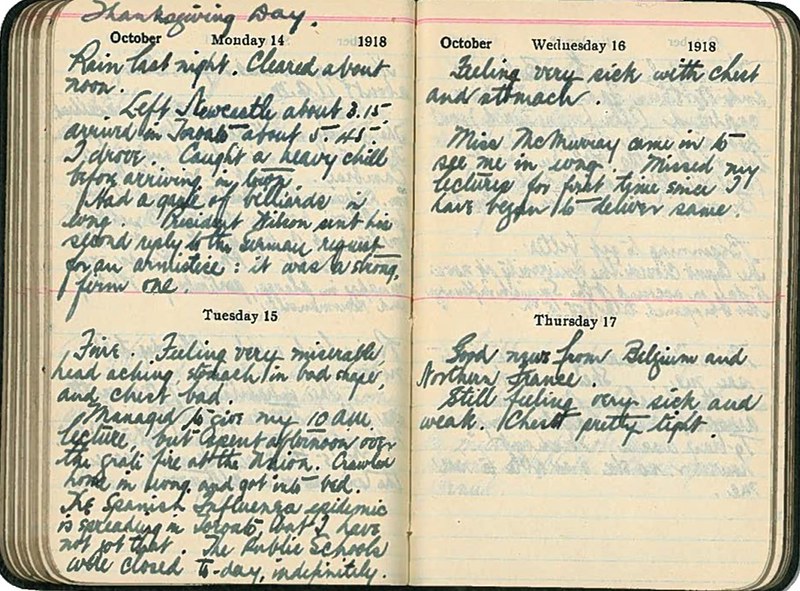
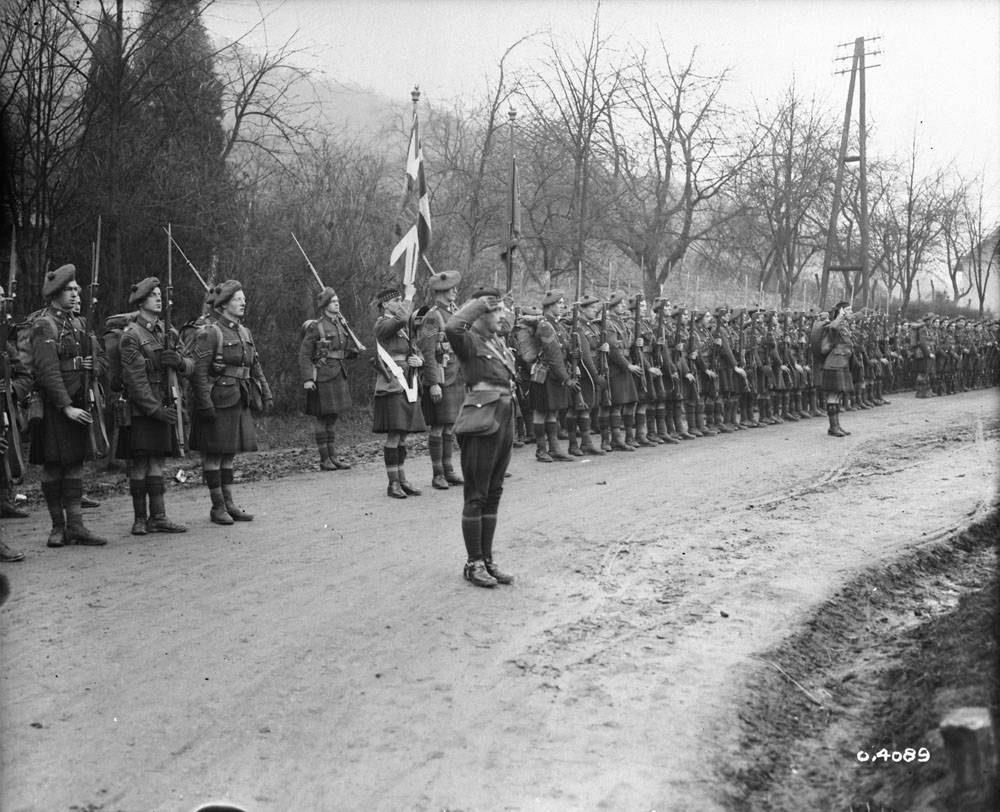
Another Battalion included the 48th Highlanders due to the high casualty rate on the Western Front. The 134th Battalion was authorized on December 22, 1915, and sailed for England on August 8, 1916. It provided reinforcements to the Canadian Corps, similar to the 92nd Battalion. On March 7, 1928, it merged with the 12th Reserve Battalion, which was disbanded 18 days after the Armistice Treaty.
Today
The 48th Highlanders of Canada is an infantry regiment of the Canadian Forces Primary Reserve, headquartered in the Moss Park Armoury. The regiment is a component of the 32 Canadian Brigade Group within the 4th Canadian Division.
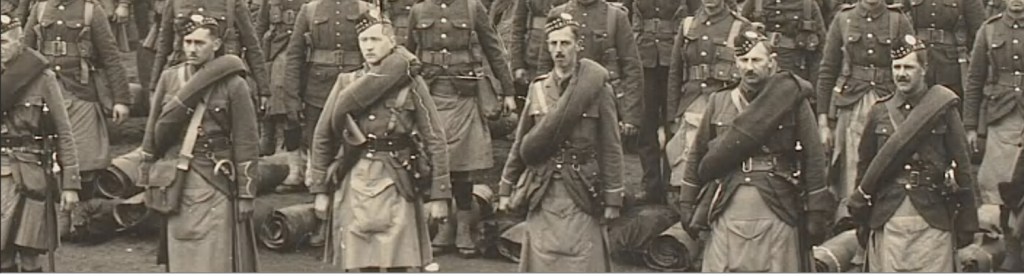
Regimental Badge
On a torteau the number 48 Argent above a scroll Azure edged and inscribed HIGHLANDERS in letters Argent, all encircled by a belt Azure edged buckled and inscribed DILEAS GU BRATH in letters Argent, overall in chief on a wreath Argent and Gules a falcon’s head couped Argent.[2]
Symbolism
The falcon’s head is adopted from the crest of the Clan Davidson, the regiment’s first commanding officer being Lieutenant-Colonel John Irvine Davidson, and the predominant colours of red and blue are from the Davidson tartan that the regiment wears. The number “48” and the word “HIGHLANDERS” are a form of the regimental title and “DILEAS GU BRATH” is the motto of the regiment.[2]
Timeline
Originated on 16 October 1891, in Toronto, Ontario, as the 48th Battalion Highlanders
Redesignated on 8 May 1900, as the 48th Regiment Highlanders
Redesignated on 15 May 1920, as The 48th Regiment (Highlanders)
Redesignated on 1 August 1930, as the 48th Highlanders of Canada
Redesignated on 7 November 1940, as the 2nd (Reserve) Battalion, 48th Highlanders of Canada
Redesignated on 31 December 1945, as the 48th Highlanders of Canada https://en.wikipedia.org/wiki/48th_Highlanders_of_Canada


 The Midway Historical Society of Toronto